Worm Gear Manufacturers in India
Worm Gears made to your drawing or sample at our Gujarat unit, supplied across India and exported.

Asar Engineering Pvt. Ltd. Gandevi, Gujarat
- Teeth cut in-house: hobbing, shaping and spiral bevel cutting
- Induction hardening done in-house
- Made to your drawing or a worn sample
- Supplied across India and exported (IEC registered)
Worm and Worm Wheel Sets for High-Ratio Drives
Asar Engineering is a worm gear manufacturer in India, cutting worms and worm wheels in-house at our unit in Gandevi, Gujarat. A worm gear set transmits power between shafts that are non-parallel and non-intersecting, usually at 90 degrees to each other.
A worm drive has two main parts: a screw-like worm and a matching worm wheel. The worm is the driving member, and its helical thread engages the teeth of the worm wheel. This gives a large speed reduction in a compact space.
Worm gears are chosen for high reduction ratios, compact size and, in some designs, resistance to back-driving. They are used in hoists, industrial reducers, conveyors, mixers, lifting mechanisms, screw jacks and other machines that need a slow, controlled output.
We make worm and worm wheel sets to the customer's drawing or sample, taking into account ratio, torque, speed, centre distance, material pairing, lubrication and duty.
What is a Worm Gear?
A worm gear or worm drive is a gear set made up of a worm and a worm wheel. It transmits power between shafts that are neither parallel nor intersecting.
The worm looks like a screw and has one or more threads (starts). The worm wheel looks like a helical gear, but its teeth are throated (curved) to wrap around the worm thread.
As the input shaft turns the worm, its thread meshes continuously with the wheel teeth and turns the worm wheel. The reduction ratio in one stage equals the number of wheel teeth divided by the number of worm starts, so it can be large.
How Does a Worm Gear Work?
The working principle of a worm drive is based primarily on the interaction between the worm's helical thread and the worm wheel's teeth.
Screw Action
As the motor turns the worm, its thread slides along the teeth of the worm wheel and pushes the wheel round its axis.
Unlike spur or bevel gears, where tooth contact is mainly rolling, worm drives work mainly by sliding contact between the mating surfaces.
Speed and Torque Conversion
A worm usually has one to four starts, while the wheel has many more teeth. For each turn of the worm, the wheel advances by only the number of starts, so it turns a small fraction of a revolution.
This gives a large reduction in a compact gearbox. Single-stage ratios typically range from about 5:1 to around 100:1; higher ratios usually use two stages.
Output torque increases roughly by the reduction ratio multiplied by the efficiency of the worm set.
Shaft Direction Change
Worm drives transmit power between non-parallel, non-intersecting shafts, usually with the input and output shafts at 90 degrees.
This makes worm gearing useful where the machine layout calls for a right-angle drive.
Self-Locking and Anti-Backdrive Characteristics
Some worm gear designs resist being driven backwards from the wheel side.
How Self-Locking Works
When the worm drives the wheel, motion passes easily. The reverse, with the wheel trying to turn the worm, can be strongly restricted, depending on lead angle, friction and lubrication. As a rough guide, single-start worms with a small lead angle (below about 5 degrees) tend to resist back-driving.
In certain designs, the worm wheel cannot easily drive the worm backward. This characteristic is commonly referred to as self-locking.
However, self-locking should never be assumed. Back-driving depends on lead angle, friction, lubrication, load, wear and vibration, and a gear set that holds when static can still creep under vibration.
Applications Requiring Load Holding
Resistance to backdriving can be useful in equipment where maintaining the output position after the driving motor stops is important.
Examples include:
- Hoisting mechanisms
- Lifting equipment
- Winches
- Screw jacks
- Positioning systems
- Inclined conveyor mechanisms
For safety-critical lifting, self-locking must not replace a proper mechanical brake or other required safety device.
Performance Limitations of Worm Gear
Worm gears give large reduction in a compact size, but their sliding action brings some engineering limitations.
Sliding Friction
The worm and wheel teeth slide against each other continuously, unlike gears that work mainly by rolling contact.
This sliding motion produces friction and generates heat during operation.
Mechanical Efficiency
Sliding friction lowers efficiency compared with spur, helical or bevel gears. Efficiency depends on lead angle, materials, lubrication, speed, load and temperature; high-ratio, single-start sets are the least efficient.
High-reduction worm drives therefore produce more heat and power loss than other gear types.
Heat Generation
Because of the sliding contact, worm sets generate considerable heat. Heat dissipation and gearbox design are important, especially in continuous duty.
Operating speed, transmitted load, lubrication, housing design, and ambient temperature all influence thermal behavior.
Lubrication Requirements
Worm gears require appropriate lubrication to control friction, wear, and operating temperature.
Sliding can break down the oil film between worm and wheel, so the lubricant matters. The right gear oil depends on the material pair, speed, load, temperature and gearbox design. Some EP additives can attack bronze wheels, so the oil must be compatible with the wheel material.
Worm and Worm Wheel Material Selection
Material pairing is central to worm gear design because the worm and wheel slide against each other under load.
The most common combination is a hardened steel worm running against a phosphor bronze worm wheel.
The hard steel worm gives a durable thread surface, while the softer bronze wheel gives good sliding and wear behaviour. The bronze wheel is designed to be the wearing part, which protects the more expensive worm shaft.
Material choice varies with the application. Load, speed, lubrication, temperature, corrosion and expected life all need to be considered when selecting worm and wheel materials. For larger wheels, a bronze rim is often fitted on a cast iron or steel hub to save bronze.
Applications of Worm Gear
Worm gears are used wherever large speed reduction, a right-angle drive, compact size and controlled output movement are required.
Heavy Hoisting Machinery
Worm drives are used in winches, lifting mechanisms, cranes and hoists, where high reduction and resistance to back-driving are useful.
A suitable worm set can help hold the load when the motor stops, but a proper brake is still needed where the equipment design or safety rules require it.
Industrial Conveyors
Worm reducers are common in conveyor drives, where motor speed must be reduced to a controlled output speed.
They suit compact conveyor drives and inclined conveyors where resistance to back-driving is useful.
Mixing Equipment
Mixers and agitators need high torque at low speed. Worm reducers give the required reduction in a compact drive.
Typical examples are in chemical, food processing, pharmaceutical and fertiliser plants.
Wastewater Treatment Equipment
Clarifiers, flocculators and mixers in water and effluent treatment plants use worm reducers for slow, controlled movement.
The gearbox material, sealing arrangement, lubrication, and corrosion protection need to be selected according to the surrounding environment.
Material Processing Machinery
Sugar, paper, textile and plastics machinery use worm reducers to drive rotating parts at controlled speed. The high reduction lets a standard motor drive a slow, high-torque mechanism.
Types of Worm Gear
Worm gears are classified by the shape of the worm and how far the worm wheel wraps around it.
Non-Enveloping or Cylindrical Worm Gear
In a non-enveloping design, a cylindrical worm meshes with a wheel that has straight (helical) teeth, not throated teeth.
Contact is only at a point, so load capacity is low. This arrangement is used mainly for light-duty drives and instruments.
Single-Enveloping Worm Gear
In a single-enveloping drive, the wheel teeth are throated (concave) so they partly wrap around a cylindrical worm. This is the standard industrial worm gear.
The throated wheel gives line contact, which spreads the load and increases load capacity compared with a non-enveloping set.
Double-Enveloping Worm Gear
In a double-enveloping (hourglass or globoid) drive, the worm is also curved along its length to follow the curvature of the wheel.
This gives a much larger contact area, with more teeth in contact at the same time.
It carries higher torque for its size, but needs specialised cutting machines and very accurate alignment during assembly.
Components of a Worm Gear
A worm gear drive is made up of several parts that work together to transmit power and control output movement.
Worm
The worm is the screw-like input part with one or more threads. It is usually driven by the motor or input shaft.
Its lead, number of starts, diameter, thread profile, material and surface hardness decide how the complete worm drive performs.
Worm Wheel
The worm wheel is the larger gear that meshes with the worm. Its teeth are throated to match the worm thread.
The wheel transfers the reduced-speed, increased-torque output to the driven shaft.
Worm Shaft
The worm is usually cut integral with its shaft, or made separately and fixed to a shaft. The shaft carries the input torque and the axial thrust from the worm.
Worm Wheel Hub
The hub connects the worm wheel to the output shaft. It may incorporate a bore, keyway, spline, or other suitable connection arrangement.
Gear Teeth
The worm wheel teeth provide the primary contact surface with the worm. Accurate tooth geometry is essential for appropriate engagement and load distribution.
Bearings
Bearings support the worm and worm-wheel shafts while allowing them to rotate smoothly. Bearing selection depends on radial and axial loads, operating speed, lubrication, and gearbox arrangement.
Gearbox Housing
The housing supports the shafts and bearings, maintains alignment, contains the lubricant, and helps dissipate heat generated during operation.
Lubricant
Lubricant reduces friction and wear between the worm and worm wheel while also assisting with heat management. The lubricant needs to be compatible with the gear materials and operating conditions.
Worm Gear Supplier in India
When choosing a worm gear supplier in India, look at the whole drive, not just the ratio. Reduction ratio, output torque, input speed, centre distance, duty cycle, heat, lubrication, materials and available space all matter.
Asar Engineering supplies worm and worm wheel sets across India for industrial drives. We treat the worm and wheel as a matched pair, because their geometry and materials directly affect friction, wear, efficiency and life.
A hardened steel worm with a phosphor bronze wheel is the usual combination. Worm threads can be induction hardened in-house.
The worm geometry must also suit the load. Non-enveloping, single-enveloping and double-enveloping designs each give different contact and load capacity.
Lubrication must match the operating conditions. The sliding action generates heat, so oil viscosity, additives, operating temperature and lubrication method are key design points.
We make worm gear sets to drawing or sample, including replacement sets for existing gearboxes, based on centre distance, ratio, material pairing and operating conditions.
Benefits of Using Worm Gear
Worm gears offer several advantages for suitable applications:
- High speed reduction: A worm and wheel can achieve substantial reduction within a single-stage arrangement.
- Compact transmission: Significant speed reduction can be achieved within a relatively compact gearbox.
- Right-angle power transmission: Worm drives can transmit power between non-parallel, non-intersecting shafts.
- High output torque: Speed reduction provides corresponding torque multiplication at the output.
- Backdrive resistance: Suitable worm geometries can resist reverse movement under appropriate conditions.
- Load-holding capability: Resistance to backdriving can be useful in certain lifting and positioning applications.
- Quiet, smooth operation: Continuous sliding engagement gives quiet running and smooth output movement.
- Flexible material combinations: Steel worms can be paired with bronze and other suitable worm-wheel materials.
- Wide application range: Worm reducers are used in conveyors, mixers, lifting equipment, screw jacks and other industrial machinery.
Worm Gear Specifications
| Specification | Typical Value / Consideration |
|---|---|
| Product Type | Worm Gear / Worm Drive |
| Main Components | Worm and Worm Wheel |
| Shaft Arrangement | Non-parallel, non-intersecting shafts |
| Typical Shaft Angle | Approximately 90° |
| Worm Configuration | Single-start or multi-start |
| Worm Type | Non-enveloping, single-enveloping (standard), double-enveloping |
| Worm Material | Hardened steel or application-specific material |
| Worm Wheel Material | Phosphor bronze or application-specific material |
| Reduction Ratio | Application-dependent; typically about 5:1 to 100:1 in one stage |
| Input Speed | Application-dependent |
| Output Speed | Determined by worm/wheel ratio |
| Output Torque | Dependent on input power, ratio, efficiency, and gear geometry |
| Gear Diameter | Application-dependent |
| Center Distance | Based on gearbox and gear dimensions |
| Lubrication | Worm gear oil compatible with the bronze wheel |
| Operating Temperature | Application-dependent |
| Efficiency | Dependent on lead angle, load, speed, materials, and lubrication |
| Backdrive Resistance | Dependent on worm lead angle, friction, load, and operating conditions |
| Housing | Application-specific gearbox housing |
| Applications | Hoists, cranes, conveyors, mixers, screw jacks, reducers, water treatment equipment |
| Customization | Made to drawing or sample: ratio, centre distance, module, materials, number of starts |
Worm Gear Exporter from India
Asar Engineering is IEC registered and takes export orders for worm and worm wheel sets made to customer drawings.
A worm gear enquiry should state reduction ratio, centre distance, module or pitch, number of starts, hand of thread, materials, input speed, output torque, lubrication and mounting arrangement.
Because worm drives slide heavily, the material pair and lubrication must suit the duty cycle and ambient temperature at the point of use.
Export shipments are packed so the worm threads, wheel teeth and finished shafts are protected from impact, contamination and moisture.
Why Choose Asar Engineering
- In-house worm and worm wheel cutting: Both parts of the set are cut at our Gandevi, Gujarat unit, so they are made as a matched pair.
- Made to drawing or sample: We make new sets to your drawing or copy a worn set from a sample.
- Material matched to the application: Steel worm and bronze wheel grades are chosen for load, speed and duty.
- In-house induction hardening: Worm threads can be induction hardened in our own facility.
- Inspection before dispatch: Dimensions, centre distance and tooth contact are checked before dispatch.
- One-off to batch quantities: From a single replacement set to repeat batch orders.
- Supply across India and export: We supply customers across India and take export orders (IEC registered).
This product is part of our industrial transmission gear range, made at our unit in Gujarat and supplied across India.
Related products: Gear Coupling, Industrial Gearbox, Spur Gear, Spiral Bevel Gear.
Get a Quote for Worm Gears
Send us your drawing or a sample with the ratio, centre distance, materials and quantity, and we will quote for your worm and worm wheel set. Asar Engineering supplies worm gears across India and takes export orders.
Get an accurate quote
What to Send for Your Worm Gear Quote
- Drawing, sample or clear photos with main dimensions
- Module or DP, number of teeth and pressure angle
- Face width, bore size and keyway or spline details
- Material and hardness, if known
- Quantity and the date you need the parts
Have a drawing, a sample or a worn part?
Send it with the quantity. We reply with material, hardness, price and delivery time.
Industries That Use Our Worm Gears
Material, hardness and fit are chosen for the duty the part will see in your plant.
-
Cement
Worm Gears for kiln, mill, crusher and conveyor drives.
-
Steel & Metal
Worm Gears for rolling mills and processing lines.
-
Sugar
Worm Gears for cane carriers, mill drives and bagasse conveyors.
-
Mining & Material Handling
Worm Gears for belt conveyors, crushers and bucket elevators.
-
Chemical & Process
Worm Gears for pumps, mixers and agitators.
-
Machine Builders (OEM)
Worm Gears for new machines, made to your drawing.
Our Worm Gears and Recent Work
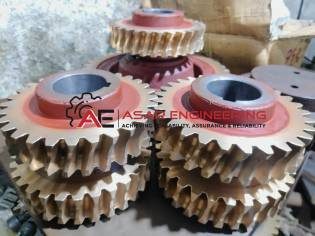
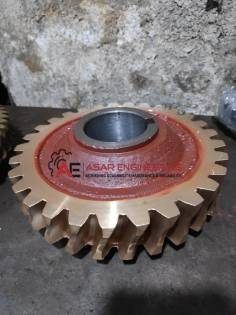
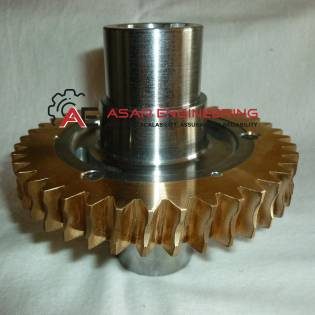
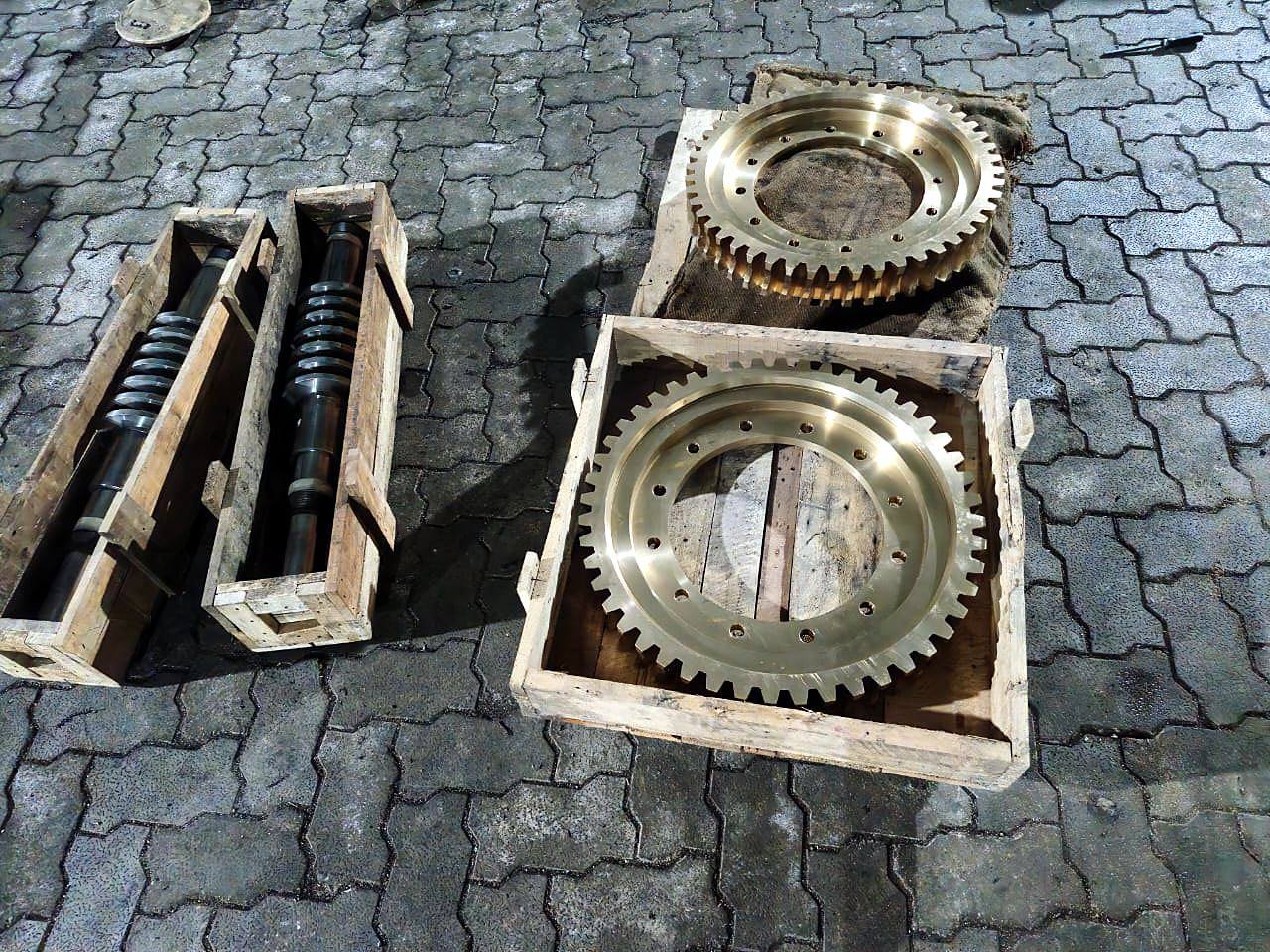
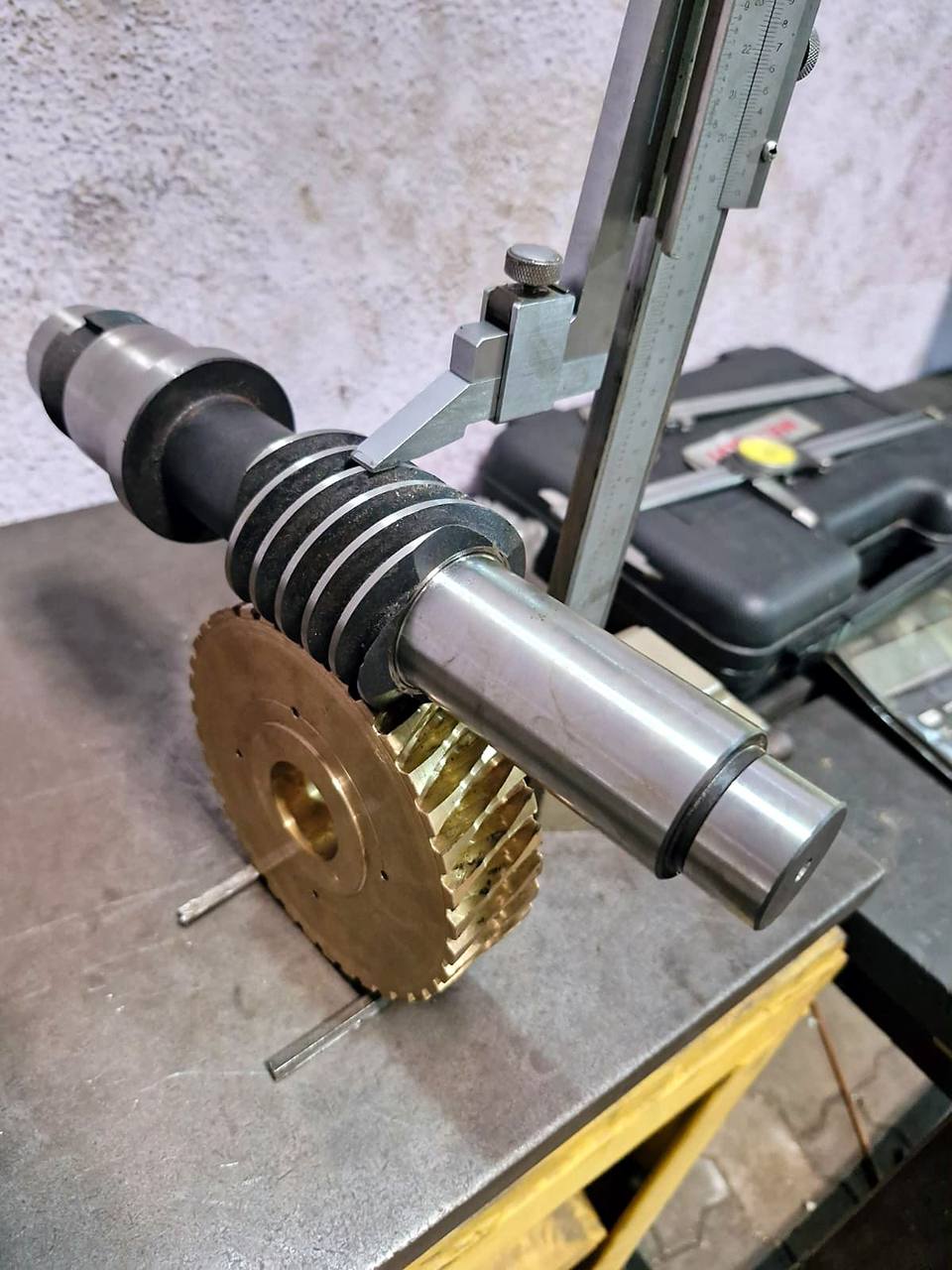
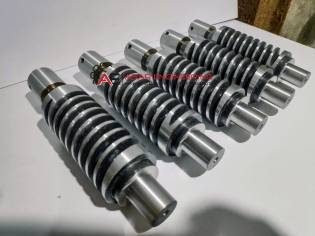
Photos of parts made and dispatched from our unit, not stock images.
Machining Videos from Our Shop Floor
Short, uncut clips of gear cutting, hobbing and machining at our unit in Gujarat.


What Our Customers Say
Reviews left on our Google Business Profile, shown word for word.
Asar Engineering supplied gearbox components for one of our industrial applications. The dimensional accuracy, finishing, and overall performance were satisfactory. We particularly appreciated their technical understanding and ability to suggest suitable solutions based on our operating requirements.
We have been sourcing industrial gearboxes from Asar Engineering Pvt. Ltd. and are satisfied with the product quality and consistency. The gearboxes are well-built, perform reliably under continuous operation, and were supplied according to our required specifications. Their team was also responsive during technical discussions and order coordination.
I bought a single screw extruder from asar engineering pvt.ltd. It's been a game changer for my manufacturing process. The extruder is efficient, easy to operate and built to last. Their customer is excellent and they guided me well through installation and setup. Highly recommended!
Worm Gear FAQs
Questions buyers usually ask us before sending an enquiry for worm gear.
Do I need a single-enveloping or double-enveloping worm gear set?
Most industrial reducers use a single-enveloping worm gear, where a throated wheel wraps partly around a cylindrical worm and gives line contact. A non-enveloping set has only point contact and suits light drives. A double-enveloping (globoid) set carries more torque for its size but needs very accurate assembly. We can suggest the type from your torque, ratio and centre distance.
Will a worm gear hold a load without a brake?
Not reliably. A single-start worm gear with a small lead angle tends to resist back-driving, but friction, lubrication, wear and vibration all affect this, and a set that holds when still can creep under vibration. For hoists, lifts and other safety-critical duties we recommend a proper mechanical brake, whatever the worm geometry.
Which details should be in a worm and worm wheel enquiry?
Please give the reduction ratio, centre distance, module or pitch, number of starts, hand of thread, worm and wheel materials, input speed, output torque, lubrication and mounting arrangement, together with a drawing or the old set and the quantity. For a replacement worm gear set, the gearbox make and existing centre distance help us match the geometry.
Can you make a replacement worm gear set for an existing gearbox from the worn parts?
Yes. We cut both the worm and the worm wheel in-house, so a replacement worm gear set is made as a matched pair to your drawing or the worn sample. The usual pairing is a hardened steel worm with a phosphor bronze wheel; worm threads can be induction hardened at our Gandevi unit, and centre distance and tooth contact are checked before dispatch.
Can you supply worm gears to other states and overseas buyers?
Yes. We supply worm and worm wheel sets across India from our Gandevi, Gujarat unit, with a branch office in Mumbai, and we are IEC registered for export orders to customer drawings. Quantities range from one replacement set to repeat batches. Export packing protects the worm threads, wheel teeth and shafts from impact, contamination and moisture.
How We Make Your Worm Gears
- Send your requirementDrawing, sample or photos of the worm gear, with the quantity you need.
- Technical check and quoteWe confirm material, hardness and tolerances, then send price and delivery time.
- Manufacturing and inspectionMade at our Gandevi unit; dimensions are checked before dispatch.
- DispatchPacked for road transport across India, or for export shipment.
Companies We Supply


























Need Worm Gears made to your drawing?
Send the drawing or a sample with the quantity. We supply across India and take export orders.