Encoder Coupling (Bellow Coupling) Manufacturers in India
Encoder (Bellows) Couplings made to your drawing or sample at our Gujarat unit, supplied across India and exported.

Asar Engineering Pvt. Ltd. Gandevi, Gujarat
- Hubs bored and keyed to your shaft sizes
- Gear coupling teeth cut in-house
- Replacement to your existing coupling size
- Supplied across India and exported (IEC registered)
Bellows Couplings for Encoders and Feedback Devices
Asar Engineering is an encoder coupling manufacturer in India, supplying bellows-type encoder couplings from its manufacturing unit at Gandevi, Gujarat. An encoder coupling is a precision flexible coupling that joins a rotating shaft to a feedback device such as a rotary encoder, resolver or tachometer. General industrial couplings are built to transmit high torque and absorb shock loads; encoder couplings are built for positioning accuracy, zero backlash and accurate rotational synchronization.
An encoder bellows coupling has a thin-walled metal bellows between two shaft hubs. The bellows can bend and move axially but is very stiff in torsion. This lets the coupling take up small shaft misalignment without adding rotational play between the motor and the feedback device.
Its low inertia suits motion-control drives, where even slight torsional wind-up or clearance shows up as feedback error. Asar Engineering supplies these couplings for automation, motion-control and rotating equipment.
Hubs are bored to suit your motor and encoder shaft sizes, and couplings can be made to your drawing or sample, from a single replacement to batch quantities.
What is an Encoder Coupling?
An encoder coupling is a precision flexible coupling used to mechanically connect an encoder, resolver, tachometer, or other feedback device to a rotating shaft. Its primary function is to transmit rotational movement accurately from the drive shaft to the feedback device while accommodating controlled amounts of shaft misalignment.
A common encoder coupling design uses a metal bellows as its flexible element. The bellows consists of a thin-walled, corrugated metallic tube that can flex in bending and accommodate axial displacement while remaining highly resistant to torsional deformation.
Three-Piece Construction
A typical encoder bellows coupling consists of:
- Two Mounting Hubs: Usually manufactured from lightweight aluminum or stainless steel and attached to the respective shafts.
- One Flexible Bellows: A corrugated metallic element connecting the two hubs.
- Shaft Attachment System: Clamping rings, split clamps, or set-screw arrangements used to secure the hubs to the shafts.
Metal Bellows Flexibility
The corrugated geometry of the bellows allows it to flex, pivot, and stretch axially. This enables the coupling to compensate for parallel, angular, and axial shaft misalignment within its permissible operating range.
The bellows is flexible in the directions where compensation is required while remaining highly torsionally stiff during rotation.
High Torsional Stiffness
High torsional stiffness is one of the defining characteristics of an encoder bellows coupling. When the motor shaft rotates, the coupling is designed to transfer that rotational movement to the encoder with minimal torsional wind-up.
This creates a close positional relationship between the driving and driven shafts, which is essential when the encoder is responsible for measuring angular position, speed, or motion.
Zero-Backlash Operation
Precision encoder applications require the coupling to transfer rotational movement without introducing mechanical play. The bellows construction provides a continuous metallic connection without conventional gear-tooth clearance or elastomeric spider movement.
This allows the coupling to maintain accurate rotational synchronization between the motor and feedback shaft.
Applications of Encoder Coupling
Encoder couplings are primarily used in precision motion-control systems where accurate transmission of rotational movement is more important than high torque capacity.
Rotary Encoders
Rotary encoders require a precise mechanical connection to the rotating shaft being measured. An encoder bellows coupling transfers shaft rotation accurately while accommodating the small alignment errors that may exist between the encoder and drive shaft.
Resolvers and Tachometers
Resolvers and tachometers also depend on accurate shaft rotation for reliable feedback. A high-torsional-stiffness coupling helps maintain the mechanical relationship between the rotating machine and feedback device.
Servo Motors
Servo motor systems rely on feedback to control position, speed, and motion. Encoder couplings connect the servo motor shaft with the feedback device while minimizing backlash and torsional wind-up.
Stepper Motor Drives
Precision stepper applications can use encoder couplings where closed-loop feedback or accurate rotational measurement is required. The lightweight coupling construction helps minimize additional rotational inertia.
CNC Machinery
CNC machines require precise positioning along X, Y, and Z axes. Encoder couplings can be used in the motion-control drive systems where accurate shaft-to-feedback transmission is necessary for positioning operations.
Ball Screw Drives
Servo motors and other precision motors can be connected to ball-screw systems through appropriate precision coupling arrangements. Encoder couplings can be used in feedback assemblies where rotational movement must be accurately measured.
Robotic Arms
Robotic systems require accurate angular movement and repeatable positioning. Encoder couplings can connect feedback devices to precision rotary axes while accommodating controlled shaft misalignment.
Motor Feedback in Process Plants
In steel, cement, paper and material-handling plants, encoders are often mounted on the non-drive end of motors and on crane and conveyor drives for speed and position feedback. An encoder coupling connects the encoder to the shaft without passing shaft float or misalignment on to the encoder bearings.
Packaging, Printing and Textile Machinery
Packaging, printing and textile machines use servo and encoder feedback to control cut length, print registration and web tension. Bellows encoder couplings suit these drives because backlash and torsional flexibility must be kept low.
Common Types of Encoder Coupling
Encoder couplings can be differentiated primarily by their hub attachment method and material configuration.
Bellows Encoder Coupling
The bellows coupling uses a thin-walled corrugated metal bellows between two mounting hubs. This is a common precision configuration because the bellows provides flexibility for misalignment while maintaining high torsional stiffness.
Aluminum Hub Encoder Coupling
Aluminum hubs are selected where low weight and reduced rotational inertia are important. This configuration is particularly useful for high-speed precision motion systems.
Stainless Steel Hub Encoder Coupling
Stainless steel hubs can be selected where greater corrosion resistance is required. They are suitable for applications where environmental conditions demand a more resistant metallic construction.
Clamping Hub Encoder Coupling
Clamping hubs use a split or collar arrangement that applies uniform radial pressure around the shaft. This provides a balanced friction grip while helping avoid shaft damage associated with direct set-screw contact.
Set-Screw Encoder Coupling
Set-screw hubs use screws tightened directly against the shaft to secure the coupling. This arrangement provides a simple and economical attachment method, although installation requires appropriate care to avoid damaging the shaft surface.
Core Components
The performance of an encoder coupling depends on the precision and interaction of its hubs, bellows, and shaft attachment system.
Mounting Hubs
Two hubs connect the coupling to the rotating shaft and encoder shaft. Aluminum and stainless steel are common material options depending on the required weight, strength, and environmental resistance.
Flexible Metal Bellows
The bellows is the primary flexible element. Its thin corrugated walls allow bending, axial movement, and controlled lateral compensation while maintaining high torsional stiffness.
Corrugations
The folds or corrugations in the bellows provide the required flexibility. Their geometry allows the bellows to deform in selected directions without compromising its ability to transmit rotational movement.
Clamping Rings
Clamping arrangements use screws or collars to create a uniform gripping force around the shaft. This provides a secure connection without requiring a conventional keyway.
Set Screws
Set screws provide a straightforward method of attaching the coupling hub to the shaft. They are commonly used where simple installation and economical construction are priorities.
Precision Shaft Interface
The hub-to-shaft connection is critical in encoder applications because improper mounting can introduce eccentricity, imbalance, or unwanted mechanical movement that affects feedback accuracy.
Encoder Coupling Supplier in India
Choosing an encoder coupling needs more care than choosing a heavy-duty shaft coupling. As an encoder coupling supplier in India, we ask for the shaft diameters on both sides, operating speed, required torsional stiffness, expected misalignment, inertia limits and the feedback accuracy the system needs.
As an encoder coupling manufacturer in India, Asar Engineering supplies couplings for encoders, resolvers, servo motors, CNC machines, robotics and automated machinery. Hub material and shaft attachment are chosen to suit the application.
Aluminum hubs keep rotational inertia low, while stainless steel hubs suit applications where corrosion resistance matters.
Also consider the shaft dimensions of the feedback device and the operating conditions of the drive. Correct installation and alignment matter as much as the coupling itself for accurate feedback.
Benefits of Using Encoder Coupling
Zero Backlash
A bellows-type encoder coupling is designed to eliminate mechanical play during rotational transmission, making it suitable for precision feedback systems.
High Torsional Stiffness
The metallic bellows provides high resistance to torsional deformation, allowing rotational movement to be transferred accurately from the driving shaft to the feedback device.
Precise Positional Transmission
The coupling maintains a highly accurate rotational relationship between the motor and encoder, supporting precise position and motion feedback.
Misalignment Compensation
The corrugated bellows can accommodate controlled amounts of angular, parallel, and axial shaft misalignment without requiring rigid shaft alignment.
Low Rotational Inertia
Lightweight hub materials such as aluminum help reduce coupling mass and rotational inertia, which can be beneficial in high-speed motion-control applications.
High-Speed Capability
The lightweight and balanced construction of precision bellows couplings makes them suitable for high-speed rotating applications when the selected model is properly rated.
Long Fatigue Life
When operated within the manufacturer's specified misalignment, speed, and load limits, metallic bellows can provide extensive cyclic service without the wear mechanisms associated with conventional elastomeric elements.
Built for Precision, Not Shock Loads
Unlike rubber-element couplings, encoder bellows couplings are designed for torsional precision, not for absorbing large mechanical shocks. Use them on controlled precision drives, not on heavy-impact machinery.
Compact Construction
The three-piece arrangement of two hubs and one bellows provides a compact mechanical connection suitable for limited-space encoder assemblies.
Precision Shaft Attachment
Clamping hubs provide a balanced gripping method that can minimize shaft marking and help maintain concentric mounting when correctly installed.
Encoder Coupling Specifications
| Specification | Typical Configuration |
|---|---|
| Coupling Type | Precision Encoder Bellows Coupling |
| Main Construction | Two hubs + flexible metal bellows |
| Hub Materials | Aluminum or stainless steel |
| Bellows Materials | Stainless steel, phosphor bronze, or nickel |
| Flexible Element | Thin-walled corrugated metallic bellows |
| Backlash | Zero-backlash design |
| Torsional Stiffness | High |
| Misalignment | Angular, parallel, and axial within design limits |
| Shaft Attachment | Clamping hub or set-screw |
| Rotational Inertia | Low, depending on hub material and size |
| Lubrication | Generally not required |
| Typical Applications | Encoders, resolvers, tachometers, servo motors, CNC, robotics |
| Operating Speed | Model- and application-dependent |
| Torque Capacity | Precision/instrument-duty and application-dependent |
| Fatigue Life | Dependent on rated misalignment and operating conditions |
Exact torque capacity, allowable misalignment, maximum speed, shaft bore, bellows geometry, and fatigue performance should be selected according to the specific encoder coupling design and manufacturer rating.
Encoder Coupling Exporter from India
Asar Engineering is IEC registered and takes export orders as an encoder coupling exporter from India, alongside supply to customers across India.
For export orders, share the encoder shaft size, motor shaft size, operating speed, required torsional stiffness, allowable misalignment, preferred hub material and mounting arrangement, and we will confirm a suitable coupling.
Why Choose Asar Engineering
- Made to Drawing or Sample: Couplings are supplied to your drawing, sample or shaft details, from one-off replacements to batch orders.
- Bores Matched to Your Shafts: Hub bores and clamping arrangements are matched to the motor and encoder shaft sizes you specify.
- Material Matched to the Application: Aluminum hubs for low inertia, stainless steel where corrosion resistance is needed.
- Inspection Before Dispatch: Bores and run-out are checked with dial gauges before the coupling leaves our Gujarat unit.
- Clamping or Set-Screw Hubs: Choose the shaft attachment that suits your equipment and maintenance practice.
- Related Drive Parts In-House: Gear teeth, racks and worm gears are cut in-house, so couplings can be ordered together with related drive parts.
- Supply Across India and Export: We are GST, IEC and MSME registered, supply across India and take export orders.
- Working Since 2015: Asar Engineering has made power transmission parts at Gandevi, Gujarat since 2015, with a branch office in Mumbai (Goregaon).
Related products: Gear Coupling, HRC Coupling, Jaw Coupling, Industrial Gearbox, Mechanical Seal.
Get Encoder Couplings from Asar Engineering
Need an encoder coupling for a servo, CNC or feedback application? Send us your drawing or sample, shaft sizes and required quantity. Asar Engineering is an encoder coupling manufacturer in India and supplies across India and for export.
Get an accurate quote
What to Send for Your Encoder Coupling (Bellow Coupling) Quote
- Coupling type and size, or the old coupling as a sample
- Motor power (kW) and speed (rpm)
- Both shaft diameters with keyway details
- Distance between shaft ends (DBSE) for spacer types
- Quantity and the date you need the parts
Have a drawing, a sample or a worn part?
Send it with the quantity. We reply with material, hardness, price and delivery time.
Industries That Use Our Encoder (Bellows) Couplings
Material, hardness and fit are chosen for the duty the part will see in your plant.
-
Cement
Encoder (Bellows) Couplings for kiln, mill, crusher and conveyor drives.
-
Steel & Metal
Encoder (Bellows) Couplings for rolling mills and processing lines.
-
Chemical & Process
Encoder (Bellows) Couplings for pumps, mixers and agitators.
-
Sugar
Encoder (Bellows) Couplings for cane carriers, mill drives and bagasse conveyors.
-
Mining & Material Handling
Encoder (Bellows) Couplings for belt conveyors, crushers and bucket elevators.
-
Machine Builders (OEM)
Encoder (Bellows) Couplings for new machines, made to your drawing.
Recent Work from Our Gandevi Unit
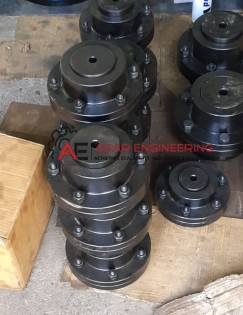
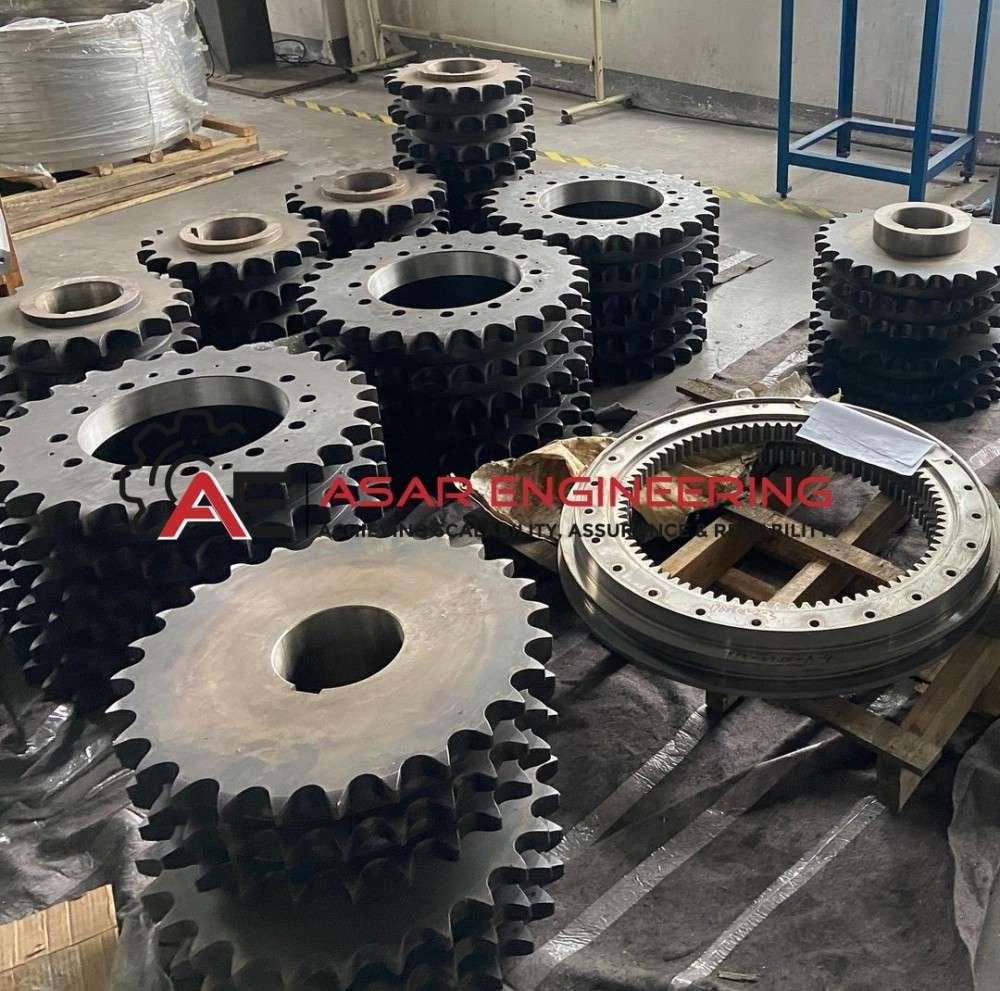
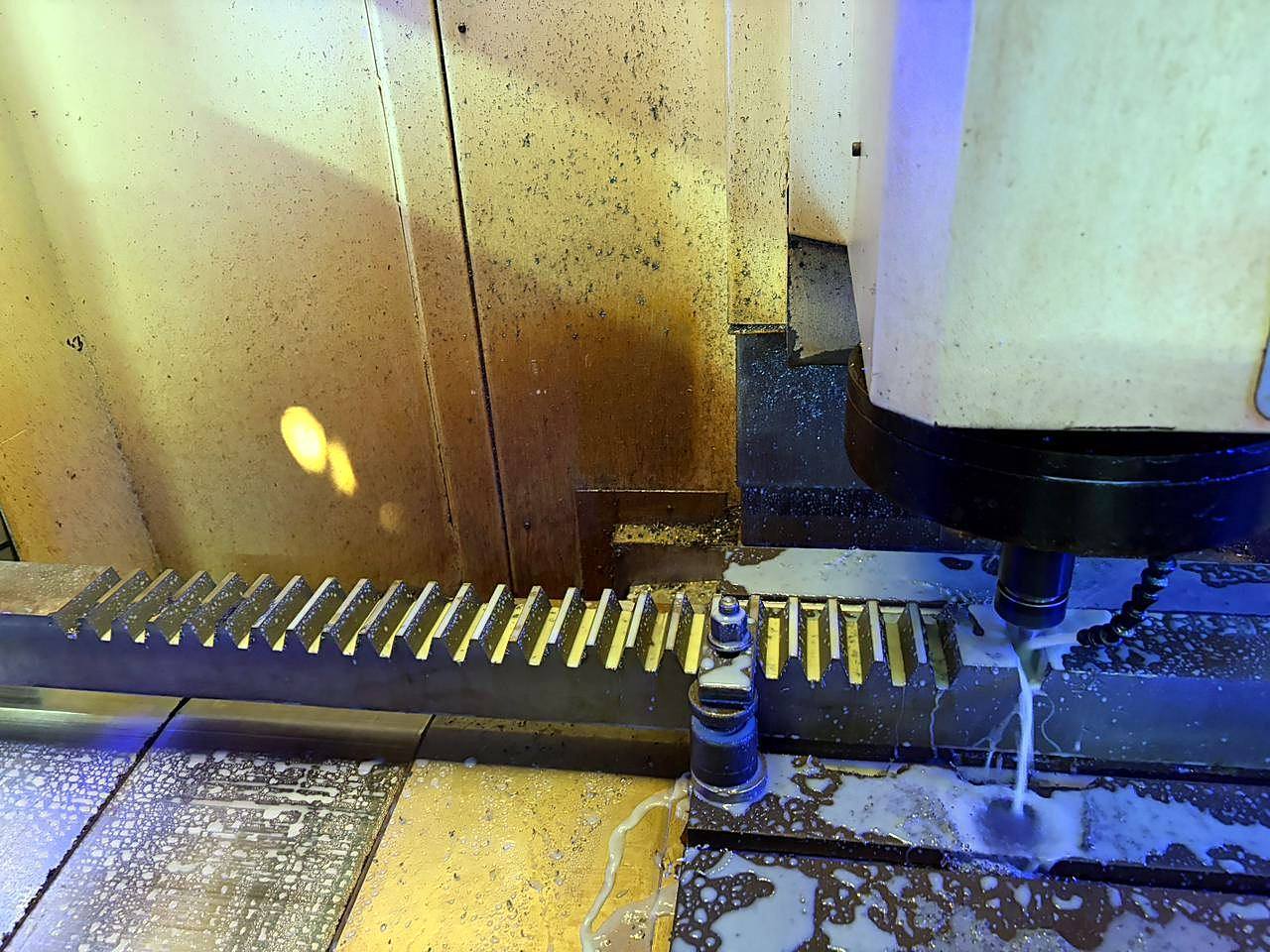
Photos of parts made and dispatched from our unit, not stock images.





Machining Videos from Our Shop Floor
Short, uncut clips of gear cutting, hobbing and machining at our unit in Gujarat.


What Our Customers Say
Reviews left on our Google Business Profile, shown word for word.
I bought a single screw extruder from asar engineering pvt.ltd. It's been a game changer for my manufacturing process. The extruder is efficient, easy to operate and built to last. Their customer is excellent and they guided me well through installation and setup. Highly recommended!
Asar Engineering supplied gearbox components for one of our industrial applications. The dimensional accuracy, finishing, and overall performance were satisfactory. We particularly appreciated their technical understanding and ability to suggest suitable solutions based on our operating requirements.
We have been sourcing industrial gearboxes from Asar Engineering Pvt. Ltd. and are satisfied with the product quality and consistency. The gearboxes are well-built, perform reliably under continuous operation, and were supplied according to our required specifications. Their team was also responsive during technical discussions and order coordination.
Encoder Coupling (Bellow Coupling) FAQs
Questions buyers usually ask us before sending an enquiry for encoder coupling (bellow coupling).
When should I use a bellows encoder coupling instead of a jaw or HRC coupling?
Use an encoder coupling where the job is accurate feedback rather than heavy torque. The metal bellows gives zero backlash and high torsional stiffness, so the encoder follows the true shaft position. Jaw and HRC couplings with elastomer elements absorb shock but allow some wind-up, which appears as feedback error on servo, CNC and encoder drives.
Which hub material and shaft fixing should we choose for our encoder coupling?
Aluminium hubs keep rotational inertia low and suit fast motion-control drives, while stainless steel hubs are used where corrosion resistance matters. A clamping hub grips evenly around the shaft, avoids marking it and helps keep the encoder concentric. Set-screw hubs are simpler and cheaper but need care during fitting. We match both choices to your drive and shaft sizes.
What details do you need to quote an encoder coupling?
Please send the motor shaft and encoder shaft diameters, operating speed, the torsional stiffness you need, expected angular, parallel and axial misalignment, any inertia limit, preferred hub material and clamping or set-screw fixing, plus the quantity. A drawing or photo of the existing coupling also helps. We then confirm a suitable encoder coupling for your feedback device.
Can you make an encoder coupling to replace a failed one on our machine?
Yes. We make encoder couplings from your drawing, a sample or your shaft details, from a single replacement to batch quantities. Hub bores are matched to the motor and encoder shafts, and bores and run-out are checked with dial gauges before dispatch. If the old bellows cracked, share the mounting details, because excess misalignment shortens bellows fatigue life.
Do you supply encoder couplings across India and for export?
Yes. Asar Engineering is GST, IEC and MSME registered and supplies encoder couplings across India from our unit at Gandevi, Gujarat, with a branch office in Mumbai. We also take export orders under our IEC. Quantities range from one coupling for a breakdown to batch orders for machine builders and automation integrators.
How We Make Your Encoder (Bellows) Couplings
- Send your requirementDrawing, sample or photos of the encoder coupling (bellow coupling), with the quantity you need.
- Technical check and quoteWe confirm material, hardness and tolerances, then send price and delivery time.
- Manufacturing and inspectionMade at our Gandevi unit; dimensions are checked before dispatch.
- DispatchPacked for road transport across India, or for export shipment.
Companies We Supply




























Need Encoder (Bellows) Couplings made to your drawing?
Send the drawing or a sample with the quantity. We supply across India and take export orders.