Twin Screw Elements Manufacturers in India
Twin Screw Elements made to your drawing or sample at our Gujarat unit, supplied across India and exported.

Asar Engineering Pvt. Ltd. Gandevi, Gujarat
- Flights and threads made to your drawing
- Material matched to the product handled
- Old screw accepted as a sample
- Supplied across India and exported (IEC registered)
Screw Elements for Co-Rotating Extruders
Twin screw extruder elements are modular components used to build the working screw assembly inside a twin screw extruder, most commonly a co-rotating, intermeshing machine. A single screw extruder usually has one continuous screw body. A twin screw system instead uses individual elements that slide onto two splined shafts. The elements are arranged in a chosen sequence, called the screw profile, to control conveying, melting, mixing, pressure build-up, residence time and venting.
This modular design gives process engineers real flexibility, because the screw profile can be changed to suit the formulation. Conveying elements move material forward, reverse elements create local filling and back pressure, and kneading and mixing elements give different levels of shear and mixing.
Asar Engineering is a twin screw extruder elements manufacturer in India, making replacement and custom elements to drawing or sample at its manufacturing unit in Gandevi, Gujarat. Twin screw extrusion is a demanding application: element geometry, spline fit, material and wear resistance directly affect output and product quality.
What are Twin Screw Extruder Elements?
Twin screw extruder elements are the individual modular components that are assembled onto splined shafts to form the working screw assembly of a twin screw extruder.
Each element has a specific geometry and function. By combining different elements in a chosen sequence, a screw profile can be designed for polymer compounding, filler feeding, colour dispersion, melting, degassing and chemical processing.
There are three major categories: Conveying Elements, Kneading Blocks, and Mixing Elements.
Conveying Elements
Conveying elements use continuous helical flights to move material through the extrusion barrel.
Forward Conveying Elements
Forward conveying elements use conventional helical flights that push pellets, powders, or molten material toward the discharge end.
The pitch can influence the speed and filling behavior of the material. Larger pitches can promote faster conveying, while smaller pitches can increase material residence and contribute to pressure development.
Reverse Conveying Elements
Reverse conveying elements have flights oriented in the opposite direction of the primary material flow.
Instead of simply transporting the material forward, they resist the material's movement and create localized filling, pressure, and material-sealing zones. Such elements can be positioned strategically within a screw profile, including around areas where controlled backpressure or vacuum degassing is required.
Kneading Blocks
Kneading blocks are made of several lobed discs (usually two-lobed in co-rotating machines) set at a fixed stagger angle to each other. They are the main elements for melting, dispersing and compounding.
As the discs rotate and interact with the material, they generate mechanical working and shear. Different stagger arrangements provide different combinations of forward conveying and material interaction.
30° and 45° Kneading Blocks
These are forward-conveying kneading blocks. They give comparatively strong forward conveying along with mechanical working and are used where polymer melting and controlled material movement are both needed.
60° Kneading Blocks
A 60° arrangement provides a balance between conveying and shear and can be used for general dispersing applications, including pigment and filler incorporation.
90° Kneading Blocks
Each disc is offset 90° from the next, so the block is neutral: it neither pushes material forward nor back. Material is pushed through by the elements upstream. This creates a fully filled, restrictive zone with intensive shear and melting, but almost no conveying of its own.
The appropriate stagger angle depends on the material, desired shear level, melting requirements, throughput, and overall screw profile.
Mixing Elements
Mixing elements are used when a formulation requires controlled blending, distribution, or dispersion.
Distributive Mixing Elements
Distributive mixers divide and recombine the melt stream repeatedly. Their geometry promotes uniform distribution of additives, pigments, or other formulation components while controlling the intensity of mechanical working.
Dispersive Mixing Elements
Dispersive mixing elements subject the material to restrictive clearances and intensive mechanical forces. They are designed to break down larger agglomerates and distribute smaller particles throughout the polymer matrix.
Applications of Twin Screw Extruder Elements
Twin screw extruder elements are used in machinery where the processing material requires controlled conveying, melting, mixing, dispersion, degassing, or chemical interaction.
Polymer Compounding
Twin screw systems are widely suited to polymer compounding because the screw profile can be configured to combine the base polymer with fillers, pigments, additives, and reinforcing materials.
Filler Incorporation
Specialized screw elements can generate the material interaction required to incorporate fillers such as mineral powders into polymer formulations.
Color Masterbatch Processing
Mixing elements can support the uniform distribution of pigments and color concentrates throughout the polymer melt.
Glass Fiber Compounding
Elements made from wear-resistant materials are selected for formulations containing abrasive reinforcements such as glass fibre. Element material and geometry are particularly important here, because glass fibre wears flights and kneading discs quickly.
Degassing Applications
Reverse conveying sections can create localized filling and pressure zones that support controlled processing around vacuum degassing sections.
Chemical Processing
Twin screw systems can be configured for processes involving chemical reactions and materials requiring specialized corrosion-resistant element materials.
Food Processing
The modular screw concept can also be adapted to certain food-processing applications where controlled conveying, mixing, and material handling are required.
Reactive Processing
Different element combinations can be arranged to provide controlled residence time, mixing, pressure, and material interaction during chemical or reactive processing.
Common Types of Twin Screw Extruder Elements
The geometry and function of individual elements determine the behavior of the complete screw profile.
Forward Conveying Elements
These elements transport material toward the discharge end using conventional helical flights. They are typically used where efficient forward material movement is required.
Reverse Conveying Elements
Reverse elements resist forward movement and increase local filling and backpressure. They can also help create controlled material seals within selected sections of the barrel.
30° Kneading Elements
These elements provide a combination of material movement and mechanical working and can be used in melting or controlled processing sections.
45° Kneading Elements
45° elements provide forward conveying with additional mechanical interaction and can be incorporated into polymer melting and compounding zones.
60° Kneading Elements
These elements provide a balanced processing configuration and can be used for dispersive applications involving pigments and fillers.
90° Kneading Elements
90° kneading elements are neutral, with no conveying action of their own. They generate intensive mechanical working and high shear and are used in demanding melting and processing sections.
Distributive Mixing Elements
These elements divide and recombine the melt stream to promote uniform distribution of formulation ingredients.
Dispersive Mixing Elements
Dispersive elements use restrictive processing clearances to break down agglomerated material and promote finer dispersion.
Customized Screw Profiles
Individual elements can be assembled in different sequences to create a customized screw profile. This allows the processing zones to be arranged around the specific requirements of the formulation and extrusion process.
Main Components of a Twin Screw Assembly
A twin screw extrusion assembly consists of several interconnected mechanical components. The screw elements work together with the shafts and barrel to create the required processing environment.
Splined Shafts
Splined shafts provide the mechanical foundation onto which individual screw elements are installed. The spline connection allows the elements to rotate with the shaft and transfer the required torque.
Screw Elements
Individual conveying, kneading, and mixing elements form the working screw profile. Their geometry determines how material moves and interacts within the barrel.
Kneading Discs
Kneading discs are the lobed sections used for controlled melting, mixing, dispersing, and mechanical working.
Barrel
The barrel encloses the screw assembly and provides the processing chamber. Its internal clearance relative to the screw elements is important for efficient operation.
Screw Profile
The screw profile refers to the specific sequence and arrangement of elements along the shaft. It is configured according to the processing objectives.
Drive System
The drive system, normally a motor with a twin-shaft gearbox, supplies rotational power to the splined shafts and screw assembly. It must handle the torque and operating conditions generated during processing.
Wear-Resistant Element Surface
The element material and surface characteristics need to be selected according to the abrasiveness, corrosiveness, temperature, and mechanical demands of the processed material.
Twin Screw Extruder Elements Supplier in India
When you source from a twin screw extruder elements supplier in India, remember that choosing the right element depends on the whole process, not only on the element shape. Screw diameter, shaft and spline type, formulation, operating temperature, torque, screw speed, shear requirement, filler content and wear conditions all affect the choice.
Because twin screw systems are modular, dimensional compatibility is critical. Each element must fit the splined shaft correctly, line up with the adjacent elements and run with the correct clearance to the barrel.
Asar Engineering supplies elements made to the customer's drawing or sample, with the spline bore, outside diameter, length and flight geometry matched to the existing screw set. Material and hardness are chosen for the application.
In twin screw extrusion, element requirements can be determined based on the following:
- Shaft and spline configuration
- Element outside diameter
- Element length
- Flight geometry
- Stagger angle
- Pitch
- Required conveying direction
- Processing temperature
- Material abrasiveness
- Corrosive exposure
- Torque requirements
- Operating speed
- Desired mixing intensity
- Barrel clearance
- Overall screw-profile arrangement
This approach helps ensure that replacement or customized components are compatible with the intended extrusion equipment.
Benefits of Twin Screw Extruder Elements
Modular Configuration
Individual elements can be assembled in different combinations to create a screw profile suited to a particular process.
Flexible Processing
Different conveying, kneading, and mixing geometries can be combined to adjust material movement and processing intensity.
Controlled Shear
Kneading and mixing elements can be selected according to the desired level of mechanical interaction.
Improved Mixing Control
Distributive and dispersive elements provide different mechanisms for achieving uniform formulation distribution and breaking down agglomerates.
Application-Specific Screw Profiles
Engineers can arrange elements according to the requirements of different materials, processing stages, and production objectives.
Replaceable Components
Because the screw assembly is modular, individual worn elements can be replaced rather than necessarily replacing an entire screw assembly.
Suitable for Demanding Materials
Specialized alloys and wear-resistant materials can be selected for abrasive formulations containing fillers or reinforcing materials.
Adaptability to Different Processes
The modular approach can support applications involving polymer compounding, filler incorporation, pigment dispersion, chemical processing, and other demanding extrusion operations.
Twin Screw Extruder Elements Specifications
| Specification | Typical Details (Application-Dependent) |
|---|---|
| Component Type | Modular twin screw extrusion element |
| Basic Configuration | Individual elements mounted on splined shafts |
| Main Element Categories | Conveying, kneading, and mixing |
| Conveying Direction | Forward or reverse |
| Kneading Angles | Common stagger angles: 30°, 45°, 60° (forward) and 90° (neutral); reverse kneading blocks also used |
| Mixing Type | Distributive or dispersive |
| Shaft Connection | Splined bore (typically involute spline) matched to the shaft |
| Element Profile | Application-specific |
| Material Options | Nitriding steel, through-hardened tool steel (including high-vanadium grades), nickel/cobalt-based alloys for corrosive duty |
| Wear Resistance | Selected according to material and operating conditions |
| Corrosion Resistance | Material-dependent |
| Processing Applications | Plastics, compounding, food processing, chemical processing |
| Screw Arrangement | Customized modular screw profile |
| Operating Conditions | Dependent on equipment, material, speed, temperature, and torque |
| Manufacturing | Machined to customer drawing or sample |
The exact element dimensions, alloy selection, clearances, and geometry should be established according to the original extrusion machine, shaft configuration, processed material, and operating conditions.
Twin Screw Extruder Elements Exporter from India
Twin screw extrusion applications can expose screw elements to significant mechanical wear, especially when processing abrasive fillers, reinforcing fibers, and demanding polymer formulations. Corrosive environments and elevated processing temperatures can further influence element life and material selection.
For this reason, replacement elements should not be selected solely by external dimensions. The spline arrangement, element geometry, outside diameter, length, stagger angle, material grade, and barrel clearance all need to correspond with the extrusion equipment.
Asar Engineering is IEC registered and takes export orders as a twin screw extruder elements exporter from India, in addition to supplying customers across the country. Elements are made around the customer's shaft interface, element geometry and processing conditions.
Material selection may include options such as nitrided steels, high-vanadium tool steels, or specialized nickel/cobalt-based alloys, depending on the application's wear and corrosion requirements. The suitable material should be determined from the actual processing conditions rather than treating one material as universally appropriate.
Proper inspection and dimensional control are also important for replacement elements. Even relatively small changes in element dimensions or barrel clearance can influence material flow, pressure development, and extrusion consistency.
Why Choose Asar Engineering
Asar Engineering has been making gears and machined transmission parts at Gandevi, Gujarat since 2015. For twin screw extruder elements, this is what you get:
- Made to Drawing or Sample: Elements are made to your drawing or copied from a worn sample, with spline bore, outside diameter, length and flight geometry matched to your screw set.
- In-House Spline Cutting: Internal spline bores are cut in-house by shaping, the same process used for internal gears.
- Material and Hardness Matched to the Application: Steel grade and hardening are chosen according to filler content, abrasion, corrosion and processing temperature.
- Inspection Before Dispatch: Spline fit, outside diameter and length are checked with gauges before dispatch.
- One-Off to Batch Quantities: From a few replacement elements for one worn section to batch orders.
- Supply Across India and Export: Delivery to customers across India; export orders handled under our IEC registration.
This product is part of our industrial screw range, made at our unit in Gujarat and supplied across India.
Related products: Industrial Gearbox, Helical Gearbox, Worm Reduction Gearbox.
Get Twin Screw Extruder Elements from Asar Engineering
Send us your element drawing or a worn sample, along with the screw diameter, shaft and spline details, the material being processed and the quantity required. As a twin screw extruder elements manufacturer in India, Asar Engineering supplies across India and takes export orders.
Get an accurate quote
What to Send for Your Twin Screw Elements Quote
- Outer diameter, pitch and flight thickness
- Overall length, shaft or pipe size and end connections
- Material handled and required capacity
- For extruder screws: barrel bore and L/D ratio
- Quantity and the date you need the parts
Have a drawing, a sample or a worn part?
Send it with the quantity. We reply with material, hardness, price and delivery time.
Industries That Use Our Twin Screw Elements
Material, hardness and fit are chosen for the duty the part will see in your plant.
-
Plastics & Extrusion
Twin Screw Elements for extruders and compounding lines.
-
Food Processing
Twin Screw Elements for processing, conveying and packing lines.
-
Chemical & Process
Twin Screw Elements for pumps, mixers and agitators.
-
Cement
Twin Screw Elements for kiln, mill, crusher and conveyor drives.
-
Mining & Material Handling
Twin Screw Elements for belt conveyors, crushers and bucket elevators.
-
Machine Builders (OEM)
Twin Screw Elements for new machines, made to your drawing.
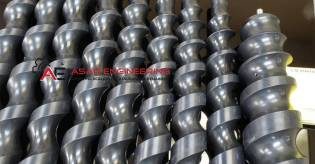
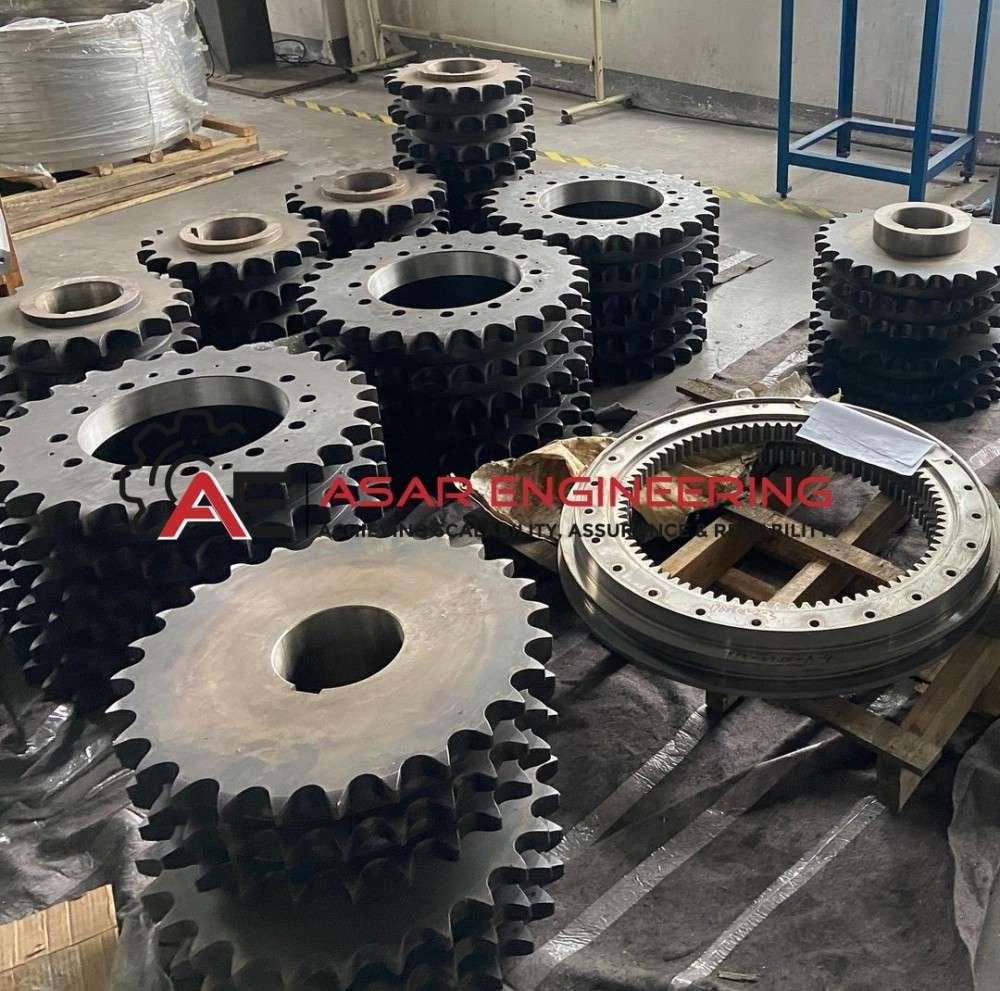
Our Twin Screw Elements and Recent Work
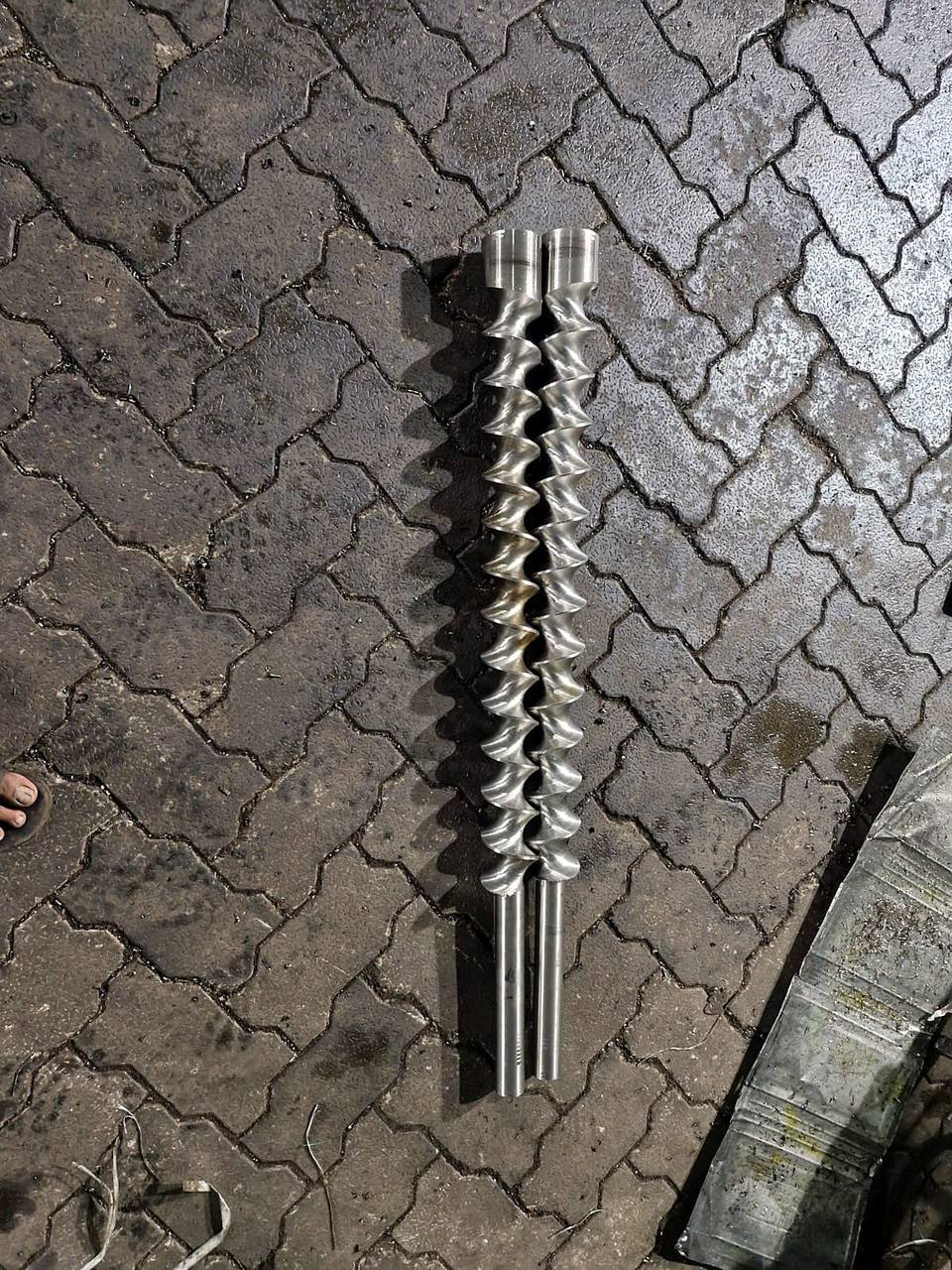
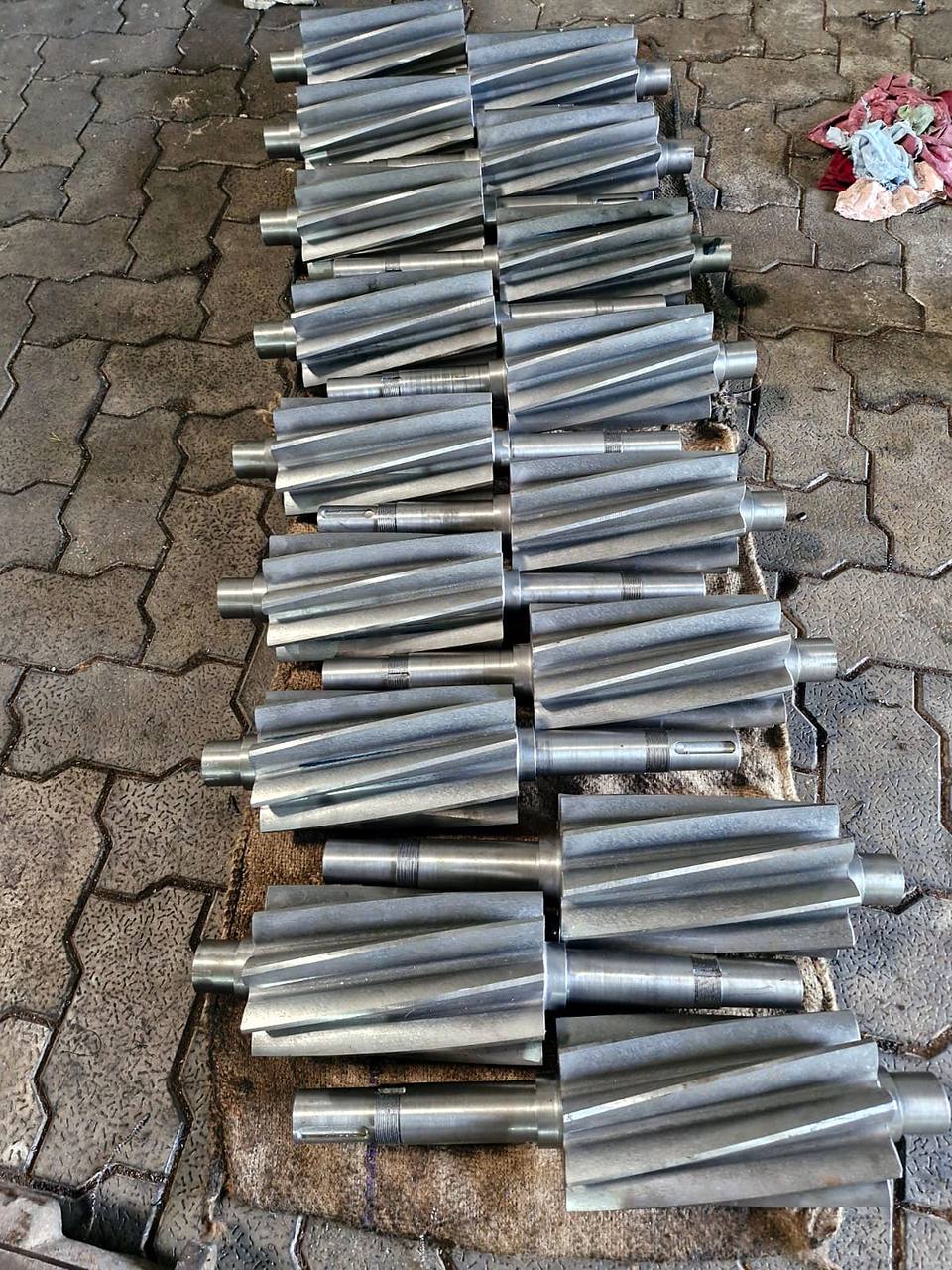
Photos of parts made and dispatched from our unit, not stock images.


Machining Videos from Our Shop Floor
Short, uncut clips of gear cutting, hobbing and machining at our unit in Gujarat.


What Our Customers Say
Reviews left on our Google Business Profile, shown word for word.
I bought a single screw extruder from asar engineering pvt.ltd. It's been a game changer for my manufacturing process. The extruder is efficient, easy to operate and built to last. Their customer is excellent and they guided me well through installation and setup. Highly recommended!
Asar Engineering supplied gearbox components for one of our industrial applications. The dimensional accuracy, finishing, and overall performance were satisfactory. We particularly appreciated their technical understanding and ability to suggest suitable solutions based on our operating requirements.
We have been sourcing industrial gearboxes from Asar Engineering Pvt. Ltd. and are satisfied with the product quality and consistency. The gearboxes are well-built, perform reliably under continuous operation, and were supplied according to our required specifications. Their team was also responsive during technical discussions and order coordination.
Twin Screw Elements FAQs
Questions buyers usually ask us before sending an enquiry for twin screw elements.
Which kneading block stagger angle should I choose for my twin screw extruder elements?
It depends on how much conveying and shear the process needs. 30 and 45 degree blocks convey forward while melting, 60 degree blocks balance conveying with dispersion of pigments and fillers, and 90 degree blocks are neutral, creating a fully filled, high-shear zone. The final choice follows your formulation, throughput and the rest of the screw profile.
What material is used for twin screw extruder elements that process glass fibre or corrosive compounds?
Glass fibre and mineral fillers wear flights and kneading discs quickly, so we choose the steel grade and hardening from the actual filler content, abrasion, corrosion and processing temperature. Options include nitriding steels, through-hardened high-vanadium tool steels, and nickel or cobalt based alloys for corrosive duty. No single material is right for every process.
What information do you need to quote twin screw elements?
Please send the element drawing or a worn sample, the screw diameter, shaft and spline details, element outside diameter and length, flight type, pitch or stagger angle, conveying direction, the material being processed and the quantity. Processing temperature and filler content help us select the material and hardness for your screw set.
Can you copy a worn twin screw element from our existing screw set?
Yes. We make replacement elements to a drawing or by copying a worn sample, matching the spline bore, outside diameter, length and flight geometry to your existing screw set. Internal spline bores are shaped in-house, and spline fit, outside diameter and length are gauge-checked before dispatch. You can replace just the worn section instead of the whole screw.
Do you supply twin screw extruder elements outside Gujarat and for export?
Yes. We deliver twin screw extruder elements to customers across India from our unit at Gandevi, Gujarat, and take export orders under our IEC registration. Quantities range from a few replacement elements for one worn section up to batch orders, all made to your drawing or sample.
How We Make Your Twin Screw Elements
- Send your requirementDrawing, sample or photos of the twin screw elements, with the quantity you need.
- Technical check and quoteWe confirm material, hardness and tolerances, then send price and delivery time.
- Manufacturing and inspectionMade at our Gandevi unit; dimensions are checked before dispatch.
- DispatchPacked for road transport across India, or for export shipment.
Companies We Supply


























Need Twin Screw Elements made to your drawing?
Send the drawing or a sample with the quantity. We supply across India and take export orders.