Carrying Idler Manufacturers in India
Carrying Idlers made to your drawing or sample at our Gujarat unit, supplied across India and exported.

Asar Engineering Pvt. Ltd. Gandevi, Gujarat
- Built to your belt width and trough angle
- Sealed bearings for dusty and wet duty
- Replacement rollers to fit existing frames
- Supplied across India and exported (IEC registered)
Troughing Idlers for the Loaded Belt
Asar Engineering is a carrying idler manufacturer in India, making carrying idler sets at its unit in Gandevi, Gujarat. A carrying idler is an idler roller assembly that supports the top, loaded run of a conveyor belt, where the belt carries the full weight of the material. It is built to give continuous support to the loaded belt and hold it in the required profile.
Carrying idlers stop the belt sagging between support points, spread the load and keep material moving smoothly. On bulk-material conveyors, troughing carrying idlers shape the flat belt into a trough, which increases carrying capacity and keeps material from spilling over the belt edges.
Depending on the conveyor design, carrying idlers can be supplied as troughing carrying idlers for bulk materials or flat carrying idlers for packaged and unit loads. Specialized configurations such as impact, transition, and self-aligning carrying idlers can also be positioned at specific points along the conveyor to address loading impact, belt shaping, and tracking requirements.
Idler sets are made to your drawing, sample or conveyor data, with bearing protection chosen for the dust, water and load at your site.
What is a Carrying Idler?
A carrying idler is a free-rotating conveyor roller assembly located below the loaded upper run of a belt conveyor. It supports the conveyor belt and the conveyed load.
The belt turns the rollers as it moves. Internal bearings let each roller shell rotate around a fixed shaft, so the belt rolls over the idler instead of sliding, which keeps friction low.
Carrying-Side Support
The primary purpose of a carrying idler is to support the loaded side of the conveyor belt. Because this side carries the transported material, carrying idlers are designed to withstand substantially greater loading conditions than idlers supporting an empty return belt.
Trough Formation
For bulk material conveyors, carrying idlers are commonly arranged in a troughing configuration. Multiple rollers are positioned at different angles to form a U- or V-shaped support profile.
The angled wing rollers deform the flat belt into a trough, creating greater cross-sectional carrying space and helping keep loose bulk material centered on the belt.
Flat Belt Support
For conveyors transporting packaged goods or individual units, flat carrying idlers can maintain the belt in a horizontal configuration. This provides a level surface suitable for boxes, crates, luggage, and manufactured components.
Continuous Load Distribution
Carrying idlers are distributed along the conveyor length to provide regular support under the loaded belt. Close spacing helps reduce excessive sagging between support points and contributes to smoother material movement.
Applications of Carrying Idler
Carrying idlers are used across conveyor systems where the upper belt run transports materials or products. The appropriate arrangement depends on the type of material, belt design, conveyor speed, loading conditions, and required belt profile.
Bulk Material Conveyors
Troughing carrying idlers are widely used for transporting bulk materials such as coal, gravel, grain, sand, and other loose materials. The trough-shaped belt provides greater carrying volume and helps reduce material spillage.
Mining Conveyors
Mining operations use carrying idlers to support heavily loaded conveyor belts transporting ores, coal, crushed rock, and other extracted materials. Robust roller assemblies are required to withstand continuous loading and abrasive operating environments.
Quarrying Systems
Quarries use belt conveyors to transport aggregates, crushed stone, gravel, and sand. Carrying idlers provide regular support along the loaded conveyor run while troughing configurations help contain loose materials.
Grain Handling
Agricultural processing and grain-handling facilities use carrying idlers for conveyor systems transporting wheat, corn, grain, fertilizers, and similar bulk products.
Power Plant Material Handling
Coal-handling conveyor systems in power plants require continuous belt support while transporting fuel material toward processing and boiler-feed areas. Carrying idlers maintain the belt profile throughout these conveyor sections.
Packaged Goods Conveyors
Flat carrying idlers are suitable for conveyors transporting boxes, crates, luggage, containers, and other unit loads where maintaining a level belt surface is important.
Cement and Construction Material Handling
Cement plants and construction-material facilities use carrying idlers in conveyors transporting aggregates, limestone, clinker, and other bulk materials.
Common Types of Carrying Idler
Carrying idlers can be classified according to their roller arrangement and their specific position or function along the loaded conveyor run.
Troughing Carrying Idlers
Trough carrying idlers are the most common arrangement for bulk-material conveyor systems. They generally consist of three rollers mounted on a rigid steel frame.
The center roller remains approximately horizontal, while the two wing rollers are positioned upward at a selected angle. Common configurations include 20°, 35°, and 45° arrangements depending on the conveyor design.
The angled rollers shape the belt into a trough that increases its material-carrying cross-section and helps prevent loose materials from falling over the sides.
Flat Carrying Idlers
Flat carrying idlers use a single horizontal roller spanning the conveyor belt width. The arrangement maintains the belt in a flat position.
This configuration is commonly used for unit-load transportation, including boxes, crates, luggage, and manufactured components that require a relatively level conveyor surface.
Impact Carrying Idlers
Impact carrying idlers are installed below loading chutes and transfer points where bulk material falls onto the conveyor belt.
These rollers incorporate thick rubber rings around the steel roller. The rings deform when struck by falling material, absorbing part of the impact energy and helping protect the conveyor belt from tearing or puncturing.
Transition Carrying Idlers
Transition carrying idlers are positioned near the beginning and end sections of the conveyor, close to the pulleys.
Their wing rollers use progressively changing angles to gradually transform the belt from a relatively flat profile into its full trough shape, or back toward a flatter profile. This gradual transition helps reduce excessive stress on the belt edges.
Self-Aligning Carrying Idlers
Self-aligning or training carrying idlers are mounted on a pivot mechanism that allows the roller assembly to respond to lateral belt movement.
When the loaded belt begins drifting away from the desired centerline, the assembly can swivel to provide a corrective steering action and help return the belt toward proper alignment.
Core Components
A carrying idler assembly contains several components designed to support the loaded belt while allowing the roller surfaces to rotate smoothly.
Center Roller
The center roller forms the central support point in a typical troughing arrangement. It carries a significant portion of the belt and material load while maintaining the central section of the trough.
Wing Rollers
The wing rollers are positioned on either side of the center roller at an upward angle. Their primary purpose is to shape the belt into the required trough profile and help retain bulk materials.
Roller Shell
The roller shell is the cylindrical outer surface that directly contacts the conveyor belt. It must provide sufficient structural strength and durability for the expected loading conditions.
Shaft
The shaft passes through the roller assembly and connects it to the supporting frame. It provides the stationary structural axis around which the roller shell rotates.
Bearings
Internal bearings allow the roller shell to rotate around the shaft with reduced resistance. Bearing performance is particularly important because carrying idlers operate under continuous load.
Seals
Carrying idlers can use multi-stage sealing arrangements to protect their internal bearings from dust, moisture, and other contaminants. Triple labyrinth sealing can be used for demanding conveyor environments where contamination protection is important.
Support Frame
The support frame holds the individual rollers in their required configuration. In a troughing arrangement, the frame establishes the position and angle of the center and wing rollers.
Rubber Impact Rings
Impact carrying idlers use resilient rubber rings around the roller shell. These rings provide a cushioning surface for material falling onto the belt at loading points.
Carrying Idler Supplier in India
As a carrying idler supplier in India, we look at the material conveyed, belt width, load, belt speed, belt profile, idler spacing and site conditions before recommending an idler set.
For bulk materials, troughing carrying idlers provide a formed carrying surface that increases the belt’s effective carrying area while containing the material to prevent spillage. Flat carrying idlers are more appropriate when the belt needs to stay horizontal to carry unit loads.
Roller diameter is another key factor. Carrying idlers typically use rollers of about 89 mm to 159 mm diameter, chosen according to belt speed, belt width and material load.
Carrying idlers are spaced closer than return idlers because the loaded belt needs continuous support. A typical spacing is about 1.0 to 1.5 m, but the actual spacing should come from the conveyor design and loading.
As a carrying idler manufacturer in India, Asar Engineering supplies troughing, flat, impact, transition and self-aligning carrying idlers, with bearing protection and sealing suited to dusty, wet or abrasive sites.
Benefits of Using Carrying Idler
Maximized Load Capacity
Troughing arrangements increase the cross-sectional area of the belt, allowing bulk material to be carried in a deeper channel while utilizing the available belt width more effectively.
Spillage Control
Angled wing rollers create a trough that helps keep loose material toward the center of the conveyor belt, reducing the possibility of material falling from the edges.
Reduced Belt Sagging
Carrying idlers provide regular support beneath the loaded belt, reducing excessive sag between adjacent support frames.
Smooth Material Transit
Close and properly selected carrying-idler spacing helps maintain a controlled belt profile and promotes smoother movement of conveyed material.
Impact Protection
Rubber-ring impact carrying idlers absorb part of the shock generated when material falls onto the conveyor at loading points, helping reduce concentrated impact on the belt.
Belt Tracking Support
Self-aligning carrying idlers help correct lateral belt movement and reduce the tendency of the loaded belt to drift away from the intended conveyor centerline.
Gradual Belt Transition
Transition carrying idlers progressively change the belt profile near the pulleys, helping reduce stress caused by an abrupt change from a flat to a fully troughed configuration.
Continuous Heavy-Load Support
Carrying idlers are specifically designed for the loaded conveyor run and can provide continuous support for demanding bulk-material transportation systems.
Reduced Material Loss
By maintaining a controlled trough profile and keeping material centered, carrying idlers can help reduce product loss and conveyor cleanup requirements.
Adaptable Conveyor Configuration
Different carrying-idler arrangements allow conveyor designers to select suitable roller geometry according to bulk material, packaged goods, loading zones, transition areas, and belt-tracking requirements.
Carrying Idler Specifications
| Specification | Typical Range / Configuration |
|---|---|
| Component Type | Loaded-Side Conveyor Idler |
| Primary Function | Support the loaded upper conveyor belt |
| Main Configurations | Troughing and Flat |
| Troughing Arrangement | Typically Three Rollers |
| Wing Roller Angles | Commonly 20°, 35°, or 45° |
| Flat Configuration | Single Horizontal Roller |
| Specialized Types | Impact, Transition, Self-Aligning |
| Typical Roller Diameter | Approximately 89–159 mm |
| Typical Idler Spacing | Approximately 1.0–1.5 m, application-dependent |
| Bearing Protection | Multi-Stage / Labyrinth Sealing |
| Heavy-Duty Sealing | Triple Labyrinth Configuration |
| Impact Protection | Rubber Rings |
| Typical Materials | Coal, Grain, Gravel, Ore, Sand, Aggregates |
| Unit-Load Applications | Boxes, Crates, Luggage, Manufactured Components |
| Operating Speed | Conveyor- and application-dependent |
| Load Capacity | Conveyor design- and idler-size-dependent |
Exact roller diameter, frame dimensions, bearing arrangement, shaft diameter, idler spacing, load capacity, and permissible conveyor speed should be selected according to the specific conveyor design and operating conditions.
Carrying Idler Exporter from India
Asar Engineering is IEC registered and takes export orders as a carrying idler exporter from India, alongside supply to customers across India.
Our carrying idler options can be chosen based on the conveying need in terms of material. The troughing arrangement can offer a troughed cross-section profile for better carrying of coal, grain, gravel, ore, and other free-flowing materials, whereas flat carrying idlers are suitable for conveying bagged and unit loads.
For an export or domestic enquiry, share the belt width, material bulk density, conveyor speed, roller diameter, idler spacing, loading conditions and site environment.
Why Choose Asar Engineering
- Made to Drawing or Sample: Shell diameter, length, shaft size and end details are made to your drawing, a sample roller or your conveyor data.
- All Carrying Arrangements: Troughing (20°, 35° or 45°), flat, impact, transition and self-aligning idler sets.
- Bearing and Seal Matched to Duty: Bearing size and sealing arrangement are selected for the belt load and the dust or water at site.
- Inspection Before Dispatch: Rollers are checked for free rotation, shell run-out and key dimensions with gauges before dispatch.
- One-Off to Batch Quantities: Replacement idlers for a running conveyor or complete sets for a new line.
- Made in Gujarat, Since 2015: Products are made at our manufacturing unit in Gandevi, Gujarat, on National Highway 48.
- Supply Across India and Export: We are GST, IEC and MSME registered, supply across India and take export orders.
- Related Drive Parts In-House: Gears and racks for conveyor drives are cut in-house, with induction hardening where required.
Related products: Conveyor Sprocket, Conveyor Screw, Industrial Gearbox, Impact Idler.
Get Carrying Idlers from Asar Engineering
Need carrying idlers for a new conveyor or replacement sets? Send us your drawing or sample, belt width, trough angle and quantity. Asar Engineering is a carrying idler manufacturer in India and supplies across India and for export.
Get an accurate quote
What to Send for Your Carrying Idler Quote
- Belt width and trough angle
- Roller diameter and length
- Shaft diameter and end type (flats or slots)
- Material conveyed and belt speed
- Quantity and the date you need the parts
Have a drawing, a sample or a worn part?
Send it with the quantity. We reply with material, hardness, price and delivery time.
Industries That Use Our Carrying Idlers
Material, hardness and fit are chosen for the duty the part will see in your plant.
-
Mining & Material Handling
Carrying Idlers for belt conveyors, crushers and bucket elevators.
-
Cement
Carrying Idlers for kiln, mill, crusher and conveyor drives.
-
Steel & Metal
Carrying Idlers for rolling mills and processing lines.
-
Sugar
Carrying Idlers for cane carriers, mill drives and bagasse conveyors.
Recent Work from Our Gandevi Unit
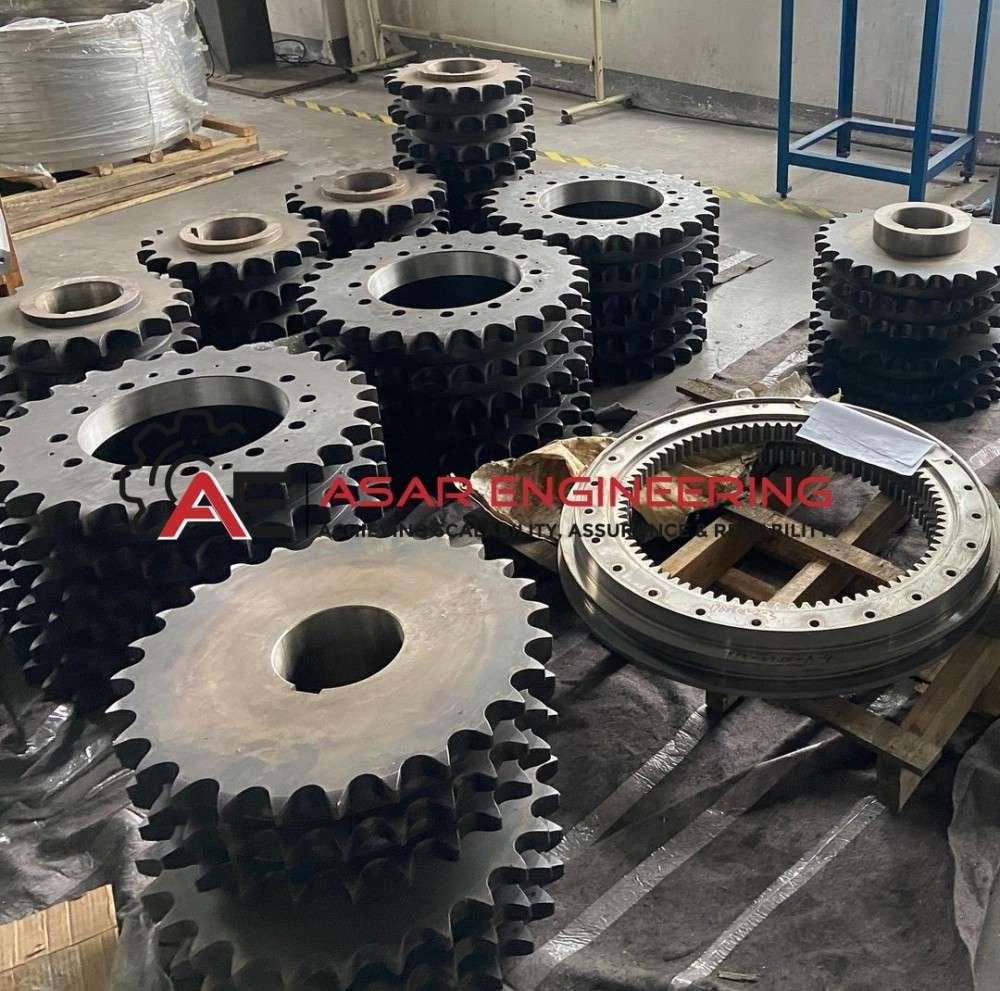
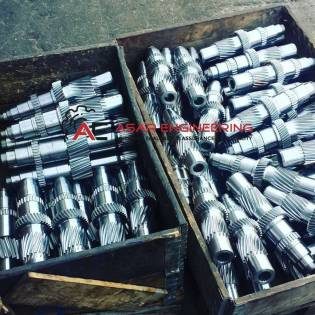
Photos of parts made and dispatched from our unit, not stock images.





Machining Videos from Our Shop Floor
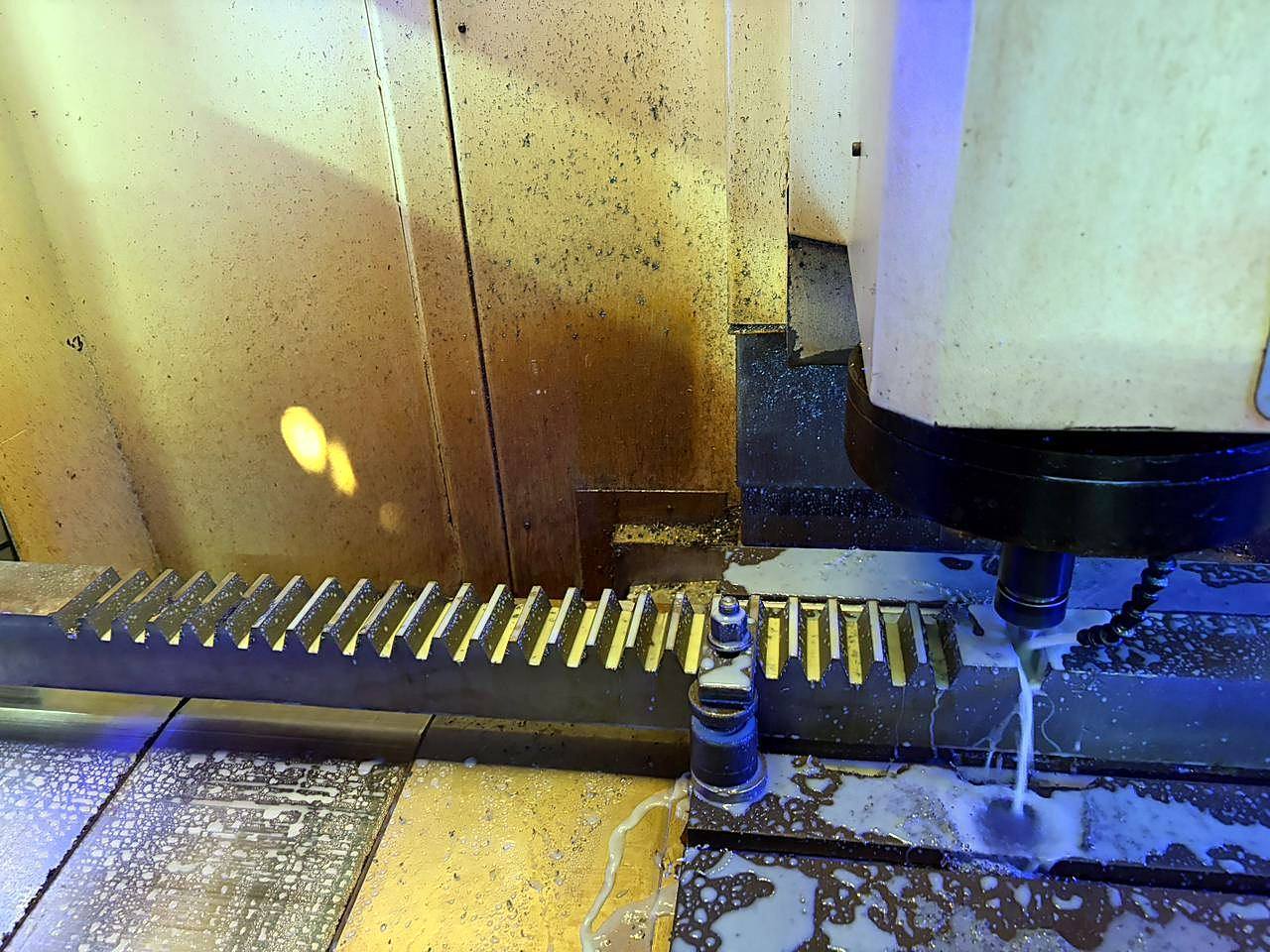
Short, uncut clips of gear cutting, hobbing and machining at our unit in Gujarat.


What Our Customers Say
Reviews left on our Google Business Profile, shown word for word.
I bought a single screw extruder from asar engineering pvt.ltd. It's been a game changer for my manufacturing process. The extruder is efficient, easy to operate and built to last. Their customer is excellent and they guided me well through installation and setup. Highly recommended!
Asar Engineering supplied gearbox components for one of our industrial applications. The dimensional accuracy, finishing, and overall performance were satisfactory. We particularly appreciated their technical understanding and ability to suggest suitable solutions based on our operating requirements.
We have been sourcing industrial gearboxes from Asar Engineering Pvt. Ltd. and are satisfied with the product quality and consistency. The gearboxes are well-built, perform reliably under continuous operation, and were supplied according to our required specifications. Their team was also responsive during technical discussions and order coordination.
Carrying Idler FAQs
Questions buyers usually ask us before sending an enquiry for carrying idler.
Should we use 20, 35 or 45 degree troughing carrying idlers?
The trough angle should come from your conveyor design. A steeper wing angle forms a deeper trough, which increases carrying cross-section and keeps loose material centred, while 20 degree sets give a shallower profile. For boxes, bags and other unit loads, flat carrying idlers keep the belt level. Share your belt width and material, and we will match the carrying idler set.
What roller diameter and spacing are normal for carrying idlers?
Carrying idlers typically use rollers of about 89 mm to 159 mm diameter, selected by belt speed, belt width and material load. On the carrying side they are typically spaced about 1.0 to 1.5 m apart, closer than return idlers, because the loaded belt needs more support. Final diameter and spacing should always be taken from your conveyor design and loading.
What details do you need to quote carrying idler sets?
Send the belt width, trough angle (20, 35 or 45 degrees, or flat), roller diameter, material conveyed and its bulk density, belt speed, idler spacing, loading conditions and site environment such as dust or water. Mention whether you also need impact, transition or self-aligning sets, and the number of carrying idler sets required. A drawing or sample frame helps.
Can you make carrying idlers to fit the existing frames on a running conveyor?
Yes. We make carrying idlers to your drawing, a sample roller or conveyor data, matching shell diameter, length, shaft size and end details so the new rollers suit your present frames. Bearing size and sealing, including triple labyrinth seals for demanding sites, are chosen for the belt load and conditions. Rollers are checked for free rotation and run-out before dispatch.
Do you supply carrying idlers in bulk and for export?
We supply carrying idlers from Gandevi, Gujarat to sites across India and take export orders under our IEC registration. Orders range from a few replacement sets for a running conveyor to complete troughing, flat, transition, impact and self-aligning sets for a new line. Asar Engineering is also GST and MSME registered, with a branch office in Mumbai.
How We Make Your Carrying Idlers
- Send your requirementDrawing, sample or photos of the carrying idler, with the quantity you need.
- Technical check and quoteWe confirm material, hardness and tolerances, then send price and delivery time.
- Manufacturing and inspectionMade at our Gandevi unit; dimensions are checked before dispatch.
- DispatchPacked for road transport across India, or for export shipment.
Companies We Supply



























Need Carrying Idlers made to your drawing?
Send the drawing or a sample with the quantity. We supply across India and take export orders.