Conveyor Sprocket Manufacturers in India
Conveyor Sprockets made to your drawing or sample at our Gujarat unit, supplied across India and exported.

Asar Engineering Pvt. Ltd. Gandevi, Gujarat
- Teeth cut to ISO / BS and ANSI chain sizes
- Teeth induction hardened on request
- Bored and keyed to your shaft size
- Supplied across India and exported (IEC registered)
Sprockets for Conveyor and Elevator Chains
Asar Engineering is a conveyor sprocket manufacturer in India, making sprockets for chain conveyors at its manufacturing unit in Gandevi, Gujarat. A conveyor sprocket is a toothed wheel that drives and guides a conveyor chain, a modular plastic belt or a steel mesh belt. Unlike sprockets in general power transmission drives, conveyor sprockets usually run at low speed on continuous conveyors, where steady linear movement, correct chain or belt engagement and load distribution matter most.
Since 2015, Asar Engineering has made power transmission and conveyor parts for material-handling equipment. Conveyor sprockets are selected by chain or belt construction, working environment, shaft arrangement and maintenance needs. The tooth profile must match the chain or belt so that shaft rotation is converted into controlled movement of the conveyor.
Conveyor sprockets are used wherever products, packages, bulk materials or other loads move continuously along a fixed path. Depending on the application, sprockets are made of carbon steel, alloy steel, stainless steel or engineering plastics such as nylon and acetal.
Asar Engineering makes steel conveyor sprockets to customer drawing or sample, with teeth cut and induction hardened in-house, for reliable conveyor operation and easy maintenance.
What is a Conveyor Sprocket?
A conveyor sprocket is a toothed or profiled wheel that drives or guides a conveyor chain, modular plastic belt or steel mesh belt. It is usually fitted at the drive (head) or return (tail) end of a conveyor, together with the conveyor shaft, bearings, chain or belt and drive unit.
As the shaft rotates, the sprocket teeth engage the chain or belt and pull it forward. This converts the rotation of the drive shaft into controlled linear movement of the conveying surface.
Sprocket design depends on the type of chain or belt. A modular plastic belt sprocket has teeth shaped to engage the moulded pockets on the underside of the belt. Roller chain conveyor sprockets have standard chain tooth forms, and steel mesh belt sprockets use narrow, pin-like teeth that fit the openings in the mesh.
Conveyor Sprocket Working Principle
A conveyor sprocket converts shaft rotation into a pulling force on the chain or belt, rather than transmitting power from one shaft to another. Sprockets are mounted on the conveyor shafts and engage the chain or belt at the drive and idler ends.
When the conveyor shaft rotates:
- The sprocket engages with the belt or chain.
- The engagement produces a controlled pulling action.
- The conveyor surface moves along its predetermined path.
- Material placed on the conveyor is transported from one location to another.
- The sprocket maintains engagement between the rotating shaft and conveying element.
Correct sprocket selection keeps the conveyor moving steadily. The sprocket must match the chain or belt so that the teeth, pockets, pins or engagement surfaces fit correctly.
Key Design Considerations
Several factors influence the selection and construction of conveyor sprockets, including:
- Conveyor belt or chain construction
- Tooth or engagement profile
- Number of teeth
- Shaft and bore arrangement
- Conveyor operating speed
- Load being transported
- Operating temperature
- Moisture and chemical exposure
- Abrasive material conditions
- Cleaning requirements
- Required maintenance accessibility
- Solid or split construction
- Material selection
- Alignment and tracking requirements
The operating environment has a major effect on sprocket selection. Heavy industrial conveyors need robust steel sprockets, while food-processing lines may use stainless steel or plastic sprockets where cleaning, corrosion resistance and non-marking operation are important.
Applications of Conveyor Sprockets
Conveyor sprockets are used wherever chain, modular-belt or wire-mesh conveyors move material continuously. Their construction is adapted to the conveyor type and operating environment.
Food Processing and Packaging
Plastic sprockets in nylon or acetal are common on modular plastic belts in food packaging and processing, where clean, quiet running and easy maintenance are important. Stainless steel sprockets are used where washdown is frequent.
Bottling and Beverage Lines
Conveyor sprockets drive the continuous conveyors that carry bottles, containers and packages. Plastic sprockets give a non-marking engagement with compatible plastic belts.
Sugar, Steel and Power Plants
Cane carriers, bagasse conveyors, coal and ash handling systems and bucket elevators use heavy steel sprockets that must withstand high chain pull, dust and continuous duty.
Engineering and Assembly Lines
Conveyors in engineering and assembly plants move components through machining and assembly areas. Conveyor sprockets keep positive engagement between the drive shaft and the conveyor chain.
Mining and Bulk Material Handling
Heavy-duty steel sprockets are used on conveyors that carry abrasive materials under high loads. Material selection and tooth hardness are key in these conditions.
Cement and Industrial Processing
Conveyors in cement and process plants face dust, abrasive particles and continuous operation. Robust, hardened steel sprockets help keep chain engagement reliable.
Scrap and Material Recovery Systems
Scrap handling equipment exposes conveyor parts to abrasive and irregular material. Carbon steel sprockets with induction-hardened teeth suit this duty.
High-Temperature Conveyor Systems
Steel mesh belts in high-temperature applications, such as baking ovens, need sprockets that withstand the heat while keeping reliable engagement with the mesh.
Deep-Freezing and Cold-Process Lines
Steel mesh conveyors in freezing lines need components that keep working at low temperatures. Sprocket material and dimensional stability should suit the application.
Common Types of Conveyor Sprockets
Conveyor sprockets are classified by the chain or belt they drive, their construction and their material.
Modular Plastic Belt Sprockets
Modular plastic belt sprockets are made for modular plastic conveyor belts. Their teeth engage the moulded pockets on the underside of the belt.
They often have square bores that fit square conveyor shafts. Except for one sprocket that is fixed to track the belt, the others can slide along the shaft to allow for thermal expansion of the belt.
Moulded plastic sprockets run quietly and do not mark plastic belts. Nylon and acetal are common materials, chosen to suit the operating environment.
Roller Chain Conveyor Sprockets
Roller chain conveyor sprockets engage conveyor chains using standard chain tooth profiles. They are made for ANSI, ISO/DIN or IS conveyor chain sizes, including heavy-duty and large-roller conveyor chains.
Conveyor chains often have a long pitch, so conveyor sprockets commonly have fewer teeth on a relatively large pitch diameter, giving slow, steady movement. Exact selection depends on the chain, conveyor speed, load and layout.
Steel Mesh Belt Sprockets
Steel mesh belt sprockets engage the openings in wire and steel mesh conveyor belts. Their teeth are narrow and pin-like so that they fit the mesh.
They are used on conveyors in high- and low-temperature service, including baking ovens and freezing lines.
Solid Conveyor Sprockets
Solid conveyor sprockets are made as a single piece. They are rigid and rugged and suit most conveyor installations.
However, replacing a solid sprocket in the middle of a shaft can mean dismantling the conveyor drive, including bearings, couplings or motor mounts.
Split Conveyor Sprockets
Split sprockets are made in two halves that are bolted together around the shaft. Their main advantage is easier maintenance.
Instead of removing the whole shaft assembly, the maintenance team fits the two halves around the shaft and bolts them together. This cuts replacement time and conveyor downtime.
Carbon Steel Conveyor Sprockets
Carbon steel sprockets suit heavy industrial duty where strength and durability are important. The teeth can be induction hardened for wear resistance.
They are used on abrasive conveyors in mining, scrap handling, cement plants and other heavy industries.
Stainless Steel Conveyor Sprockets
Stainless steel conveyor sprockets are used in wet, corrosive or acidic conditions, especially where equipment is regularly washed down.
Moulded Plastic Conveyor Sprockets
Moulded plastic sprockets are made from materials such as nylon or acetal. They run quietly, do not mark the belt and need little or no lubrication.
They suit compatible conveyors in food packaging and bottling lines.
Core Components of a Conveyor Sprocket
A conveyor sprocket assembly has several parts that work together to move the conveyor.
Teeth or Engagement Profile
The tooth or engagement profile is the interface between the sprocket and the chain or belt. Its shape must match the specific chain or belt.
Bore
The bore fits the sprocket onto the conveyor shaft. Square bores are used with some modular plastic belts, while steel chain sprockets usually have round bores with keyways.
Hub
The hub provides the central structural area around the bore and supports the connection between the sprocket and shaft.
Shaft Interface
The shaft transmits rotation from the conveyor drive to the sprocket. The bore and shaft must fit correctly for reliable operation.
Sprocket Body
The sprocket body carries the teeth and transfers torque from the shaft to the chain or belt.
Belt or Chain Engagement Surface
This is the area that directly contacts the chain rollers, belt or mesh. Its geometry depends on the conveyor type.
Split Joint
In split sprockets, the two halves have matching faces and bolt holes, so the sprocket can be fitted around a shaft without removing it.
Conveyor Sprocket Supplier in India
As a conveyor sprocket supplier in India, Asar Engineering supplies conveyor sprockets and other power transmission parts for material-handling and manufacturing plants. A conveyor sprocket is not chosen only by outside diameter or tooth count; it must match the chain or belt and the operating environment.
For modular plastic belts, the sprocket must match the belt pockets and shaft. For roller chain conveyors, the tooth profile must match the chain type. For steel mesh belts, the teeth must engage the mesh openings without damaging the belt or letting it jump off.
Material is another key factor. Carbon steel suits heavy industry, and stainless steel suits wet or acidic environments. For suitable light-duty conveyors, nylon or acetal sprockets offer quieter, non-marking running.
Asar Engineering makes sprockets to your drawing or sample and considers the following before production:
- Conveyor belt or chain type
- Drive and return arrangement
- Shaft configuration
- Operating environment
- Conveyor load
- Speed requirements
- Temperature conditions
- Corrosive exposure
- Abrasive material handling
- Maintenance accessibility
- Solid or split sprocket construction
This helps buyers get a sprocket that suits the real operating conditions of their conveyor, not just its general dimensions.
Benefits of Using Conveyor Sprockets
Correctly matched conveyor sprockets offer several practical benefits.
Positive Conveyor Engagement
The sprocket engages the chain or belt directly, giving controlled movement along the conveyor.
Continuous Material Movement
They suit continuous loops where material must move steadily through production, processing, packaging or handling areas.
Application-Specific Construction
Conveyor sprockets are made in different forms for modular plastic belts, roller chains and steel mesh belts.
Material Flexibility
Carbon steel, stainless steel and engineering plastics let the sprocket be matched to the environment and load.
Reduced Maintenance Time with Split Designs
Split sprockets fit around an existing shaft, so replacement does not need the shaft to be dismantled.
Quiet Operation with Polymer Designs
Moulded plastic sprockets run quietly and do not mark compatible plastic belts.
Suitability for Demanding Environments
Hardened steel sprockets suit abrasive, heavy-duty conveyors, and stainless steel suits wet or corrosive environments.
Support for Specialized Conveyor Systems
Different tooth profiles allow sprockets to be used on modular plastic belt, roller chain and steel mesh conveyors.
Conveyor Sprocket Specifications
| Specification | Typical Options |
|---|---|
| Product Type | Conveyor Sprocket |
| Main Function | Driving and guiding conveyor chains and belts |
| Belt Compatibility | Modular plastic belt, roller chain, steel mesh/wire belt |
| Construction | Solid or split |
| Materials | Carbon steel, alloy steel, stainless steel; nylon or acetal for plastic sprockets |
| Bore Options | Round bore with keyway; square bore for modular belt systems |
| Chain Compatibility | ANSI, ISO/DIN or IS conveyor chain sizes |
| Tooth Design | Belt- or chain-specific engagement profile |
| Application | Material handling, packaging, food processing, mining, cement, sugar, steel, power plants, oven and freezer conveyors |
| Operating Environment | Standard, wet, acidic, abrasive, high-temperature, deep-freezing environments depending on material |
| Maintenance Feature | Split construction available for accessible replacement |
| Surface Treatment | Induction hardening of teeth (steel sprockets), application-dependent |
| Design | Made to drawing or sample |
| Customization | Based on conveyor, shaft, belt, chain, and operating requirements |
Conveyor Sprocket Exporter from India
Asar Engineering is an IEC-registered conveyor sprocket exporter from India. For overseas buyers, selection covers the conveyor layout, chain or belt type, shaft arrangement, operating environment and maintenance needs.
For export orders, correct identification is especially important because every conveyor sprocket is made for a specific chain or belt. The tooth profile, bore, dimensions, material and mounting method should be confirmed, ideally with a drawing or sample, before production.
Why Choose Asar Engineering
In-House Teeth Cutting
Sprocket teeth are cut at our own manufacturing unit in Gandevi, Gujarat, so tooth form and pitch are controlled in-house.
Made to Drawing or Sample
Conveyor sprockets are made to your drawing, sample or chain specification, including solid and split designs.
In-House Induction Hardening
Steel sprocket teeth can be induction hardened in-house for longer life on abrasive conveyors.
Material and Hardness Matched to the Application
Carbon steel, alloy steel or stainless steel is chosen, and tooth hardness set, to suit the load and environment.
Inspection Before Dispatch
Key dimensions such as bore, keyway and tooth form are checked with gauges before dispatch.
One-Off to Batch Quantities
From a single replacement sprocket to batch orders for new conveyors.
Supply Across India and Export
Asar Engineering supplies customers across India and takes export orders (IEC registered).
Related products: Chain Coupling, Simplex Sprocket, Duplex Sprocket.
Get a Quote for Conveyor Sprockets
Looking for a conveyor sprocket manufacturer in India? Send your drawing or sample, chain size, bore details and required quantity to Asar Engineering. We make conveyor sprockets in Gujarat, supply across India and take export orders.
Get an accurate quote
What to Send for Your Conveyor Sprocket Quote
- Chain number or pitch (ISO / ANSI)
- Number of teeth and strands (simplex, duplex, triplex)
- Bore, keyway and hub details
- Material and tooth hardening required
- Quantity and the date you need the parts
Have a drawing, a sample or a worn part?
Send it with the quantity. We reply with material, hardness, price and delivery time.
Industries That Use Our Conveyor Sprockets
Material, hardness and fit are chosen for the duty the part will see in your plant.
-
Sugar
Conveyor Sprockets for cane carriers, mill drives and bagasse conveyors.
-
Cement
Conveyor Sprockets for kiln, mill, crusher and conveyor drives.
-
Mining & Material Handling
Conveyor Sprockets for belt conveyors, crushers and bucket elevators.
-
Food Processing
Conveyor Sprockets for processing, conveying and packing lines.
-
Steel & Metal
Conveyor Sprockets for rolling mills and processing lines.
-
Machine Builders (OEM)
Conveyor Sprockets for new machines, made to your drawing.
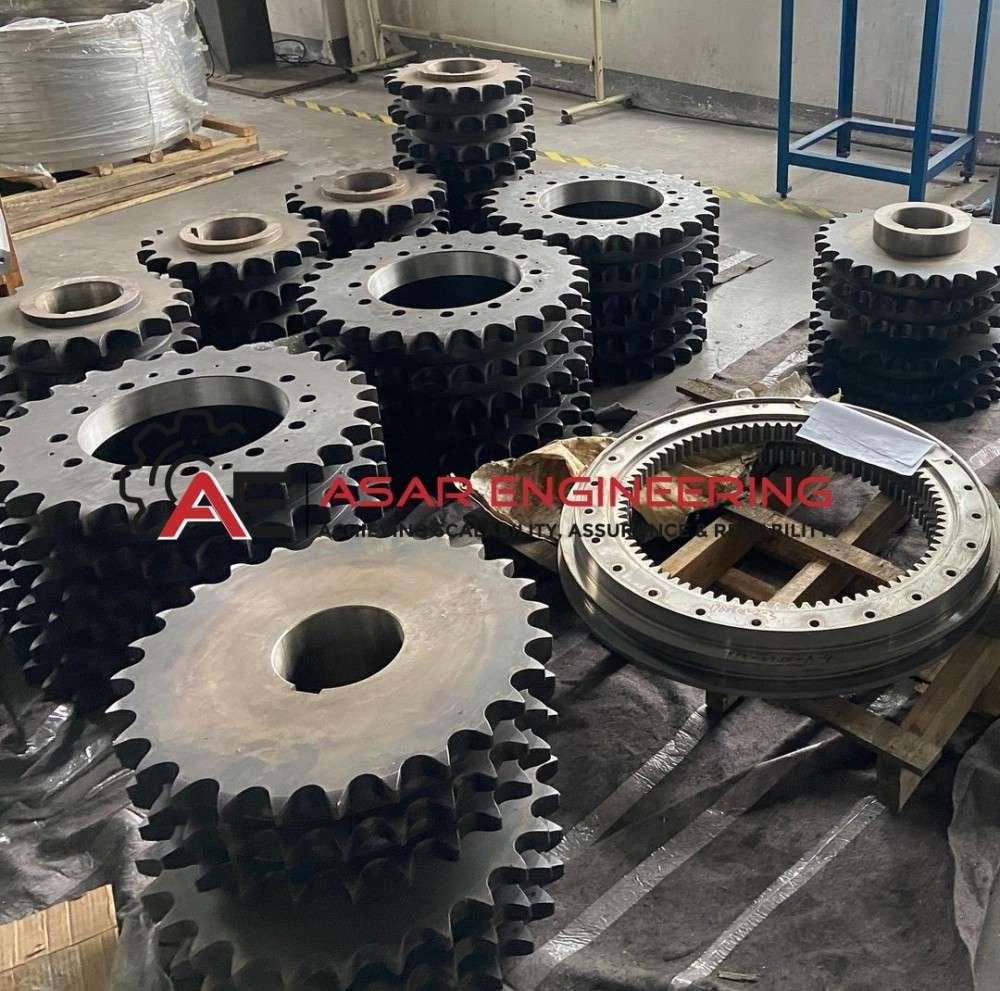
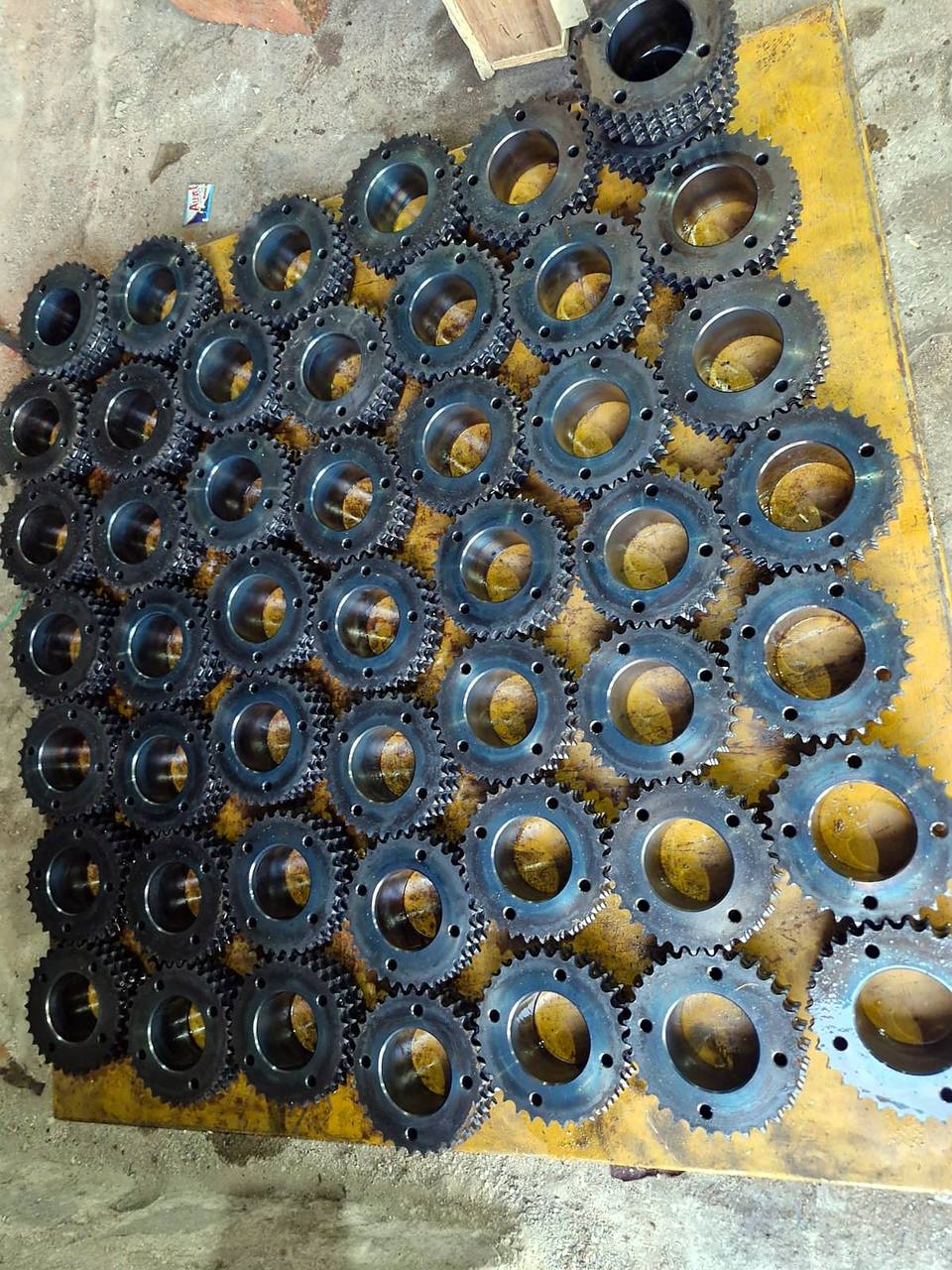
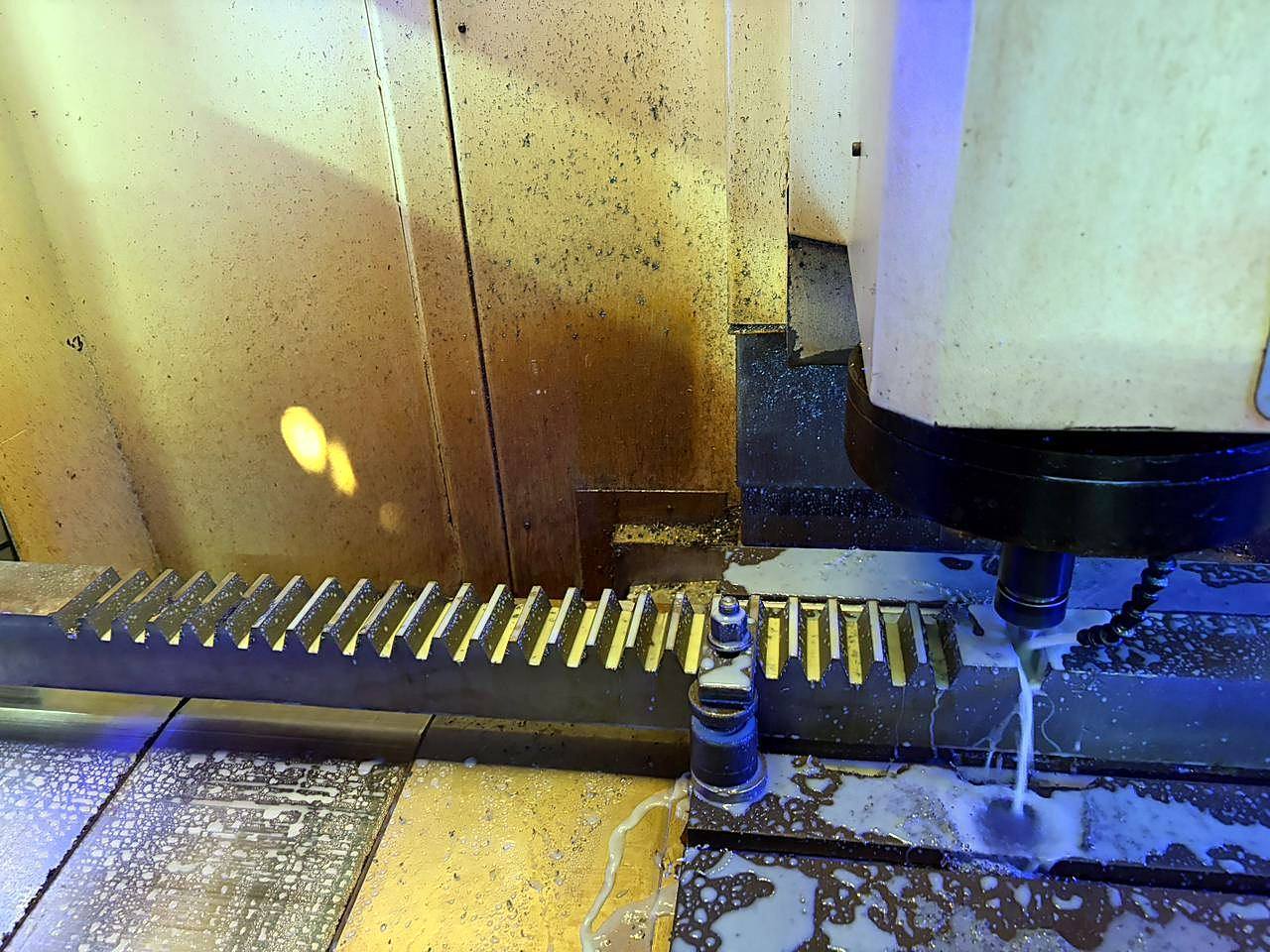
Our Conveyor Sprockets and Recent Work
Photos of parts made and dispatched from our unit, not stock images.




Machining Videos from Our Shop Floor
Short, uncut clips of gear cutting, hobbing and machining at our unit in Gujarat.


What Our Customers Say
Reviews left on our Google Business Profile, shown word for word.
I bought a single screw extruder from asar engineering pvt.ltd. It's been a game changer for my manufacturing process. The extruder is efficient, easy to operate and built to last. Their customer is excellent and they guided me well through installation and setup. Highly recommended!
Asar Engineering supplied gearbox components for one of our industrial applications. The dimensional accuracy, finishing, and overall performance were satisfactory. We particularly appreciated their technical understanding and ability to suggest suitable solutions based on our operating requirements.
We have been sourcing industrial gearboxes from Asar Engineering Pvt. Ltd. and are satisfied with the product quality and consistency. The gearboxes are well-built, perform reliably under continuous operation, and were supplied according to our required specifications. Their team was also responsive during technical discussions and order coordination.
Conveyor Sprocket FAQs
Questions buyers usually ask us before sending an enquiry for conveyor sprocket.
Which conveyor sprocket suits my conveyor - chain, modular belt or mesh belt type?
The conveyor sprocket follows the conveying element. Roller or long-pitch conveyor chain needs a chain tooth form to ANSI, ISO/DIN or IS sizes, modular plastic belts need teeth that fit the belt pockets, and steel mesh belts need narrow pin-like teeth. Split sprockets suit mid-shaft positions where removing the shaft is difficult. We make steel sprockets to drawing or sample.
How do you make conveyor sprockets last longer on abrasive material?
For cement, coal, ash, scrap and mining conveyors we use carbon or alloy steel and induction harden the teeth in-house, so the conveyor sprocket teeth resist abrasion while the core stays tough. Chain wear and misalignment also accelerate tooth wear, so a stretched chain should be changed with the sprockets. For wet or acidic duty, stainless steel is the better choice.
What should I send to get conveyor sprockets quoted?
Send the chain type and pitch, or chain make and number, the number of teeth, bore size and keyway, hub width, material, whether teeth should be hardened, solid or split construction, and quantity. A drawing or old conveyor sprocket is the surest reference. Also mention the material conveyed and the plant, such as sugar cane carrier, bucket elevator or ash handling.
Can you make split conveyor sprockets to replace solid ones without removing the shaft?
Yes. We can make a split conveyor sprocket in two halves with matching faces and bolt holes, so it is clamped around the existing shaft without dismantling bearings, couplings or the drive. We work from your drawing or the old solid sprocket, matching the chain, tooth count and bore, which reduces downtime at the next replacement.
Can you supply conveyor sprockets for a new conveyor project as well as spares?
Yes. We supply conveyor sprockets from a single breakdown spare up to batch orders for new conveyors, made at Gandevi, Gujarat and sent across India. We are IEC registered for export; for overseas orders the chain or belt, tooth profile, bore and material should be confirmed with a drawing or sample before production. Bore, keyway and tooth form are gauge-checked before dispatch.
How We Make Your Conveyor Sprockets
- Send your requirementDrawing, sample or photos of the conveyor sprocket, with the quantity you need.
- Technical check and quoteWe confirm material, hardness and tolerances, then send price and delivery time.
- Manufacturing and inspectionMade at our Gandevi unit; dimensions are checked before dispatch.
- DispatchPacked for road transport across India, or for export shipment.
Companies We Supply























Need Conveyor Sprockets made to your drawing?
Send the drawing or a sample with the quantity. We supply across India and take export orders.