Spacer Coupling Manufacturers in India
Spacer Couplings made to your drawing or sample at our Gujarat unit, supplied across India and exported.

Asar Engineering Pvt. Ltd. Gandevi, Gujarat
- Hubs bored and keyed to your shaft sizes
- Gear coupling teeth cut in-house
- Replacement to your existing coupling size
- Supplied across India and exported (IEC registered)
Spacer Couplings for Easy Pump Maintenance
A spacer coupling is a shaft coupling with a removable intermediate spacer (a tube or sleeve) between two hubs. It connects two rotating shafts while keeping a defined Distance Between Shaft Ends (DBSE) and leaving working space around the coupled equipment.
Unlike a close-coupled arrangement, a spacer coupling leaves a gap between the driving and driven machines. This is valuable on pumps and other rotating equipment where mechanical seals, bearings, impellers or cartridges need regular inspection or replacement.
The removable spacer is the main maintenance advantage. Once it is unbolted and taken out, technicians can reach the shaft ends and internal parts without moving the motor or the driven machine off its foundation.
Asar Engineering is a spacer coupling manufacturer in India, making spacer couplings, hubs and spacers to the customer's drawing or sample at its manufacturing unit in Gandevi, Gujarat. The configuration is chosen according to the shaft arrangement, required DBSE, torque, speed, misalignment, equipment type and maintenance needs.
The spacer concept can be combined with different flexible coupling types, including disc, jaw and gear couplings. This lets it be used on everything from general industrial drives to process and fluid-handling equipment.
What is a Spacer Coupling?
A spacer coupling is a flexible shaft coupling with a removable spacer between the two coupling hubs. The spacer keeps enough distance between the shaft ends for maintenance and servicing.
One hub is fixed to the driving shaft and the other to the driven shaft. A flexible element at each end connects the hub to the spacer. In operation, torque flows from the driving shaft through the first hub and flexible element, along the spacer, through the second flexible element and hub, into the driven shaft.
It is not just a plain extension tube. Its length and construction are designed around the required DBSE, machine dimensions, maintenance clearance, shaft sizes and coupling type.
Drop-Out Spacer Design
The key feature of most spacer couplings is the drop-out design.
In a close-coupled pump and motor set, the two shafts sit very close together. Servicing a mechanical seal, bearing cartridge or impeller can then mean major dismantling or moving the motor.
A spacer coupling provides an intermediate section that can be removed from between the hubs.
The general maintenance sequence is:
- The intermediate spacer is disconnected from the coupling hubs.
- The spacer section is removed or moved out of the shaft line.
- A larger working gap becomes available between the two shaft ends.
- Technicians can access or remove internal pump and rotating-equipment components through the available clearance.
- After maintenance, the spacer is returned and secured between the coupling hubs.
This makes maintenance much simpler, because the heavy driving and driven machines can usually stay on their foundations, depending on the equipment and coupling arrangement.
Distance Between Shaft Ends
Distance Between Shaft Ends (DBSE) is an important dimensional consideration when selecting a spacer coupling.
The DBSE determines the required spacer length and the physical clearance available between the two connected machines. A correct DBSE allows the coupling to bridge the shaft gap while maintaining the required maintenance space.
When replacing an existing coupling, technicians should verify the shaft-end distance, shaft diameters, hub dimensions, coupling configuration, spacer length, and available installation clearance before selecting a replacement.
Spacer Coupling and Alignment
Spacer couplings also help where alignment changes because of thermal expansion, foundation movement or operating loads.
The spacer separates the two flexible joints. A parallel offset between the shafts is taken up as a small angle at each joint, so a longer spacer can accept more offset for the same angle at each flexible element.
This arrangement can help accommodate defined levels of angular and parallel misalignment while reducing unwanted forces on connected shafts and bearings.
However, a spacer does not remove the need for proper alignment. The coupling must still be installed and aligned within its permissible limits.
Applications of Spacer Coupling
Spacer couplings are used where both the shaft connection and maintenance access matter. They are particularly useful on pumps and other machines whose internal parts must be removed without disturbing the driver.
Industrial Pumps
Spacer couplings are standard on many pump and motor sets. The removable spacer gives enough clearance to service mechanical seals, bearings and impellers.
Process Pumps
Chemical, water treatment, petrochemical and general process plants need pumps that can be serviced without moving the motor. A spacer coupling gives the required access around the pump shaft.
Compressors
Industrial compressors can use spacer-type coupling arrangements to transmit power between the driver and compressor while maintaining a defined distance between the shafts.
Cooling Fans and Blowers
Large cooling fans, ventilation systems, and industrial blowers can use flexible spacer couplings where shaft separation and vibration control are required.
High-Speed Process Equipment
In refineries and petrochemical plants, high-speed compressors and pumps typically use spacer disc couplings, where torsional stiffness, alignment and maintenance access are all important.
Cement and Process Mills
Heavy industrial machinery such as process mills, mixers, and material-handling equipment may use spacer coupling arrangements to transmit torque while accommodating installation and maintenance requirements.
Conveyors
Industrial conveyor drive systems can incorporate spacer coupling configurations where the drive arrangement requires additional shaft separation or simplified access to connected machinery.
Industrial Fluid Systems
Pump, compressor, fan, and other fluid-handling systems can benefit from the additional service clearance provided by spacer-type shaft couplings.
Common Types of Spacer Coupling
Spacer couplings are available in different designs depending on the underlying flexible coupling technology, operating conditions, and torque requirements.
Spacer Disc Coupling
A spacer disc coupling uses flexible metallic disc packs connected between the hubs and a central spacer. The thin metallic discs flex to accommodate defined shaft misalignment while transmitting torque through the coupling assembly.
Disc-type spacer couplings suit applications that need torsional stiffness, zero backlash and no lubrication.
In demanding applications, additional guard or retention arrangements may be incorporated to help control the spacer assembly if a flexible element fails.
Spacer disc couplings are common on high-speed rotating equipment where accurate torque transmission is needed.
Spacer Jaw Coupling
A spacer jaw coupling combines the familiar elastomeric jaw coupling principle with an intermediate spacer section.
Metallic hubs connect to a flexible elastomer element, often called a spider, while the spacer arrangement provides additional shaft separation and maintenance clearance.
The elastomer provides vibration damping and flexibility between the connected shafts. Depending on the specific design, the coupling can provide a resilient connection for pumps, motors, conveyors, and other general industrial equipment.
Spacer Gear Coupling
A spacer gear coupling has toothed hubs that mesh with internally toothed sleeves at each end of the spacer. The gear teeth carry high torque while allowing angular and parallel misalignment within the design limits.
The spacer section provides the additional shaft distance required for equipment accessibility.
This configuration suits heavy-duty drives where high torque in a compact size and robust construction are important. Like any gear coupling, it needs lubrication.
Flanged Spacer Coupling
A flanged spacer arrangement uses bolted flange connections between the coupling hubs and central spacer. This construction can provide a mechanically secure connection while allowing the spacer section to be removed when servicing the equipment.
Removable Spacer Coupling
A removable spacer design allows quick separation of the intermediate section. Depending on the configuration, the spacer is removed radially (drop-out) or after an axial slide, leaving an open working space between the shafts.
Core Components of a Spacer Coupling
A spacer coupling contains several components that work together to transmit torque while maintaining the required shaft separation.
Shaft Hubs
The hubs are mounted onto the driving and driven shafts. They form the primary connection between the machine shafts and the flexible coupling assembly.
Intermediate Spacer
The spacer is the defining component of the coupling. It is generally a cylindrical or tubular section that bridges the distance between the two hubs.
Its length is selected according to DBSE and the required maintenance clearance.
Flexible Elements
Depending on the coupling design, flexible elements may include metallic disc packs, elastomeric spiders, or gear-tooth arrangements.
These elements provide the required flexibility and allow the coupling to accommodate defined levels of shaft misalignment.
Disc Packs
In spacer disc couplings, thin metallic discs provide the flexible connection between the hubs and spacer. The discs flex under angular and parallel displacement while transmitting torque.
Elastomer Spider
In spacer jaw couplings, the elastomer spider sits between the metallic jaws and absorbs vibration and shock loads while allowing controlled shaft movement.
Gear Teeth
Spacer gear couplings use external and internal gear teeth to transmit torque between the hubs and spacer assembly. The tooth geometry permits controlled movement between the connected components.
Bolts and Fasteners
Bolted connections secure the spacer, flexible elements, and coupling components together. Correct tightening is important for maintaining the mechanical integrity of the coupling during operation.
Coupling Guard
A suitable guard protects personnel from rotating components and can provide additional containment around the coupling assembly. Guarding requirements should be determined according to the equipment installation and applicable safety requirements.
Spacer Coupling Supplier in India
When you choose a spacer coupling supplier in India, share the full drive details, not just the shaft diameters. Torque, speed, DBSE, shaft dimensions, misalignment, environment and maintenance requirements all affect the selection.
Asar Engineering supplies spacer couplings for pumps, compressors, fans, conveyors and process machinery. Hubs, spacers and flanges are machined to the customer's drawing or sample, and gear-type spacer couplings have their teeth cut in-house.
For a replacement, check the existing coupling carefully. Key information includes:
- Shaft diameter
- Shaft-end distance
- Required spacer length
- Hub dimensions
- Bore and keyway arrangement
- Coupling type
- Operating speed
- Transmitted torque
- Misalignment requirements
- Machine foundation arrangement
- Available maintenance clearance
For new installations, the coupling should be selected according to the driver and driven-machine characteristics rather than only the nominal shaft diameter.
Share these details with Asar Engineering, along with a drawing or sample, so the spacer coupling can be matched to your equipment.
Benefits of Using a Spacer Coupling
Simplified Equipment Maintenance
The removable spacer creates a larger working gap between the connected machines, allowing technicians to access internal components without necessarily moving the motor or driven machine.
Drop-Out Maintenance Design
The spacer can be removed from the shaft line to create maintenance clearance. This is particularly useful for pump seal and bearing servicing.
Reduced Equipment Disturbance
Because the driver and driven equipment can remain mounted on their foundations during many maintenance operations, unnecessary dismantling can be reduced.
Alignment Preservation
Avoiding unnecessary movement of the connected machines can help reduce the need for repeated alignment procedures after routine servicing.
Increased Shaft Separation
The spacer allows two coupling hubs to remain separated by a defined distance, making it useful for equipment arrangements requiring additional clearance.
Misalignment Compensation
Depending on the flexible coupling design, spacer couplings can accommodate specified angular and parallel shaft misalignment.
Vibration and Shock Control
Elastomeric and other flexible coupling configurations can reduce the transmission of vibration and absorb certain shock loads between the connected machines.
Flexible Design Options
Spacer couplings are available in disc, jaw, gear, and other configurations, allowing the coupling technology to be matched to the application.
Spacer Coupling Specifications
| Parameter | Typical Specification |
|---|---|
| Coupling Type | Flexible spacer shaft coupling |
| Primary Construction | Two hubs with removable intermediate spacer |
| Main Purpose | Shaft connection and maintenance accessibility |
| Shaft Arrangement | Separated shaft ends |
| Key Dimension | Distance Between Shaft Ends (DBSE) |
| Spacer Construction | Cylindrical or tubular intermediate section |
| Flexible Technologies | Disc, jaw, gear, and related configurations |
| Disc Material | Thin metal disc packs, commonly stainless steel |
| General Hub Materials | Carbon steel, alloy steel, stainless steel or other application-specific materials |
| Elastomeric Version | Rubber/elastomer spider with metallic hubs |
| Gear Version | Crowned external hub teeth meshing with internal sleeve teeth; lubrication required |
| Maintenance | Removable/drop-out spacer for equipment access |
| Misalignment | Angular and parallel compensation according to coupling design |
| Torque Capacity | Application and coupling-size dependent |
| Speed Capacity | Application and coupling-design dependent |
| Typical Equipment | Pumps, compressors, fans, conveyors, mixers, process machinery |
| Selection Factors | Torque, speed, DBSE, shaft diameter, misalignment, environment, and maintenance clearance |
Actual torque rating, maximum speed, allowable misalignment, spacer length, bore sizes and materials must be confirmed for the selected coupling design and size.
Spacer Coupling Exporter from India
Spacer couplings are often part of a complete rotating-equipment package, so correct identification of the shaft arrangement and maintenance requirements is essential, whether the order is domestic or for export.
Asar Engineering is IEC registered and takes export orders as a spacer coupling exporter from India, in addition to supplying customers across the country. Couplings are made around the operating conditions of the connected equipment.
For export orders, coupling dimensions, spacer length, hub arrangement, bore details, flexible-element specification and installation information should be fixed before manufacturing, so that the coupling matches the machine at site.
Why Choose Asar Engineering
Asar Engineering has been making gears and power-transmission parts at Gandevi, Gujarat since 2015. For spacer couplings, this is what you get:
- Made to Drawing or Sample: Hubs, spacers and flanges are made to your drawing or copied from your existing coupling, with the spacer length set to your DBSE.
- In-House Teeth Cutting: For gear-type spacer couplings, hub teeth are hobbed and sleeve internal teeth are shaped in-house.
- Induction Hardening In-House: Gear coupling teeth can be induction hardened for better wear life.
- Material and Hardness Matched to the Application: Material and hardness are chosen according to torque, speed and operating environment.
- Inspection Before Dispatch: Bores, keyways, spacer length and flange fits are checked with gauges before dispatch.
- One-Off to Batch Quantities: From a single replacement spacer or hub to batch orders.
- Supply Across India and Export: Delivery to customers across India; export orders handled under our IEC registration.
This product is part of our industrial coupling range, made at our unit in Gujarat and supplied across India.
Related products: HRC Coupling, Industrial Gearbox.
Get Spacer Couplings from Asar Engineering
Send us your spacer coupling drawing or a sample, with shaft sizes, DBSE, motor power, speed and quantity required. As a spacer coupling manufacturer in India, Asar Engineering supplies across India and takes export orders.
Get an accurate quote
What to Send for Your Spacer Coupling Quote
- Coupling type and size, or the old coupling as a sample
- Motor power (kW) and speed (rpm)
- Both shaft diameters with keyway details
- Distance between shaft ends (DBSE) for spacer types
- Quantity and the date you need the parts
Have a drawing, a sample or a worn part?
Send it with the quantity. We reply with material, hardness, price and delivery time.
Industries That Use Our Spacer Couplings
Material, hardness and fit are chosen for the duty the part will see in your plant.
-
Cement
Spacer Couplings for kiln, mill, crusher and conveyor drives.
-
Steel & Metal
Spacer Couplings for rolling mills and processing lines.
-
Chemical & Process
Spacer Couplings for pumps, mixers and agitators.
-
Sugar
Spacer Couplings for cane carriers, mill drives and bagasse conveyors.
-
Mining & Material Handling
Spacer Couplings for belt conveyors, crushers and bucket elevators.
-
Machine Builders (OEM)
Spacer Couplings for new machines, made to your drawing.
Recent Work from Our Gandevi Unit
Photos of parts made and dispatched from our unit, not stock images.
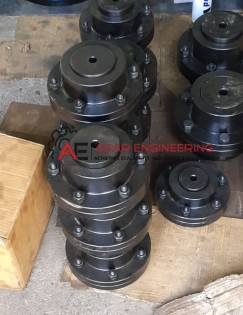

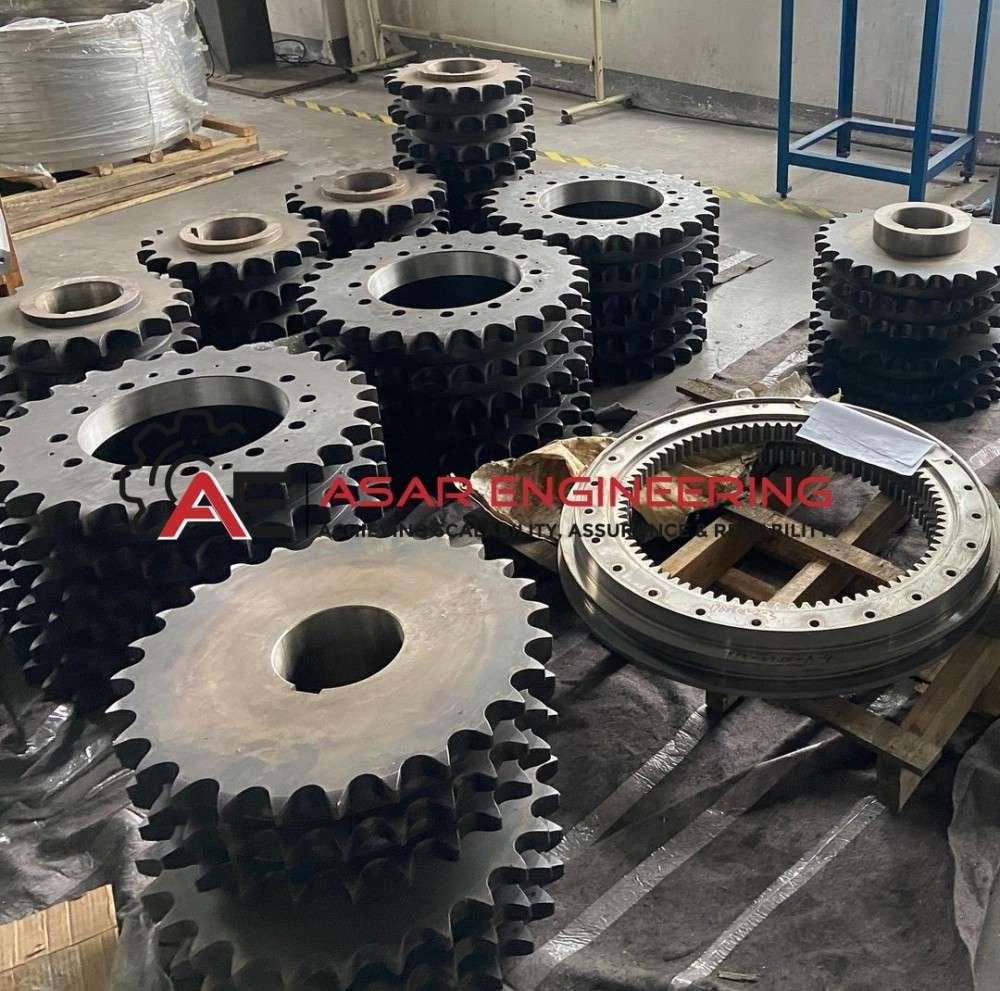


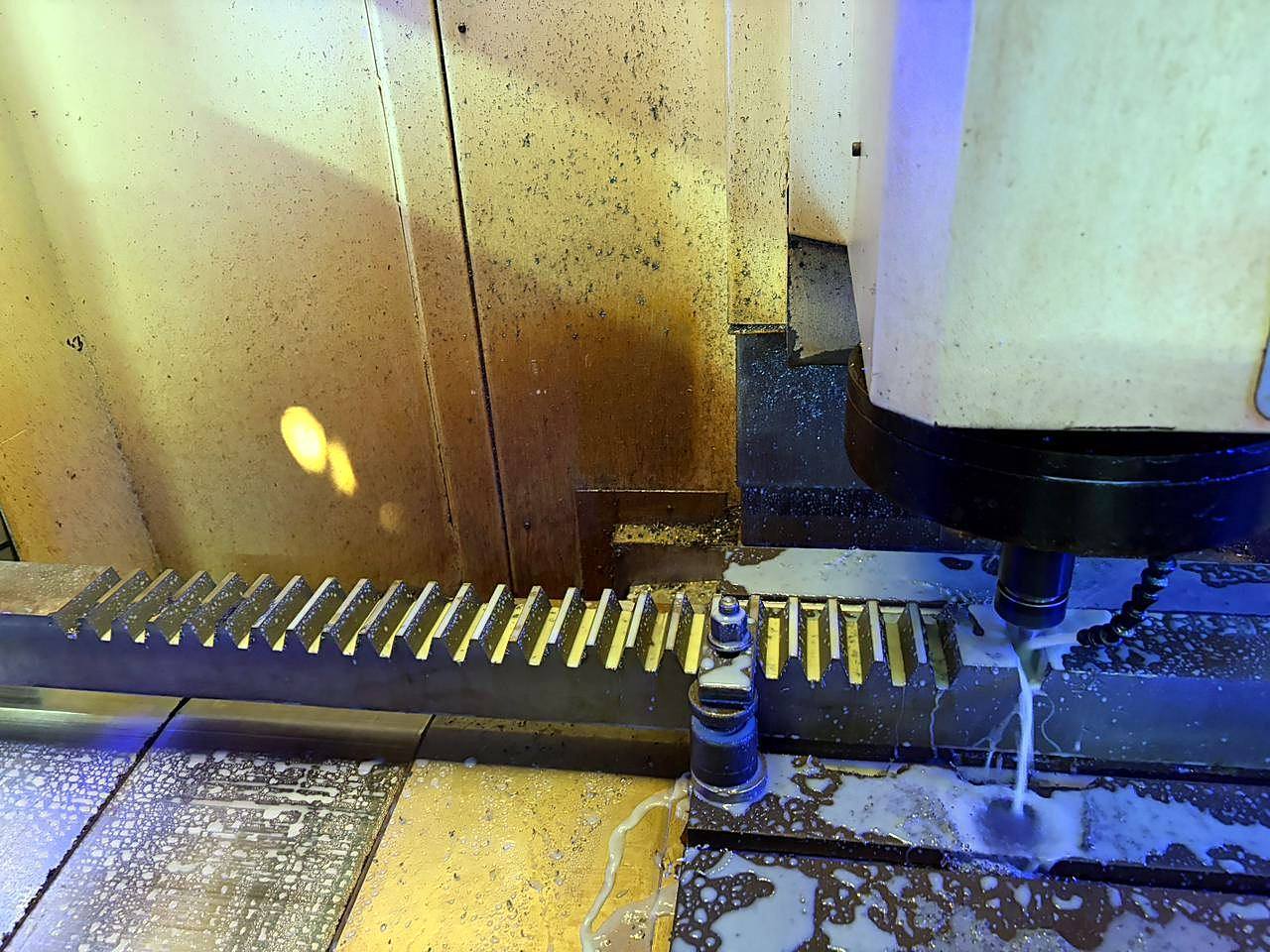


Machining Videos from Our Shop Floor
Short, uncut clips of gear cutting, hobbing and machining at our unit in Gujarat.


What Our Customers Say
Reviews left on our Google Business Profile, shown word for word.
I bought a single screw extruder from asar engineering pvt.ltd. It's been a game changer for my manufacturing process. The extruder is efficient, easy to operate and built to last. Their customer is excellent and they guided me well through installation and setup. Highly recommended!
Asar Engineering supplied gearbox components for one of our industrial applications. The dimensional accuracy, finishing, and overall performance were satisfactory. We particularly appreciated their technical understanding and ability to suggest suitable solutions based on our operating requirements.
We have been sourcing industrial gearboxes from Asar Engineering Pvt. Ltd. and are satisfied with the product quality and consistency. The gearboxes are well-built, perform reliably under continuous operation, and were supplied according to our required specifications. Their team was also responsive during technical discussions and order coordination.
Spacer Coupling FAQs
Questions buyers usually ask us before sending an enquiry for spacer coupling.
Which flexible element should I use in a spacer coupling: disc, jaw or gear?
Spacer disc couplings suit high-speed pumps and compressors that need torsional stiffness, zero backlash and no lubrication. Spacer jaw couplings use an elastomer spider for vibration damping on general pumps, motors and conveyors. Spacer gear couplings suit heavy-duty, high-torque drives but need lubrication. The choice depends on torque, speed, misalignment and environment.
How does spacer length affect misalignment in a spacer coupling?
With a flexible element at each end, parallel offset between the shafts becomes a small angle at each element. The longer the spacer, the more offset it can take for that same angle. Correct installation alignment is still needed; the spacer only helps with movement caused by heat, foundation settling and operating loads, within the coupling's limits.
What measurements do I need to send for a spacer coupling quote?
Send both shaft diameters, bore and keyway details, the Distance Between Shaft Ends (DBSE), hub dimensions, coupling type, motor power, speed and quantity, with a drawing or sample if available. For pump sets, tell us the clearance needed to remove the seal or bearing cartridge, so the spacer length can be set correctly.
Can you copy an existing spacer coupling or make a spacer to a new DBSE?
Yes. We make hubs, spacers and flanges to your drawing or by copying your existing spacer coupling, with the spacer length set to your DBSE. For gear-type versions, hub teeth are hobbed and sleeve teeth shaped in-house and can be induction hardened. Bores, keyways, spacer length and flange fits are gauge-checked before dispatch.
Do you supply single spacer coupling parts and take export orders?
Yes. We supply anything from one replacement spacer or hub to batch quantities, delivered across India from Gandevi, Gujarat. Export orders are handled under our IEC registration; for these we fix the spacer length, hub arrangement, bore details and flexible-element specification before manufacture so the spacer coupling matches the machine at site.
How We Make Your Spacer Couplings
- Send your requirementDrawing, sample or photos of the spacer coupling, with the quantity you need.
- Technical check and quoteWe confirm material, hardness and tolerances, then send price and delivery time.
- Manufacturing and inspectionMade at our Gandevi unit; dimensions are checked before dispatch.
- DispatchPacked for road transport across India, or for export shipment.
Companies We Supply




























Need Spacer Couplings made to your drawing?
Send the drawing or a sample with the quantity. We supply across India and take export orders.