Mechanical Seal Manufacturers in India
Mechanical seals for rotating shafts in pumps, mixers and agitators, selected to suit your shaft size, fluid and operating conditions.

Asar Engineering Pvt. Ltd. Gandevi, Gujarat
- Selected to your shaft size and fluid
- Single and double seal arrangements
- Replacement for existing pumps and mixers
- Supplied across India and exported (IEC registered)
Mechanical Seals for Pumps, Mixers and Agitators
Asar Engineering is a mechanical seal manufacturer in India, supplying seals from its unit at Gandevi, Gujarat. A mechanical seal contains the fluid inside pumps, mixers and agitators where a rotating shaft passes through a stationary housing. Its job is to stop process fluid escaping along the shaft while the equipment runs.
Unlike traditional compression packing, which relies on material compressed around the shaft and can require regular adjustment, mechanical seals create a controlled sealing interface between two highly finished faces. This design can significantly reduce fluid leakage, product loss, and emissions around rotating equipment.
We supply mechanical seals for industrial fluid-handling equipment. The seal type, face materials and elastomers are chosen to suit the pressure, speed, temperature and fluid of each application.
These seals are used in centrifugal pumps, chemical and process equipment, pharmaceutical reactors, mixers, agitators, wastewater pumps and other rotating equipment in chemical, sugar, paper, power and food-processing plants.
What is a Mechanical Seal?
A mechanical seal is a sealing device used to prevent fluid leakage from a rotating machine part. Typically made up of two finely machined faces, the mechanical seal creates a mating surface, which prevents the escape of the fluid or gas being processed.
One face is stationary and the other rotates with the shaft. Springs or a bellows, together with the pressure of the sealed fluid, hold the faces together. Leakage is kept very small, usually no more than a trace of vapour, when the machine starts, runs and stops.
Both faces are lapped to a very high flatness, typically measured in helium light bands. In operation, a thin fluid film forms between them. It lubricates the faces and keeps leakage across them to a minimum.
Rotating Face
The rotating face, also called the primary ring in many designs, is secured to the shaft or rotating assembly and turns at the operating speed of the equipment.
Its surface works directly against the stationary mating face to create the primary dynamic sealing interface.
Stationary Face
The stationary or mating ring remains fixed within the pump gland, seal chamber, or equipment housing. Its highly finished surface runs against the rotating face.
The compatibility between the rotating and stationary face materials is an important factor in seal performance.
Springs or Bellows
Springs, a bellows or another loading mechanism provide the closing force that keeps the primary faces together. In service, the pressure of the sealed fluid adds to this force; the seal's balance ratio decides how much.
This loading remains important when the equipment is stationary or operating under changing pressure conditions.
Secondary Seals
O-rings, gaskets, or other elastomeric components seal the secondary static leakage paths between the mechanical-seal components and the shaft or housing.
The secondary sealing material must be selected according to the fluid, temperature, pressure, and operating environment.
Microscopic Fluid Film
The two sealing faces operate with a very small controlled gap rather than simply rubbing together as completely dry surfaces. A microscopic layer of process fluid can form between them, providing lubrication and helping prevent excessive friction and heat generation.
This fluid film is essential to maintaining a stable sealing interface during operation.
Applications of Mechanical Seals
Mechanical seals are used wherever rotating equipment needs to contain liquids or other process fluids while maintaining shaft rotation.
Centrifugal Pumps
Centrifugal pumps are among the most common applications for mechanical seals. They are used in water utilities, chemical processing, industrial circulation systems, oil-refinery transfer lines, and other fluid-handling operations.
The seal prevents pumped fluid from escaping through the shaft opening while allowing the impeller shaft to rotate.
Industrial Mixers & Agitators
Mixers and agitators used in chemical, pharmaceutical, food-processing, and other industries require effective shaft sealing to prevent process fluids from escaping around the rotating shaft.
Mechanical seals can be selected according to the vessel contents, operating pressure, temperature, and mixing conditions.
Pharmaceutical Processing
Pharmaceutical reactors and mixing vessels often require controlled fluid containment and suitable sealing materials. Mechanical seals can be used on rotating agitator shafts where contamination control and process containment are important.
Cooling-Water and Utility Pumps
Cooling-water, hot-water and utility pumps in power plants, sugar mills and process plants use mechanical seals to keep water in while the shaft runs continuously.
Wastewater Treatment
Submersible sewage and wastewater pumps can use specialized mechanical seals to contain water, sludge, grit, and wastewater around rotating shafts. Seal-face material selection is particularly important in abrasive or contaminated fluids.
Chemical Processing
Chemical pumps and process equipment can require mechanical seals capable of handling aggressive or hazardous fluids. Seal materials and configurations can be selected according to the chemical characteristics and operating conditions.
Common Types of Mechanical Seals
Single Mechanical Seal
A single mechanical seal contains one pair of primary sealing faces. It is commonly used for relatively clean and manageable fluids such as water and certain oils.
The single arrangement provides a comparatively straightforward sealing configuration and is suitable where the process fluid does not require a secondary containment barrier.
Dual Mechanical Seal
A dual mechanical seal uses two pairs of sealing faces with a fluid kept between them. In a double (usually back-to-back) arrangement, a barrier fluid is held at a pressure above the process pressure, so any leakage is clean barrier fluid going into the process rather than process fluid escaping.
This configuration can be selected for applications involving hazardous, toxic, abrasive, or otherwise difficult fluids where additional containment is required.
Tandem Mechanical Seal
A tandem seal is a dual arrangement with both seals facing the same direction, one behind the other. The space between them holds an unpressurised buffer fluid, and the outer seal acts as a backup if the inner, process-side seal fails.
It is used where process leakage must be contained and monitored but a pressurised barrier system is not needed.
Component Mechanical Seal
Component seals consist of individual components that are assembled directly onto the pump shaft or equipment during installation.
Because individual components must be positioned and adjusted correctly, installation requires appropriate technical skill and accurate measurement.
Cartridge Mechanical Seal
A cartridge mechanical seal is supplied as a pre-assembled unit containing the major sealing components, such as faces, springs, sleeves, and secondary sealing elements.
The complete assembly can be installed onto the shaft as a unit, reducing the amount of manual measurement and component positioning required during installation.
Core Components
Mechanical seals contain multiple precision components that work together to create and maintain the sealing interface.
Primary Sealing Faces
The rotating and stationary faces form the most important part of the seal. Their precision-finished surfaces operate against each other to restrict fluid leakage.
Springs
Springs provide the mechanical closing force that keeps the primary faces in contact, especially at start-up and at low pressure. Designs use either a single large spring or several small springs, depending on shaft size and available space.
Bellows
Bellows can provide the required axial movement and sealing function in specialized mechanical-seal designs. They can be manufactured from suitable elastomeric or metallic materials according to the application.
O-Rings
O-rings provide secondary sealing between the shaft or sleeve and other seal components. Their chemical and temperature compatibility is essential for reliable service.
Gaskets
Gaskets can be used to seal stationary interfaces between components and the equipment housing.
Seal Sleeve
A sleeve can provide a controlled mounting surface for the mechanical-seal assembly and protect the equipment shaft from direct contact with certain seal components.
Gland
The gland provides the structural mounting interface between the mechanical seal and the pump or equipment housing. It helps position the stationary components correctly within the sealing chamber.
Mechanical Seal Supplier in India
Asar Engineering is a mechanical seal supplier in India for pumps, mixers, agitators and other rotating equipment. We select each seal to suit the equipment it fits and the fluid it has to hold.
The selection of a suitable seal involves considering factors such as fluid characteristics, operating pressure, shaft speed, temperature, equipment type, face-material compatibility, secondary-seal material, and whether a single or dual arrangement is required.
For relatively clean fluids, a single seal is usually enough. Higher pressures call for a balanced seal, and hazardous or abrasive fluids may need a double or tandem arrangement with a barrier or buffer-fluid system.
We supply seals with different face combinations, including carbon-graphite, silicon carbide and tungsten carbide. The right pair depends on the fluid, abrasive content, pressure and temperature. For example, hard-against-hard faces such as silicon carbide on silicon carbide are used for abrasive slurries, while carbon against silicon carbide suits clean water and light hydrocarbons.
Benefits of Mechanical Seals
Low Fluid Leakage
Mechanical seals create a highly controlled sealing interface between precision-finished faces, helping minimize unwanted process-fluid leakage around rotating shafts.
Reduced Product Loss
By limiting leakage, mechanical seals can help reduce loss of valuable process fluids and maintain cleaner equipment surroundings.
Protects the Shaft
Unlike packing systems that can continuously rub against the shaft, mechanical seals concentrate wear primarily at replaceable sealing faces, helping protect the shaft surface.
Suitable for High-Speed Applications
Balanced seal designs with suitable face materials can handle higher shaft speeds and pressures than compression packing, depending on the seal configuration.
Reduced Routine Adjustment
Mechanical seals generally do not require the continual gland adjustment associated with conventional compression packing.
Suitable for Hazardous Fluids
Dual and tandem seal arrangements can provide additional containment for process fluids that require controlled leakage management.
Multiple Material Options
Different combinations of carbon-graphite, silicon carbide, tungsten carbide, elastomers, and other materials can be selected according to application requirements.
Wide Industrial Application
Mechanical seals suit centrifugal pumps, mixers, agitators, wastewater equipment, chemical-processing machinery, cooling-water pumps and many other rotating systems.
Mechanical Seal Specifications
| Specification | Typical Range / Options |
|---|---|
| Seal Type | Pusher (spring-loaded) or non-pusher (bellows); balanced or unbalanced |
| Primary Arrangement | Single or dual (double or tandem) |
| Design | Component or cartridge |
| Primary Face | Carbon-graphite, SiC, TC and application-specific materials |
| Mating Face | Silicon carbide, tungsten carbide, carbon and other compatible materials |
| Secondary Seal | O-ring, gasket or application-specific elastomer |
| Loading Mechanism | Spring or bellows |
| Installation | Pump, mixer, agitator and other rotating equipment |
| Primary Function | Fluid containment around rotating shafts |
| Operating Pressure | Application and seal-design dependent |
| Operating Speed | Application and seal-design dependent |
| Temperature Capability | Dependent on face and secondary-seal materials |
| Typical Applications | Pumps, mixers, agitators, wastewater, chemical and process plants |
| Important Selection Factors | Fluid, pressure, temperature, speed, shaft size, materials and equipment design |
Actual mechanical-seal specifications should be selected according to the equipment manufacturer, shaft dimensions, process fluid, operating pressure, rotational speed, temperature, and required sealing arrangement.
Mechanical Seal Exporter from India
Asar Engineering holds an Importer-Exporter Code (IEC) and takes export orders for mechanical seals used in centrifugal pumps, mixers, agitators, chemical equipment and wastewater systems.
For export orders, we select face materials, secondary seals, spring or bellows loading and the single or dual arrangement to suit the equipment and the process conditions at the installation site.
We ship worldwide, including to the USA, Canada, Europe, the UAE, Africa and Australia. Send your drawing or sample with the destination and the delivery terms you need, and we will quote.
Why Choose Asar Engineering
- Seal Selected for the Duty: We match seal type, balance and face materials to your fluid, pressure, speed, temperature and shaft size.
- Single, Dual and Cartridge Designs: Single, double, tandem, component and cartridge arrangements, depending on how much containment the process needs.
- Face and Elastomer Options: Carbon-graphite, silicon carbide and tungsten carbide faces, with elastomers chosen for chemical and temperature compatibility.
- Replacement to Sample or Drawing: Seals can be supplied to replace an existing seal, based on your sample, drawing or pump details.
- Inspection Before Dispatch: Every seal is checked for dimensions and assembly before it leaves our Gujarat unit.
- One-Off to Batch Quantities: From a single replacement seal for a breakdown to batch orders for pump builders.
- Supply Across India and Export: GST and MSME registered, with an IEC for export orders.
Related products: Industrial Coupling, HRC Coupling, Jaw Coupling, Gear Coupling.
Send Us Your Mechanical Seal Requirement
Send us your pump or equipment details, shaft size, the fluid being sealed and the operating conditions, or a sample or drawing of the existing seal, along with the quantity you need. Asar Engineering, a mechanical seal manufacturer in India, supplies across India and takes export orders.
Get an accurate quote
What to Send for Your Mechanical Seal Quote
- Shaft or sleeve diameter
- Pump or mixer make and model
- Fluid, temperature and pressure
- Seal type, or the old seal as a sample
- Quantity and the date you need the parts
Have a drawing, a sample or a worn part?
Send it with the quantity. We reply with material, hardness, price and delivery time.
Industries That Use Our Mechanical Seals
Material, hardness and fit are chosen for the duty the part will see in your plant.
-
Chemical & Process
Mechanical Seals for pumps, mixers and agitators.
-
Food Processing
Mechanical Seals for processing, conveying and packing lines.
-
Sugar
Mechanical Seals for cane carriers, mill drives and bagasse conveyors.
-
Steel & Metal
Mechanical Seals for rolling mills and processing lines.
Recent Work from Our Gandevi Unit
Photos of parts made and dispatched from our unit, not stock images.

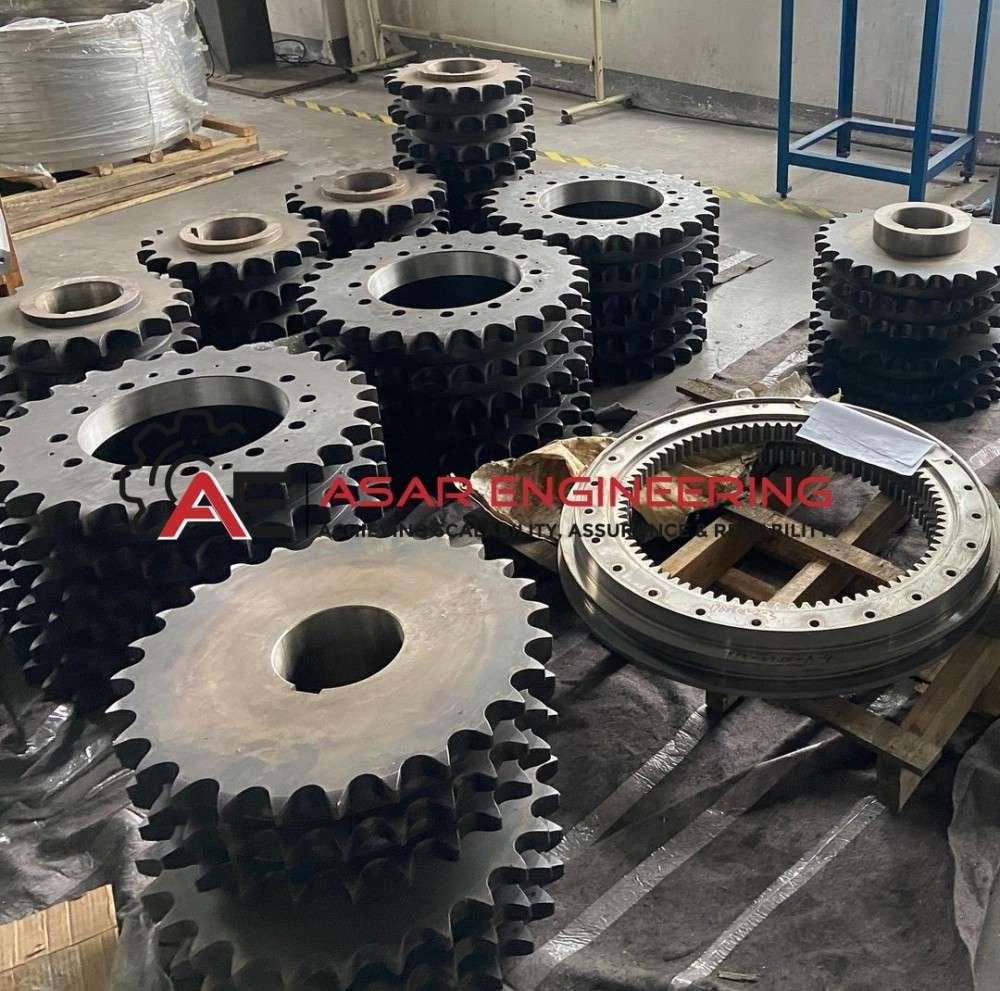


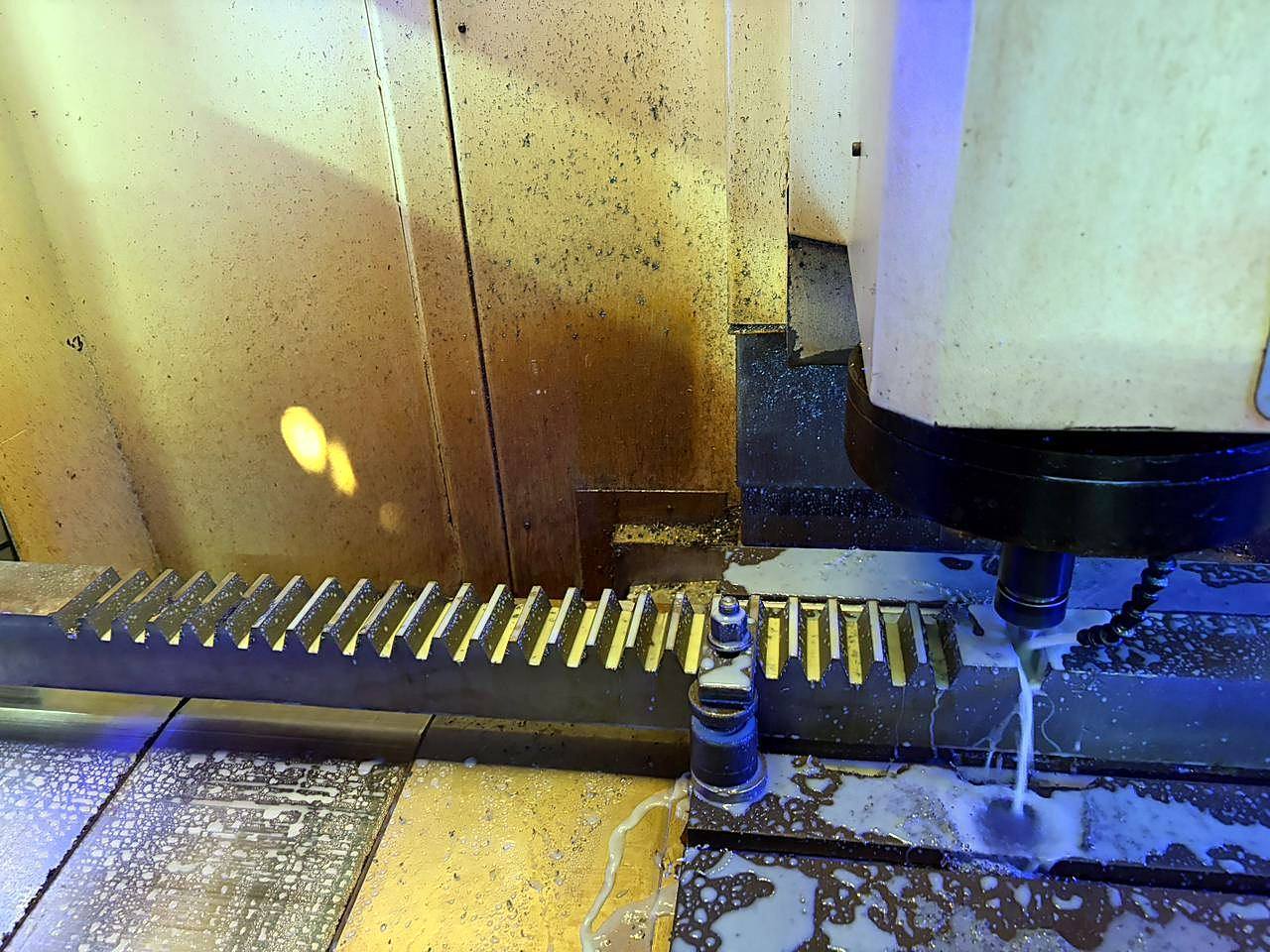


Machining Videos from Our Shop Floor
Short, uncut clips of gear cutting, hobbing and machining at our unit in Gujarat.


What Our Customers Say
Reviews left on our Google Business Profile, shown word for word.
I bought a single screw extruder from asar engineering pvt.ltd. It's been a game changer for my manufacturing process. The extruder is efficient, easy to operate and built to last. Their customer is excellent and they guided me well through installation and setup. Highly recommended!
Asar Engineering supplied gearbox components for one of our industrial applications. The dimensional accuracy, finishing, and overall performance were satisfactory. We particularly appreciated their technical understanding and ability to suggest suitable solutions based on our operating requirements.
We have been sourcing industrial gearboxes from Asar Engineering Pvt. Ltd. and are satisfied with the product quality and consistency. The gearboxes are well-built, perform reliably under continuous operation, and were supplied according to our required specifications. Their team was also responsive during technical discussions and order coordination.
Mechanical Seal FAQs
Questions buyers usually ask us before sending an enquiry for mechanical seal.
Do we need a single, double or tandem mechanical seal?
For relatively clean fluids such as water and some oils, a single mechanical seal is usually enough. Hazardous, toxic or abrasive fluids may need a dual arrangement: a double seal with a pressurised barrier fluid, or a tandem seal with an unpressurised buffer fluid and a backup outer seal. Cartridge seals come pre-assembled and are easier to fit than component seals.
How do you choose seal face materials and elastomers?
The face pair depends on the fluid, abrasive content, pressure and temperature. Carbon-graphite running on silicon carbide is used for clean water and light hydrocarbons, while hard pairs such as silicon carbide on silicon carbide handle abrasive slurries, and tungsten carbide is another hard option. The O-rings must also suit the fluid and temperature, or the mechanical seal can leak.
What details should I send for a mechanical seal quote?
Send the pump or equipment make and model, shaft or sleeve diameter, the fluid being sealed, operating pressure, speed and temperature, and whether the fluid is abrasive or hazardous. Say if you want a single, dual or cartridge mechanical seal, give seal chamber dimensions if known, and state the quantity. A sample or drawing of the old seal helps.
Can you supply a replacement based on our old seal?
Yes. We can supply a replacement mechanical seal using your old seal as a sample, a drawing or your pump details. Along with the dimensions, we review face and elastomer materials against your fluid, so the new seal is not simply a copy of one that failed early. Every seal is checked for dimensions and assembly before dispatch.
Can you supply mechanical seals for urgent breakdowns and for export?
We supply mechanical seals from our unit at Gandevi, Gujarat, anywhere from a single seal for a breakdown to batch orders for pump builders, across India. Asar Engineering is GST and MSME registered and holds an IEC, so we also take export orders for seals used in pumps, mixers, agitators, chemical equipment and wastewater systems.
How We Make Your Mechanical Seals
- Send your requirementDrawing, sample or photos of the mechanical seal, with the quantity you need.
- Technical check and quoteWe confirm material, hardness and tolerances, then send price and delivery time.
- Manufacturing and inspectionMade at our Gandevi unit; dimensions are checked before dispatch.
- DispatchPacked for road transport across India, or for export shipment.
Companies We Supply




























Need Mechanical Seals made to your drawing?
Send the drawing or a sample with the quantity. We supply across India and take export orders.