Fluid Coupling Manufacturers in India
Fluid Couplings made to your drawing or sample at our Gujarat unit, supplied across India and exported.

Asar Engineering Pvt. Ltd. Gandevi, Gujarat
- Hubs bored and keyed to your shaft sizes
- Gear coupling teeth cut in-house
- Replacement to your existing coupling size
- Supplied across India and exported (IEC registered)
Fluid Couplings for Soft-Start Drives
Asar Engineering is a fluid coupling manufacturer in India, supplying from its manufacturing unit at Gandevi, Gujarat. A fluid coupling, also called a hydraulic coupling, is a hydrodynamic device that connects two rotating shafts and transmits power through oil instead of direct mechanical contact. It is used where soft starting, shock-load absorption, torsional vibration damping and overload protection are needed.
Unlike mechanical couplings such as gear, jaw or pin bush couplings, a fluid coupling transmits torque through the kinetic energy of oil circulating inside a sealed housing. The driving element accelerates the oil, and the circulating flow carries energy to the driven element.
This operating principle makes fluid couplings suitable for heavy industrial machinery where sudden application of full load could place excessive stress on motors, shafts, gearboxes, belts, and other drivetrain components.
We supply fluid couplings to suit each drive. Selection is based on motor power, speed, driven load, starting characteristics, acceptable slip, mounting arrangement and operating environment.
What is a Fluid Coupling?
A fluid coupling is a hydrodynamic transmission device that transmits rotating power from an input shaft to an output shaft through a circulating fluid. It has two main rotors inside a sealed casing: the impeller (pump wheel) on the driving shaft and the runner (turbine wheel) on the driven shaft.
The impeller works like a centrifugal pump. As the motor turns it, the oil is thrown radially outward and forms a circulating vortex flow. This moving oil enters the runner, gives up its kinetic energy to the runner blades and turns the output shaft.
During normal operation, the impeller does not come into direct contact with the runner. The hydraulic medium is thus made to act as a torque transmission device between the two rotating components.
Impeller or Pump Section
The impeller is connected to the input or driving shaft. As the motor rotates, the impeller accelerates the fluid and forces it outward through centrifugal action.
The resulting fluid movement creates the energy required to drive the runner. The impeller is therefore the primary pumping component of the fluid coupling.
Runner or Turbine Section
The runner is connected to the output or driven shaft and positioned opposite the impeller. High-velocity fluid leaving the impeller enters the runner passages and transfers kinetic energy to the runner.
This causes the driven shaft to rotate without requiring mechanical contact between the two rotating members.
Hydraulic Fluid
Hydraulic mineral oil or another specified fluid serves as the energy-transfer medium. The selected fluid circulates continuously inside the coupling during operation.
The fluid characteristics influence heat generation, torque transmission, operating temperature, and overall coupling performance. The correct fluid should therefore be selected according to the coupling manufacturer's specifications.
Vortex Flow
When the impeller rotates, the fluid moves outward and circulates through the coupling chamber before returning toward the center through the runner. This circulating movement forms the hydrodynamic flow pattern responsible for transferring energy from the input side to the output side.
Role of Slip
A fluid coupling requires a difference in speed between the impeller and runner to transfer torque. This speed difference is known as slip.
The runner normally rotates slightly slower than the impeller because energy must be transferred through the circulating fluid. The exact slip depends on the coupling design, load, operating condition, and efficiency requirements.
For a correctly sized constant-fill coupling, full-load slip is typically around 2% to 5%. The actual figure should be taken from the selected coupling's technical data.
Applications of Fluid Coupling
Fluid couplings are widely used in heavy-duty rotating machinery where smooth motor starting, shock-load absorption, and controlled torque transmission are important. Their hydrodynamic operating principle is particularly valuable in machinery with high starting inertia or fluctuating loads.
Belt Conveyors
Long-distance and heavy-duty belt conveyors can experience substantial starting loads. Fluid couplings allow the motor to accelerate progressively before transferring the full driven load, helping reduce sudden stress on belts and mechanical components.
Crane Travel Drives
Crane long-travel and cross-travel drives can use fluid couplings for smoother acceleration of high-inertia loads. Fluid couplings are generally not used on hoisting motions, where the load must be held by a brake and the drive must not slip.
Bucket Elevators
Bucket elevators handling bulk materials can experience significant starting resistance. A hydraulic coupling can provide a gradual power-transfer characteristic between the motor and elevator drive.
Rock Crushers
Crushers may encounter sudden resistance when large or difficult material enters the crushing chamber. Fluid couplings can absorb and cushion sudden torque fluctuations between the motor and crusher.
Scrap Metal Shredders
Shredders are subject to fluctuating loads and occasional material jams. The fluid medium provides a degree of separation between the motor and driven machinery, helping reduce direct transmission of sudden mechanical shocks.
Cement Machinery
Heavy cement-processing equipment can involve high starting inertia and fluctuating mechanical loads. Fluid couplings can provide smooth acceleration and shock-load cushioning.
Wastewater Aerators
Large aeration systems require dependable rotating equipment for continuous operation. Fluid couplings can be used between motors and aerator drives where smooth starting and vibration isolation are desirable.
Boiler Feed Pumps
Boiler feed pumps in power plants often use variable-speed (scoop-controlled) fluid couplings. These let a constant-speed motor vary pump speed and flow, and also give a soft start.
Cooling Tower Fans
High-capacity cooling tower fans can involve substantial rotating inertia. Fluid coupling arrangements can provide gradual acceleration and flexible torque transfer.
Common Types of Fluid Coupling
Fluid couplings are grouped by how the working fluid is filled and controlled. The three main configurations are constant-fill, delay-fill and variable-speed designs.
Constant-Fill Fluid Coupling
A constant-fill fluid coupling contains a predetermined quantity of hydraulic fluid inside the working chamber.
The fixed fluid volume gives consistent operating characteristics and a simple, self-contained construction. It is the most common and economical type.
The amount of fluid is an important design parameter because it influences starting behavior, torque capacity, heat generation, and slip.
Delay Fill Fluid Coupling
A delay fill coupling incorporates an additional internal storage chamber that temporarily retains a portion of the fluid when the machinery is stationary.
During startup, the stored fluid gradually moves into the main working chamber. This delays the application of the complete driven load and allows the motor to accelerate toward operating speed before the full load is transferred.
This configuration can be useful for high-inertia equipment such as large conveyors, crushers, and other machinery where reducing starting load is particularly important.
Variable-Speed Fluid Coupling
A variable-speed or scoop-control fluid coupling uses a scoop tube or similar control arrangement to regulate the amount of working fluid circulating in the active chamber.
Changing the oil level in the working circuit changes the torque the coupling transmits, so the speed of the driven machine can be adjusted while it runs. Speed is reduced by increasing slip, and the slip losses turn into heat, so these couplings normally need an oil cooler.
This configuration is used on boiler feed pumps, large process pumps, induced-draft and forced-draft fans and other drives that need variable speed from a constant-speed motor.
Hydrodynamic Coupling for Multi-Motor Drives
Fluid couplings can also be incorporated into multi-motor drive systems. Small differences in rotational speed and hydrodynamic slip can assist in distributing the mechanical load among multiple motors.
This characteristic can be useful in large conveyor systems and other heavy-duty applications where several motors contribute to the same driven load.
Core Components of a Fluid Coupling
A fluid coupling consists of several important mechanical and hydraulic components that work together to transfer power without direct contact between the primary rotating elements.
Impeller
The impeller is the driving member connected to the motor shaft. It accelerates the working fluid and initiates the circulating hydraulic flow.
Runner
The runner is connected to the driven shaft. It receives kinetic energy from the moving fluid and converts that energy into rotational motion.
Coupling Housing
The sealed casing contains the impeller, runner, and working fluid. It must withstand the mechanical and thermal conditions generated during operation.
Hydraulic Fluid
The working fluid acts as the medium through which torque is transmitted. Fluid selection affects heat generation, torque transfer, and operating characteristics.
Fill Arrangement
The coupling's fill system determines how much fluid is present inside the working chamber. Constant-fill and delay-fill arrangements provide different starting characteristics.
Scoop Tube
Variable-speed designs may include a scoop tube that controls the amount of fluid inside the working chamber. Adjusting the active fluid volume changes the hydrodynamic torque-transfer behavior.
Fusible Plug
A fusible plug provides thermal protection against excessive temperature. It contains a temperature-sensitive alloy designed to release the working fluid when the coupling reaches its specified thermal threshold.
Safety and Thermal Protection
Fluid coupling operation inherently produces some heat because of slip between the impeller and runner. If the driven machine becomes stalled or severely overloaded, slip can increase significantly and generate excessive heat.
A fusible plug protects suitable coupling designs. When the rated temperature is reached, the alloy melts and releases the oil, which interrupts power transmission and protects the coupling and drive from overheating.
Fusible plugs are available in several temperature ratings, typically in the range of about 110°C to 180°C. The correct rating depends on the coupling design and the application.
Fluid Coupling Supplier in India
As a fluid coupling supplier in India, we look at both the driving motor and the driven machine. The key selection parameters are motor power, input speed, driven speed, starting torque, load inertia, duty cycle and the required acceleration.
For each enquiry, Asar Engineering assesses the driven equipment, starting load, required acceleration, thermal conditions and available space.
The quantity of oil is especially important, because it affects torque transmission, starting behaviour, slip and heat generation. Constant-fill couplings are the standard choice; delay-fill and variable-speed designs are used where the starting or speed-control requirement calls for them.
For heavy machinery such as conveyors and crushers, size the coupling to the real load characteristics, not only to the motor power.
Thermal protection is another key factor. Equipment that can stall or overload needs protection against excessive oil temperature, usually through a fusible plug.
Benefits of Using Fluid Coupling
Smooth Motor Starting
A fluid coupling allows the motor to accelerate the impeller progressively before transferring full torque to the driven machine. This provides a softer starting characteristic than a rigid mechanical connection.
Reduced Starting Shock
The hydraulic medium cushions the transition between the motor and driven equipment, reducing sudden mechanical shock during acceleration.
Overload Protection
The absence of direct mechanical contact between the impeller and runner provides a degree of protection against sudden driven-side overloads. Excessive slip can also be managed through suitable thermal protection arrangements.
Vibration Isolation
The fluid medium helps separate torsional disturbances between the driving and driven systems, reducing the direct transmission of mechanical vibration.
High Starting Inertia Capability
Fluid couplings suit machinery with high starting inertia that needs controlled acceleration, such as conveyors, crushers, bucket elevators and crane travel drives.
No Direct Contact Between Rotating Elements
The impeller and runner transfer energy through fluid circulation rather than physical contact. This reduces mechanical wear between the two primary torque-transmitting elements.
Multi-Motor Load Sharing
In suitable multi-drive systems, controlled slip can help distribute load between multiple motors operating on the same driven equipment.
Variable Speed Control
Scoop-control fluid couplings can vary the amount of working fluid inside the active chamber and provide adjustable mechanical output speed in suitable applications.
Fluid Coupling Specifications
| Specification | Typical Configuration |
|---|---|
| Coupling Type | Hydrodynamic / hydraulic fluid coupling |
| Primary Function | Fluid-based torque transmission |
| Power Transmission Medium | Hydraulic mineral oil or specified working fluid |
| Driving Element | Impeller / pump wheel |
| Driven Element | Runner / turbine wheel |
| Mechanical Contact | No direct contact between impeller and runner during normal operation |
| Operating Principle | Hydrodynamic fluid circulation |
| Slip | Application-dependent; typically about 2–5% at full load for constant-fill designs |
| Main Fill Types | Constant-fill, delay-fill and variable-speed |
| Variable-Speed Control | Scoop tube arrangement in suitable designs |
| Thermal Protection | Fusible plug or application-specific protection |
| Applications | Conveyors, crane travel drives, bucket elevators, crushers, shredders, pumps, fans and industrial machinery |
| Main Advantages | Soft start, shock absorption, vibration isolation and overload protection |
| Selection Factors | Motor power, speed, load inertia, starting torque, fill level, slip and thermal conditions |
The table shows typical configurations. Actual power rating, torque capacity, speed, oil quantity, slip, thermal limits, fusible-plug rating and dimensions depend on the specific coupling model and application.
Fluid Coupling Exporter from India
Asar Engineering is IEC registered and takes export orders for fluid couplings, alongside supply across India. Export orders can involve different power ratings, fill types, shaft arrangements, thermal protection and speed-control requirements.
For export and project orders, share the motor rating, input RPM, driven machine speed, starting torque, load inertia, coupling size, mounting arrangement, oil type and quantity, and the thermal protection required.
Delay-fill designs suit high-inertia machines that need a longer acceleration time. Variable-speed designs suit drives where output speed must be controlled. Constant-fill designs are a simple solution where the operating characteristic is fixed.
Why Choose Asar Engineering
- Application-Based Selection: Fluid couplings are matched to motor power, speed, load inertia, starting conditions and duty.
- Made to Drawing: Adaptor hubs, pulleys and other mating parts can be made to your drawing or sample.
- Manufacturing Unit in Gujarat: Asar Engineering has operated its unit at Gandevi, on National Highway 48, since 2015.
- Multiple Configurations: Constant-fill, delay-fill and variable-speed arrangements for different starting and speed-control needs.
- Thermal Protection: Suitable fusible-plug ratings are selected for the application.
- Inspection Before Dispatch: Bores and mating dimensions are checked with gauges, including dial gauges, before dispatch.
- One-Off to Batch Quantities: We handle single replacement couplings as well as batch orders.
- Supply Across India and Export: As a fluid coupling manufacturer in India, we supply customers nationwide and take export orders under our IEC registration.
This product is part of our industrial coupling range, made at our unit in Gujarat and supplied across India.
Related products: Gear Coupling, HRC Coupling, Jaw Coupling, Industrial Gearbox, Mechanical Seal.
Request a Quote for Fluid Couplings
Send us your motor power, RPM, driven equipment, starting conditions, mounting details and the quantity you need, along with any drawing or sample. We will check the requirement and quote for a suitable fluid coupling. Asar Engineering supplies across India and exports.
Get an accurate quote
What to Send for Your Fluid Coupling Quote
- Coupling type and size, or the old coupling as a sample
- Motor power (kW) and speed (rpm)
- Both shaft diameters with keyway details
- Distance between shaft ends (DBSE) for spacer types
- Quantity and the date you need the parts
Have a drawing, a sample or a worn part?
Send it with the quantity. We reply with material, hardness, price and delivery time.
Industries That Use Our Fluid Couplings
Material, hardness and fit are chosen for the duty the part will see in your plant.
-
Cement
Fluid Couplings for kiln, mill, crusher and conveyor drives.
-
Steel & Metal
Fluid Couplings for rolling mills and processing lines.
-
Chemical & Process
Fluid Couplings for pumps, mixers and agitators.
-
Sugar
Fluid Couplings for cane carriers, mill drives and bagasse conveyors.
-
Mining & Material Handling
Fluid Couplings for belt conveyors, crushers and bucket elevators.
-
Machine Builders (OEM)
Fluid Couplings for new machines, made to your drawing.
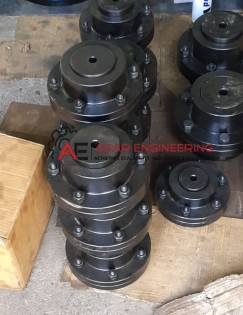
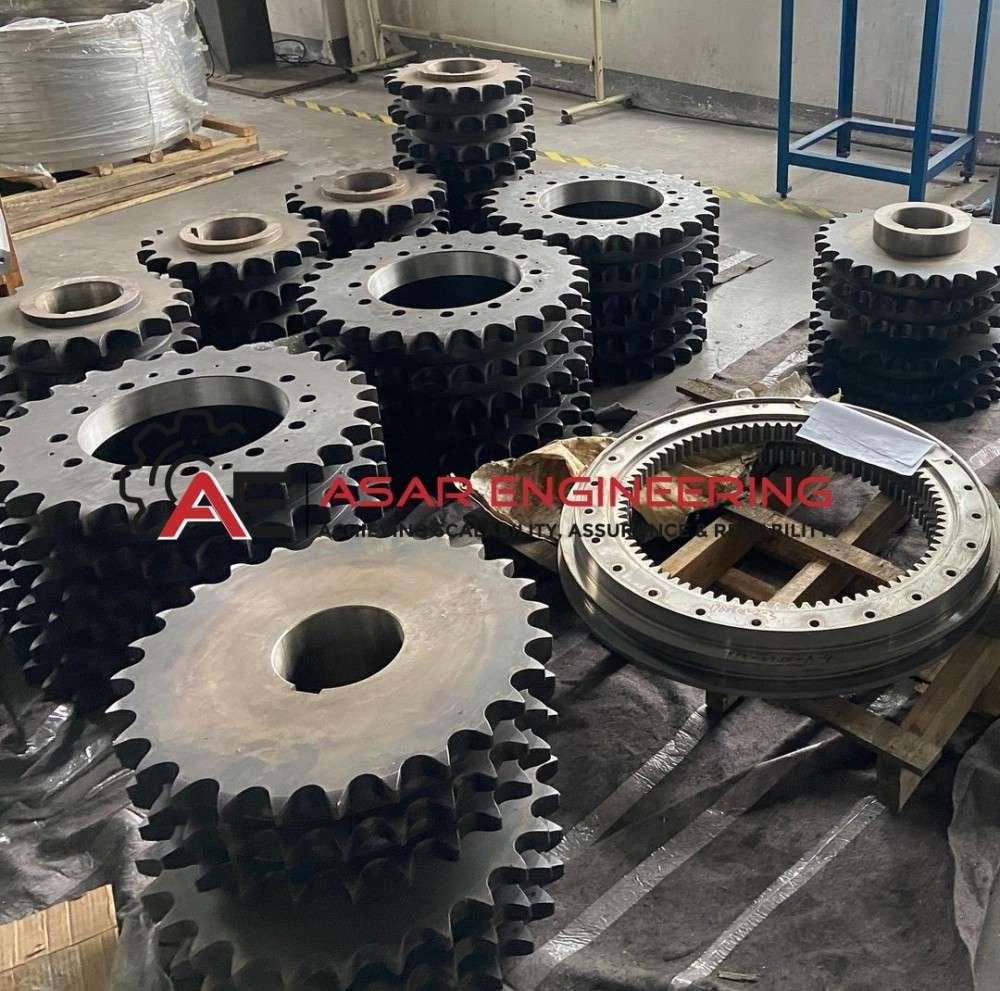
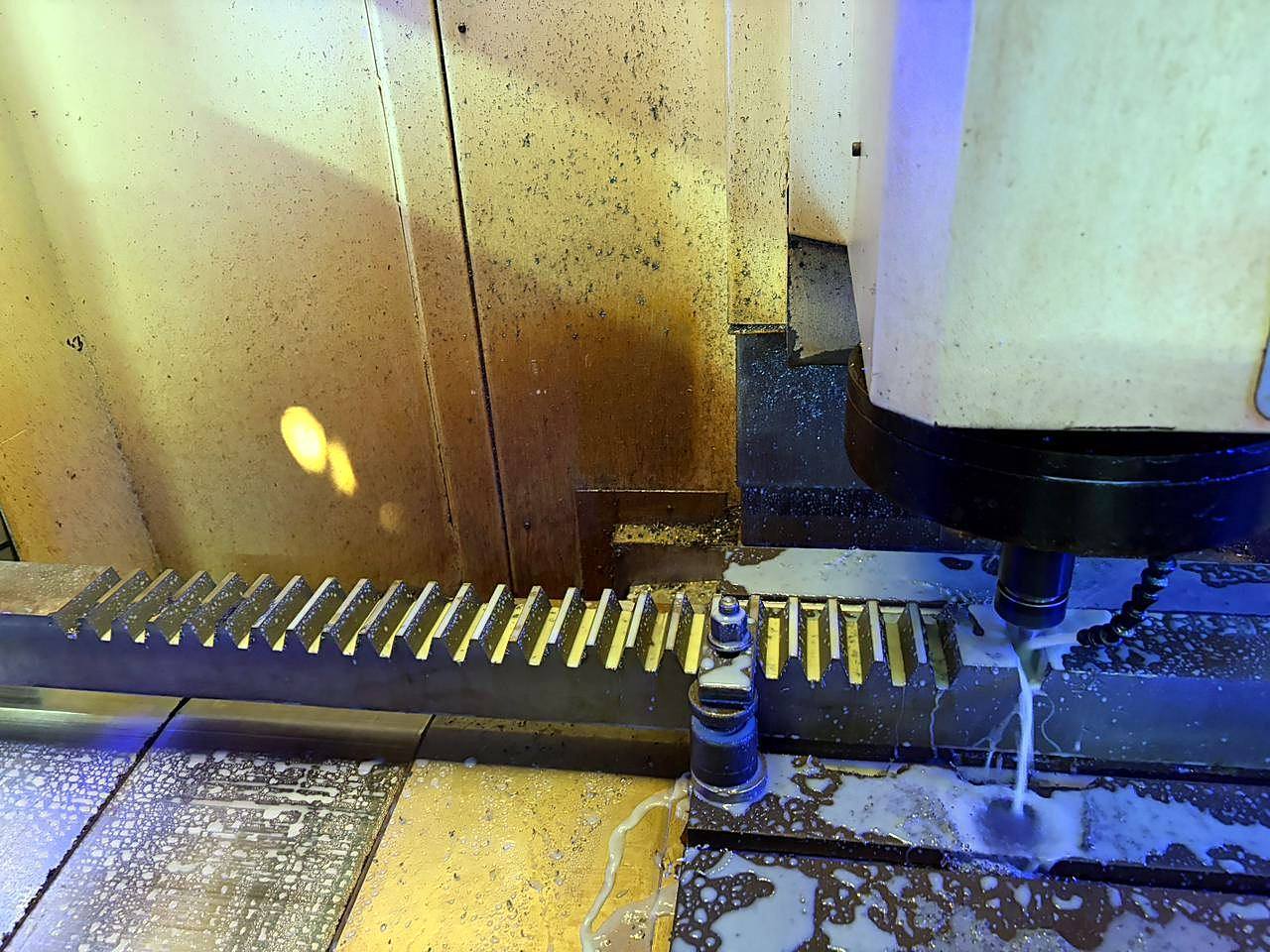
Recent Work from Our Gandevi Unit
Photos of parts made and dispatched from our unit, not stock images.





Machining Videos from Our Shop Floor
Short, uncut clips of gear cutting, hobbing and machining at our unit in Gujarat.


What Our Customers Say
Reviews left on our Google Business Profile, shown word for word.
I bought a single screw extruder from asar engineering pvt.ltd. It's been a game changer for my manufacturing process. The extruder is efficient, easy to operate and built to last. Their customer is excellent and they guided me well through installation and setup. Highly recommended!
Asar Engineering supplied gearbox components for one of our industrial applications. The dimensional accuracy, finishing, and overall performance were satisfactory. We particularly appreciated their technical understanding and ability to suggest suitable solutions based on our operating requirements.
We have been sourcing industrial gearboxes from Asar Engineering Pvt. Ltd. and are satisfied with the product quality and consistency. The gearboxes are well-built, perform reliably under continuous operation, and were supplied according to our required specifications. Their team was also responsive during technical discussions and order coordination.
Fluid Coupling FAQs
Questions buyers usually ask us before sending an enquiry for fluid coupling.
Which fluid coupling type do I need: constant-fill, delay-fill or variable-speed?
Constant-fill is the simplest and most common, suited where the operating characteristic is fixed. Delay-fill adds a chamber that holds back some oil at rest, giving a gentler start for high-inertia conveyors and crushers. Variable-speed scoop-control couplings vary output speed from a constant-speed motor, for boiler feed pumps and large fans, and normally need an oil cooler.
What slip should I expect from a fluid coupling, and what does the fusible plug do?
A correctly sized constant-fill coupling typically slips about 2% to 5% at full load; the exact value comes from the selected model's data. If the driven machine stalls, slip and heat rise sharply. The fusible plug, typically rated between about 110 and 180 degrees C, then melts and releases the oil, stopping power transmission.
What details are needed to select a fluid coupling for my drive?
Send the motor power and RPM, the driven machine and its speed, starting torque or load inertia, duty cycle, mounting arrangement, oil type and the thermal protection required, along with the quantity and any drawing. For conveyors and crushers, we size the fluid coupling on the real load characteristics, not on motor power alone.
Can you make adaptor hubs or pulleys to fit a fluid coupling to our machine?
Yes. We make adaptor hubs, pulleys and other mating parts to your drawing or sample, so the fluid coupling fits your motor and driven shaft. Bores and mating dimensions are checked with gauges, including dial gauges, before dispatch, and we select a suitable fusible-plug rating for the application.
Do you supply fluid couplings across India and for export?
Yes. We supply fluid couplings to customers across India from our unit at Gandevi, Gujarat, and take export orders under our IEC registration. We handle single replacement couplings as well as batch orders, with constant-fill, delay-fill or variable-speed arrangements selected to suit the motor, load and starting conditions.
How We Make Your Fluid Couplings
- Send your requirementDrawing, sample or photos of the fluid coupling, with the quantity you need.
- Technical check and quoteWe confirm material, hardness and tolerances, then send price and delivery time.
- Manufacturing and inspectionMade at our Gandevi unit; dimensions are checked before dispatch.
- DispatchPacked for road transport across India, or for export shipment.
Companies We Supply




























Need Fluid Couplings made to your drawing?
Send the drawing or a sample with the quantity. We supply across India and take export orders.