Jaw Coupling Manufacturers in India
Jaw Couplings made to your drawing or sample at our Gujarat unit, supplied across India and exported.

Asar Engineering Pvt. Ltd. Gandevi, Gujarat
- Hubs bored and keyed to your shaft sizes
- Gear coupling teeth cut in-house
- Replacement to your existing coupling size
- Supplied across India and exported (IEC registered)
Jaw Couplings with Elastomer Spiders
Asar Engineering is a jaw coupling manufacturer in India, with its manufacturing unit at Gandevi, Gujarat. A jaw coupling is a flexible coupling that connects two rotating shafts, transmits torque, accepts some shaft misalignment and reduces vibration. It is a material-flexing coupling: an elastomeric insert called a "spider" sits between two metal hubs.
In normal operation the two metal hubs do not touch each other. Torque passes from the jaws of one hub, through the elastomeric spider, to the jaws of the other hub. The spider is the flexible, torque-carrying element.
Jaw couplings absorb shock and vibration, need little maintenance, are easy to install and have a simple structure. This makes them popular in light- to medium-duty industrial machinery.
We make jaw couplings to suit each drive. Selection is based on shaft size, torque, speed, misalignment, environmental conditions and the connected equipment.
What is a Jaw Coupling?
A jaw coupling is a flexible coupling made up of three parts: two metal hubs and one elastomeric spider. Each hub has several projecting jaws that face the jaws of the other hub.
The spider sits between the two hubs. As the driving shaft rotates, the spider's legs are compressed between the hub jaws. The force then passes to the jaws of the second hub and turns the driven shaft.
Because the metal hubs are separated by the elastomer, there is no metal-to-metal contact in normal use, and the spider can dampen vibration and shock from the connected equipment.
Two Metallic Hubs
Each jaw coupling contains two hubs mounted on the respective shafts. Depending on the coupling design, hub materials can include:
- Sintered iron
- Aluminum
- Cast iron
- Steel
The outer portion of each hub incorporates protruding jaws that engage with the spider.
Elastomeric Spider
The spider is the flexible element positioned between the two hubs. It has a star-shaped configuration with flexible legs that fit between the jaws.
When torque is applied, the spider compresses between the hub jaws and transmits rotational force from one shaft to the other.
The spider is also responsible for absorbing vibration and cushioning shock loads. Its material has a major influence on the coupling's flexibility, torque characteristics, and operating behavior.
Torque Transmission
Torque follows a simple path through the coupling:
Driving hub → spider → driven hub
The driving hub pushes against the elastomeric spider, and the spider transfers the resulting force to the driven hub. This creates a flexible mechanical connection without direct contact between the metallic hubs.
Misalignment Accommodation
Jaw couplings can accommodate limited angular, parallel, and axial shaft misalignment through deformation of the elastomeric spider.
However, they are intended for relatively small misalignment values. Excessive misalignment can increase stress on the spider and connected machinery, making correct shaft alignment important during installation.
Applications of Jaw Coupling
Jaw couplings are generally used in light- to medium-duty industrial applications where a straightforward, flexible, vibration-damping shaft connection is required.
Centrifugal Pumps
Jaw couplings can connect electric motors to centrifugal pumps while helping reduce vibration transmission between the motor and pump shafts.
Compressors
Small and medium industrial compressor systems can use jaw couplings where flexible torque transmission and shock absorption are required.
Electric Motors
Jaw couplings are commonly used between electric motors and driven equipment to provide a simple shaft-to-shaft connection with elastomeric damping.
Generators
Generator drive arrangements can use jaw couplings where vibration reduction and flexible power transmission are desirable.
Conveyor Systems
Conveyors operating under relatively moderate loads can use jaw couplings to connect motors and gearboxes or other drive components.
Industrial Fans
Fans and blowers can benefit from the spider's ability to absorb vibration and reduce mechanical noise within the drive system.
Gearboxes
Jaw couplings can connect gearboxes with motors or other driven machinery where the torque and speed requirements fall within the coupling's design limits.
Light Machine Tools
Certain light-duty machine-tool applications can use jaw couplings for shaft connections where simple installation and vibration damping are important.
Common Types of Jaw Coupling
Jaw couplings are primarily differentiated according to the material used for their elastomeric spider. The spider material influences flexibility, torque capacity, temperature resistance, chemical resistance, and torsional stiffness.
NBR Jaw Coupling
NBR (Buna-N) rubber is a commonly used spider material for jaw couplings. It provides good flexibility and oil resistance while offering a practical balance for general industrial applications.
NBR spiders are suitable where moderate temperature and torque requirements apply and where flexibility and vibration damping are important.
Urethane Jaw Coupling
Urethane spiders provide higher torque capacity along with good chemical and abrasion resistance compared with softer elastomeric materials.
The trade-off is generally greater stiffness and lower flexibility. Urethane can therefore be selected when higher torque transmission and resistance to demanding operating conditions are more important than maximum flexibility.
Hytrel Jaw Coupling
Hytrel is a high-performance thermoplastic elastomer used for applications requiring higher torque and temperature capability.
It has comparatively high torsional stiffness and low wind-up, so it suits drives where a more rigid torque response is needed. The trade-off is less vibration damping than NBR.
Fail-Safe Characteristic
A jaw coupling can provide a fail-safe characteristic when the elastomeric spider fails. If the spider is destroyed or severely damaged, the jaws of the two metallic hubs can engage with each other.
This allows the coupling to maintain limited mechanical torque transmission until the equipment can be safely stopped and the failed spider replaced. This feature should not be considered a substitute for timely maintenance.
Core Components of a Jaw Coupling
A jaw coupling has a relatively simple construction consisting of three primary components and the associated shaft connection arrangements.
Driving Hub
The driving hub is mounted on the input shaft and contains the protruding jaws that engage with the spider.
Driven Hub
The driven hub is mounted on the output shaft. Its jaws face the driving hub's jaws and engage with the opposite legs of the spider.
Elastomeric Spider
The spider sits between the two hubs and provides the flexible connection. It transfers torque while absorbing vibration and shock.
Spider Legs
The star-shaped spider contains individual flexible sections positioned between the jaws. These sections compress and deform as torque is transmitted.
Shaft Bore and Connection
Each hub contains a bore suitable for mounting onto its corresponding shaft. The specific bore, keyway, clamping, or locking arrangement depends on the selected coupling design.
Jaw Coupling Supplier in India
As a jaw coupling supplier in India, we look at the whole rotating system, not just the shaft diameter.
The factors to consider are torque, speed, shaft size, expected misalignment, operating temperature, environmental exposure and the spider characteristics required.
Asar Engineering selects the spider material for each enquiry based on the flexibility, torque capacity, temperature range, chemical exposure and abrasion resistance required.
NBR is the usual general-purpose choice. Urethane can be selected for higher torque and better chemical and abrasion resistance. Hytrel can be considered for higher torsional stiffness and higher temperatures.
Correct alignment is also essential. The spider accepts only a limited amount of misalignment, so any misalignment should be corrected during installation rather than left for the spider to absorb.
Benefits of Using Jaw Coupling
Simple Three-Piece Construction
The coupling consists primarily of two hubs and one spider, making its construction straightforward and easy to understand.
Vibration Damping
The elastomeric spider absorbs vibration and shock generated during operation, helping reduce the transmission of mechanical disturbances between connected shafts.
Fail-Safe Operation
If the spider fails, the metallic jaws can engage with each other and provide emergency torque transmission, allowing equipment to be safely shut down rather than immediately losing the mechanical connection.
No Lubrication Required
Jaw couplings do not require continuous greasing of the spider interface. This simplifies routine maintenance compared with couplings that rely on lubricated metallic sliding surfaces.
Easy Installation
The simple hub-and-spider arrangement makes installation and replacement relatively straightforward.
Cost-Effective Design
The uncomplicated construction and replaceable elastomeric spider make jaw couplings a practical option for many light- and medium-duty industrial drives.
Shock Absorption
The spider provides a flexible interface that cushions sudden changes in torque and reduces the direct transmission of shock loads.
Multiple Spider Materials
The availability of NBR, urethane, and Hytrel spider materials allows the coupling characteristics to be selected according to application requirements.
Jaw Coupling Specifications
| Specification | Typical Configuration |
|---|---|
| Coupling Type | Flexible jaw coupling |
| Main Function | Shaft connection and torque transmission |
| Primary Components | Two hubs and one elastomeric spider |
| Hub Materials | Sintered iron, aluminum, cast iron or steel |
| Spider Materials | NBR, urethane or Hytrel |
| Spider Configuration | Star-shaped flexible insert |
| Torque Transmission | Hub → spider → hub |
| Hub Contact | No direct contact during normal operation |
| Misalignment | Limited angular, parallel and axial accommodation |
| Lubrication | Not required for the elastomeric interface |
| Vibration Control | Through elastomeric spider |
| Shock Absorption | Through spider deformation |
| Fail-Safe Feature | Hub jaws can engage if spider fails |
| Applications | Pumps, compressors, motors, generators, conveyors, fans and gearboxes |
| Selection Factors | Torque, speed, shaft size, misalignment, temperature and spider material |
The table shows typical configurations. Actual torque rating, maximum speed, bore size, allowable misalignment, temperature range, spider hardness and service life depend on the coupling size and spider material.
Jaw Coupling Exporter from India
Asar Engineering is IEC registered and takes export orders for jaw couplings, alongside supply across India. Jaw couplings suit motors, pumps, compressors, conveyors, gearboxes, fans and other rotating equipment that need a compact, flexible shaft connection.
Different spider materials can be supplied to suit the operating environment, where vibration damping, limited misalignment and low maintenance are the main requirements.
For export and project orders, share the shaft diameters, keyway sizes, motor rating, operating speed, torque to be transmitted, starting conditions, ambient temperature and likely misalignment.
The selection of spiders is especially important because of the differences in flexibility, stiffness, temperature resistance, chemical resistance, abrasion resistance and torque capability that can be found between NBR, urethane and Hytrel spiders.
Proper installation and alignment also are important factors in preventing unnecessary loading of the spider and in prolonging the life of the coupling.
Why Choose Asar Engineering
- Made to Drawing or Sample: Jaw coupling hubs are made to your drawing, sample or shaft details.
- Manufacturing Unit in Gujarat: As a jaw coupling manufacturer in India since 2015, we produce couplings at our unit at Gandevi, on National Highway 48.
- Choice of Spider Material: NBR, urethane and Hytrel options for different flexibility, torque and temperature needs.
- Material Matched to the Application: Hub materials are chosen to suit the torque, speed and operating environment.
- Inspection Before Dispatch: Bores and critical dimensions are checked with gauges, including dial gauges, before dispatch.
- One-Off to Batch Quantities: We handle single replacement couplings as well as batch orders.
- Replaceable Spiders: Spiders can be replaced without replacing the hubs, keeping maintenance simple.
- Supply Across India and Export: We supply customers across India and take export orders under our IEC registration.
This product is part of our industrial coupling range, made at our unit in Gujarat and supplied across India.
Related products: Gear Coupling, HRC Coupling, Industrial Gearbox, Mechanical Seal.
Request a Quote for Jaw Couplings
Send us your drawing or sample, shaft sizes, torque, speed, application and the quantity you need. We will check the requirement and quote for a suitable jaw coupling and spider. Asar Engineering supplies across India and exports.
Get an accurate quote
What to Send for Your Jaw Coupling Quote
- Coupling type and size, or the old coupling as a sample
- Motor power (kW) and speed (rpm)
- Both shaft diameters with keyway details
- Distance between shaft ends (DBSE) for spacer types
- Quantity and the date you need the parts
Have a drawing, a sample or a worn part?
Send it with the quantity. We reply with material, hardness, price and delivery time.
Industries That Use Our Jaw Couplings
Material, hardness and fit are chosen for the duty the part will see in your plant.
-
Cement
Jaw Couplings for kiln, mill, crusher and conveyor drives.
-
Steel & Metal
Jaw Couplings for rolling mills and processing lines.
-
Chemical & Process
Jaw Couplings for pumps, mixers and agitators.
-
Sugar
Jaw Couplings for cane carriers, mill drives and bagasse conveyors.
-
Mining & Material Handling
Jaw Couplings for belt conveyors, crushers and bucket elevators.
-
Machine Builders (OEM)
Jaw Couplings for new machines, made to your drawing.
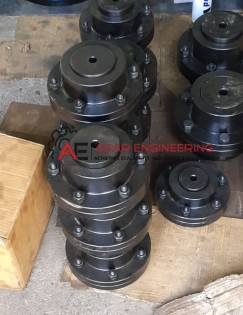
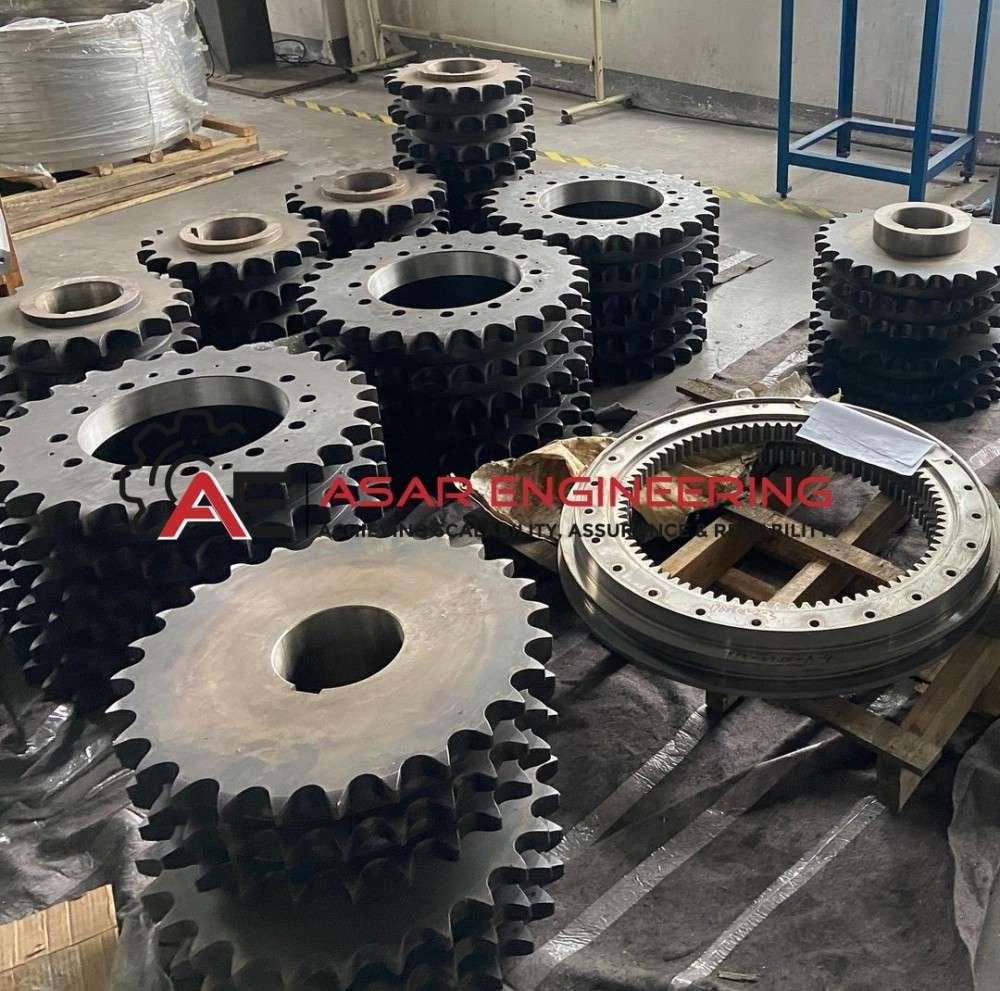
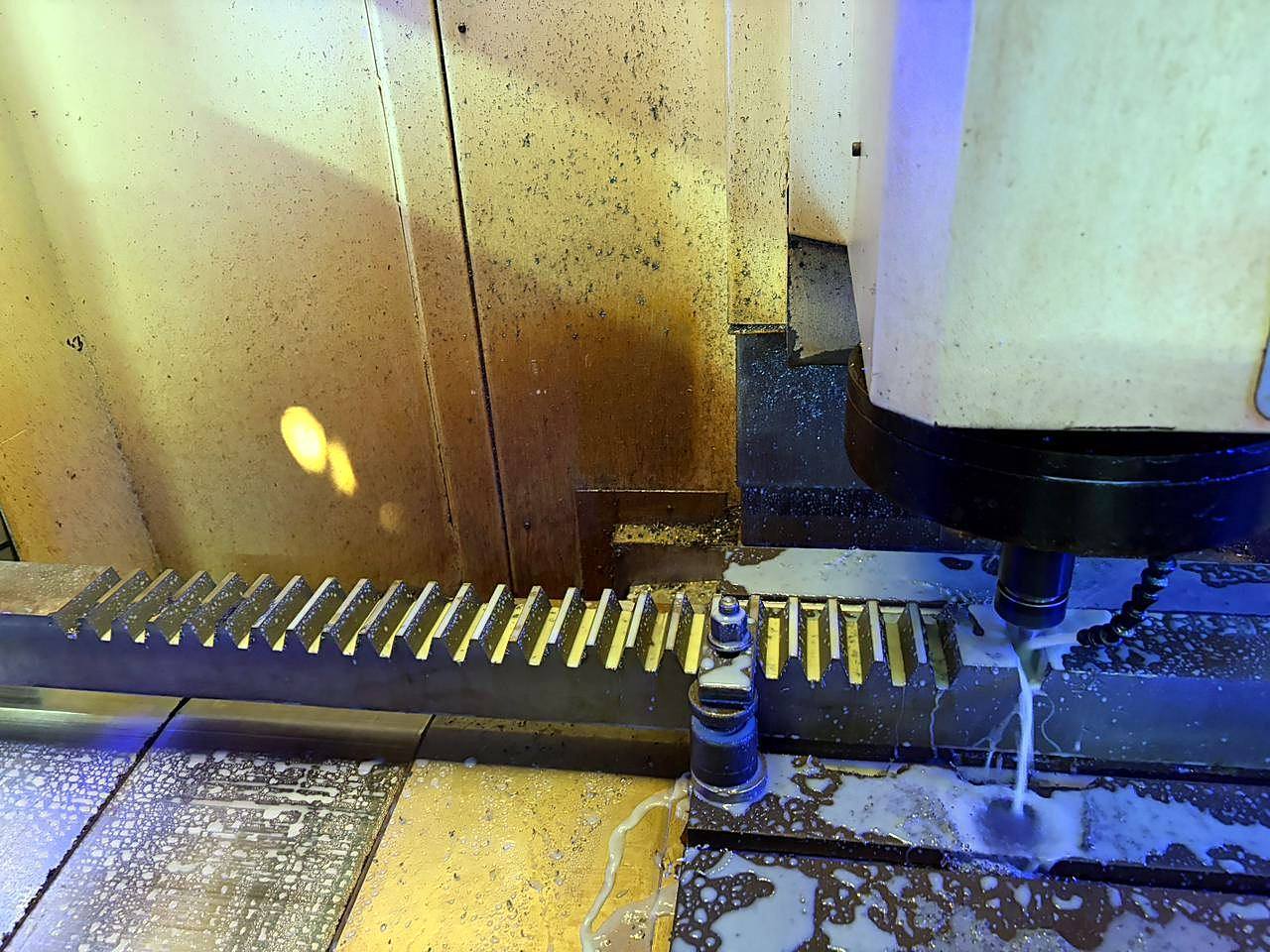
Recent Work from Our Gandevi Unit
Photos of parts made and dispatched from our unit, not stock images.





Machining Videos from Our Shop Floor
Short, uncut clips of gear cutting, hobbing and machining at our unit in Gujarat.


What Our Customers Say
Reviews left on our Google Business Profile, shown word for word.
I bought a single screw extruder from asar engineering pvt.ltd. It's been a game changer for my manufacturing process. The extruder is efficient, easy to operate and built to last. Their customer is excellent and they guided me well through installation and setup. Highly recommended!
Asar Engineering supplied gearbox components for one of our industrial applications. The dimensional accuracy, finishing, and overall performance were satisfactory. We particularly appreciated their technical understanding and ability to suggest suitable solutions based on our operating requirements.
We have been sourcing industrial gearboxes from Asar Engineering Pvt. Ltd. and are satisfied with the product quality and consistency. The gearboxes are well-built, perform reliably under continuous operation, and were supplied according to our required specifications. Their team was also responsive during technical discussions and order coordination.
Jaw Coupling FAQs
Questions buyers usually ask us before sending an enquiry for jaw coupling.
Which spider material should I choose for a jaw coupling: NBR, urethane or Hytrel?
NBR is the general-purpose choice, with good flexibility, oil resistance and damping. Urethane gives higher torque capacity and better chemical and abrasion resistance but is stiffer. Hytrel handles higher torque and temperature with high torsional stiffness and low wind-up, though it damps vibration less than NBR. We select the spider for your torque, temperature and environment.
How much misalignment can a jaw coupling take?
Only a small amount. The elastomeric spider deforms to accept limited angular, parallel and axial misalignment, but larger errors overload the spider legs and push load into the bearings. Correct misalignment during installation instead of relying on the spider. If the spider does fail, the hub jaws engage for limited emergency torque until the drive is stopped.
What details do you need to quote a jaw coupling?
Send your drawing or sample, both shaft diameters and keyway sizes, motor rating, speed, torque, the application and quantity. Also tell us the starting conditions, ambient temperature, any oil or chemical exposure and the likely misalignment, because these decide the spider material and hub material for the jaw coupling.
Can you bore jaw coupling hubs to our shaft sizes or match an existing coupling?
Yes. We make jaw coupling hubs to your drawing, sample or shaft details. Hub material is chosen for the torque, speed and environment, and bores and critical dimensions are checked with gauges, including dial gauges, before dispatch. Because spiders are replaceable, a worn spider can later be changed without replacing the hubs.
Do you supply jaw couplings in single pieces and for export?
Yes. We handle single replacement jaw couplings as well as batch orders, made at our unit in Gandevi, Gujarat, and delivered to customers across India. Export orders are taken under our IEC registration, with the spider material chosen for the operating temperature and environment at the customer's site.
How We Make Your Jaw Couplings
- Send your requirementDrawing, sample or photos of the jaw coupling, with the quantity you need.
- Technical check and quoteWe confirm material, hardness and tolerances, then send price and delivery time.
- Manufacturing and inspectionMade at our Gandevi unit; dimensions are checked before dispatch.
- DispatchPacked for road transport across India, or for export shipment.
Companies We Supply























Need Jaw Couplings made to your drawing?
Send the drawing or a sample with the quantity. We supply across India and take export orders.