Industrial Transmission Chain Manufacturers in India
Roller transmission chain in single and multi-strand sizes, available with matching sprockets for a complete chain drive.

Asar Engineering Pvt. Ltd. Gandevi, Gujarat
- ISO / BS and ANSI roller chain sizes
- Single and multi-strand chain
- Matching sprockets from our own shop
- Supplied across India and exported (IEC registered)
Roller Chains for Power Transmission and Conveying
Asar Engineering is an industrial transmission chain manufacturer in India, supplying roller chains and matching sprockets from its unit at Gandevi, Gujarat. A transmission chain, commonly called a roller chain, transfers rotation and torque from one shaft to another. It runs on toothed wheels called sprockets to give a positive drive between the driving and driven shafts.
Unlike conventional belts that can experience slip, transmission chains use a series of interconnected metal links that engage directly with sprocket teeth. This interlocking arrangement provides a controlled drive relationship between the shafts and makes industrial transmission chains suitable for applications where consistent power transfer is important.
We supply transmission chains for machinery that needs a dependable chain-and-sprocket drive. Depending on the power, speed and operating environment, chains can be selected in different pitches, strand counts, materials and special constructions.
Industrial transmission chains are used in conveyors, cement and steel plant machinery, sugar mills, material-handling equipment, agricultural machinery, packaging lines and other drives where the shafts are too far apart for gears.
What is an Industrial Transmission Chain?
An industrial transmission chain is a flexible series of interconnected links designed to transfer mechanical power between rotating shafts through engagement with sprockets. The chain loops around the sprockets, allowing rotational movement from the driving shaft to be transferred to the driven shaft.
The chain's ability to engage mechanically with the sprocket teeth provides a positive drive arrangement. Unlike friction-based belt drives, the chain does not depend primarily on surface friction between the transmission element and pulley.
A standard roller chain contains alternating inner and outer links connected through pins and bushings. Rollers rotate around the bushings and directly engage with the sprocket teeth as the chain moves.
Pin
The pin is the central cylindrical component that connects the outer link plates. It also provides the rotational axis around which the connected chain components articulate.
Pins experience repeated loading during chain operation, making their construction and surface condition important for chain durability.
Bushing
The bushing is press-fitted into the inner link plates, and the pin turns inside it as the chain articulates. The bushing also carries the roller.
Proper lubrication between the pin and bushing is important for reducing wear in conventional roller chains.
Roller
The roller is a free-rotating cylindrical component positioned around the bushing. It engages directly with the teeth of the sprocket as the chain enters and leaves the drive wheel.
Its rolling action helps reduce friction at the sprocket engagement point.
Inner and Outer Link Plates
The link plates form the side structures of the chain. They connect the pins and bushings while carrying the tensile forces generated when mechanical power is transmitted through the chain.
The alternating inner and outer plate arrangement allows individual chain links to articulate around the sprockets.
Applications of Industrial Transmission Chains
Industrial transmission chains are used across a wide range of machinery where positive mechanical power transfer is required.
Conveyor Systems
Transmission chains drive conveyors and production lines in packaging, bottling, food processing and assembly operations.
They can synchronize rotating components and transmit power between shafts while maintaining a consistent mechanical relationship.
Heavy Machinery
Crushers, feeders, mixers and other heavy machinery in cement, steel and mining plants use transmission chains where a robust positive drive is needed.
Material Handling
Roller chains drive conveyors, stackers, bucket elevators and other material-handling machinery. Lifting mechanisms such as forklift masts use leaf chains, which are a different construction from the roller chains described here.
Agricultural Machinery
Agricultural equipment often operates in dusty, demanding environments where chain drives provide a practical method of transferring power between rotating components.
Manufacturing Equipment
Industrial production machinery can use roller chains to connect drive shafts across distances where a direct gear connection would not be practical.
Sugar Mills and Process Plants
Sugar mills, paper mills and chemical plants use chain drives on carriers, feeders and auxiliary machinery, where dust, moisture and heavy loads make a positive drive practical.
Food Processing Lines
Food-processing and packaging machines use stainless steel or lube-free chains where oil contamination and corrosion must be avoided.
Common Types of Industrial Transmission Chains
Simplex Chain
A simplex chain contains one row of interconnected links and is commonly selected for light-to-medium power transmission requirements.
Its single-strand construction provides a relatively compact arrangement while allowing straightforward installation and maintenance.
Duplex Chain
A duplex chain consists of two parallel rows of chain links joined through extended pins. This configuration provides increased power-transmission capacity compared with a single-strand chain while maintaining the same basic pitch dimension.
It is used where more load capacity is needed without moving to a larger pitch or larger sprockets; the chain becomes wider instead.
Triplex Chain
A triplex chain contains three parallel strands assembled side-by-side. It is used where greater power and torque capacity are required from a chain drive.
The multiple-strand arrangement allows the load to be distributed across several rows of chain components.
Multi-Strand Chain
Multi-strand chains can incorporate more than three parallel strands for applications requiring increased transmission capacity within a controlled sprocket diameter and pitch arrangement.
The number of strands should be selected according to the required power, speed, chain size, and drive configuration.
Stainless Steel Chain
Stainless steel transmission chains provide improved resistance to corrosion and are suitable for environments exposed to moisture, cleaning processes, or certain chemicals.
They are used in food-processing plants, washdown areas, pharmaceutical plants and other places where corrosion resistance matters. Stainless steel chains usually have a lower load rating than carbon steel chains of the same size, so this must be checked during selection.
Lube-Free or Self-Lubricating Chain
Lube-free transmission chains can incorporate oil-impregnated sintered-metal bushings that gradually release lubricant during operation.
These chains can be useful in applications where conventional liquid grease or oil lubrication is undesirable, including certain textile and electronics environments.
Attachment Chain
Attachment chains incorporate customized tabs, pins, brackets, or other extensions from the side plates. These attachments allow the chain to perform additional conveying, timing, positioning, or handling functions.
Core Components
An industrial transmission chain relies on several precision-manufactured components to transfer power efficiently and maintain controlled articulation.
Chain Pins
Pins connect the outer link plates and act as the pivot between adjacent links. They carry shear and bending loads, and their wear against the bushings is the main cause of chain elongation.
Bushings
Bushings surround the pins and provide the controlled bearing interface required for chain articulation. Wear between pins and bushings is an important factor in chain elongation.
Rollers
Rollers contact the sprocket teeth and rotate around the bushings. Their free rotation helps reduce friction during engagement with the sprocket.
Inner Link Plates
Inner plates connect the bushings and provide structural support for the inner link assembly.
Outer Link Plates
Outer plates connect the pins and transfer tensile forces through the chain. Together with the inner plates, they create the alternating-link structure of the roller chain.
Sprockets
Although technically separate from the chain, sprockets are essential to the transmission system. Their teeth engage with the rollers and provide the mechanical connection through which rotational power is transferred.
Industrial Transmission Chain Supplier in India
Asar Engineering is an industrial transmission chain supplier in India for machinery that needs positive power transfer between shafts. We select chains by the power to be transmitted, shaft speed, center distance, operating environment and drive layout.
A major consideration in selecting an industrial chain is the number of strands. Simplex chains provide a single row of links, while duplex, triplex, and other multi-strand arrangements allow greater transmission capacity through multiple parallel rows.
Material selection is equally important. Stainless steel chains can be considered for corrosion-prone or washdown environments, while specialized self-lubricating chains can be used where conventional lubrication is restricted.
For customized applications, attachment chains can incorporate additional pins, tabs, or brackets to perform functions beyond conventional shaft-to-shaft power transmission.
We also check that the chain and sprockets are matched as one drive set. A new chain running on worn sprockets wears out quickly, so both should be replaced together.
Benefits of Using Industrial Transmission Chains
Positive Power Transmission
Chain drives engage mechanically with sprockets, providing a positive transmission arrangement without relying primarily on friction.
Consistent Drive Relationship
The engagement between the chain and sprocket teeth helps maintain a controlled rotational relationship between the driving and driven shafts.
Suitable for Long Center Distances
Chains can connect shafts separated by practical distances where directly meshing gears would require larger gear dimensions or a more complicated arrangement.
Multiple Capacity Options
Simplex, duplex, triplex, and multi-strand configurations allow the transmission capacity to be adapted to different machinery requirements.
Flexible Length Adjustment
Roller chains can be shortened or lengthened by removing or adding links. An even number of links is preferred; an odd number needs an offset (cranked) link, which reduces the chain's strength.
Wide Material Selection
Carbon-steel and stainless-steel chain constructions, along with specialized self-lubricating designs, provide options for different industrial environments.
Suitable for Demanding Machinery
Transmission chains are used in agricultural equipment, conveyors, material-handling machinery, and cement, sugar and mining plant drives.
Versatile Drive Configuration
Chain drives can connect shafts across different practical center distances and can be configured with different sprocket sizes to achieve the required transmission relationship.
Industrial Transmission Chain Specifications
| Specification | Typical Range / Options |
|---|---|
| Chain Type | Industrial transmission / roller chain |
| Strand Options | Simplex, duplex, triplex, multi-strand |
| Primary Function | Rotational power and torque transmission |
| Drive Element | Toothed sprocket |
| Main Components | Pins, bushings, rollers, inner plates, outer plates |
| Standard Materials | Carbon or alloy steel with heat-treated pins, bushings and rollers |
| Corrosion-Resistant Option | Stainless steel |
| Lubrication Options | Conventional lubricated or specialized lube-free designs |
| Specialized Configuration | Attachment chain |
| Chain Size Measurement | Pitch |
| ANSI Pitch Convention | ANSI B29.1 / ISO 606 A-series: chain number gives pitch in 1/8 inch (e.g. ANSI 40 = 1/2 inch) |
| BS/ISO Sizing | BS / ISO 606 B-series: number gives pitch in 1/16 inch (e.g. 08B = 1/2 inch); other dimensions differ from ANSI, so the two are not interchangeable |
| Installation | Shaft-to-shaft power transmission systems |
| Applications | Conveyors, cement, sugar and mining plant drives, agricultural machinery, material handling, food processing |
Actual chain dimensions, pitch, strand count, material, allowable load, operating speed, and lubrication requirements should be selected according to the drive design, transmitted power, center distance, sprocket arrangement, operating environment, and manufacturer specifications.
Industrial Transmission Chain Exporter from India
Asar Engineering holds an Importer-Exporter Code (IEC) and takes export orders for industrial transmission chains and sprockets for conveyors, process machinery and material-handling equipment.
For export-oriented applications, chain selection can account for the environmental conditions at the installation site. Stainless steel options may be suitable for corrosion-prone and washdown environments, while specialized lube-free designs can be considered where conventional lubrication is restricted.
Proper matching between chain pitch and sprocket dimensions is essential for reliable operation. The chain and sprocket should be selected as a compatible drive system to maintain correct engagement and minimize unnecessary wear.
We ship worldwide, including to the USA, Canada, Europe, the UAE, Africa and Australia. Send your drawing or sample with the destination and the delivery terms you need, and we will quote.
Why Choose Asar Engineering
- Sprockets Cut In-House: Matching sprockets are cut on our own gear-cutting machines, to your drawing or sample.
- Chain and Sprocket as One Drive: We match chain pitch and sprocket tooth form so the drive runs correctly from day one.
- Strand and Material Options: Simplex, duplex and triplex chains in carbon or stainless steel, plus lube-free and attachment chains.
- Induction-Hardened Sprocket Teeth: Sprocket teeth can be induction hardened in-house for longer life on heavy or dusty drives.
- Inspection Before Dispatch: Parts are checked with gauges before they leave our Gujarat unit.
- One-Off to Batch Quantities: From a single replacement drive to batch orders for machine builders.
- Supply Across India and Export: We supply across India and take export orders under our IEC registration.
Related products: Industrial Chain Sprocket, Simplex Sprocket, Duplex Sprocket, Chain Coupling.
Send Us Your Chain Drive Requirement
Send us the chain size or a sample, sprocket drawings, strand count, operating conditions and the quantity you need. Asar Engineering, an industrial transmission chain manufacturer in India, supplies across India and takes export orders.
Get an accurate quote
What to Send for Your Industrial Transmission Chain Quote
- Chain number (ISO / ANSI) and pitch
- Number of strands and chain length or links
- Attachments or special pins, if any
- Application, speed and load
- Quantity and the date you need the parts
Have a drawing, a sample or a worn part?
Send it with the quantity. We reply with material, hardness, price and delivery time.
Industries That Use Our Industrial Transmission Chains
Material, hardness and fit are chosen for the duty the part will see in your plant.
-
Sugar
Industrial Transmission Chains for cane carriers, mill drives and bagasse conveyors.
-
Food Processing
Industrial Transmission Chains for processing, conveying and packing lines.
-
Cement
Industrial Transmission Chains for kiln, mill, crusher and conveyor drives.
-
Mining & Material Handling
Industrial Transmission Chains for belt conveyors, crushers and bucket elevators.
-
Machine Builders (OEM)
Industrial Transmission Chains for new machines, made to your drawing.
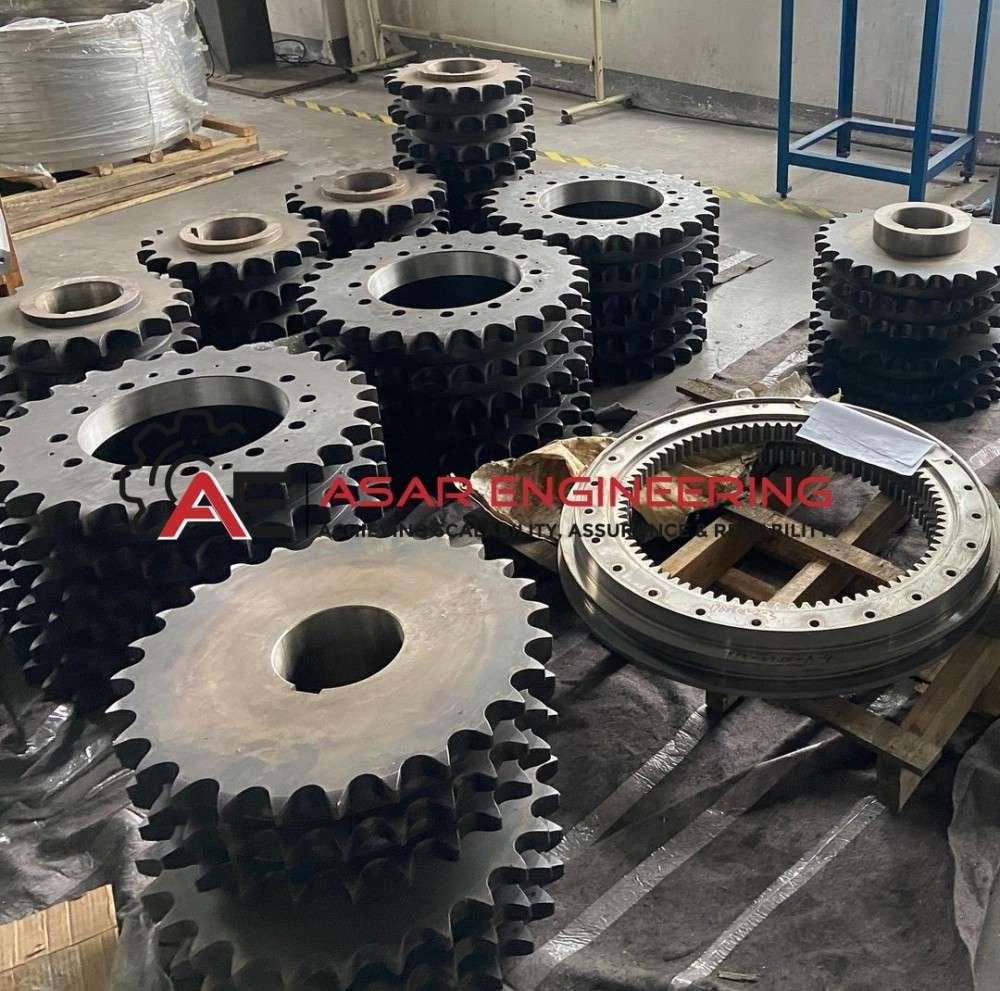
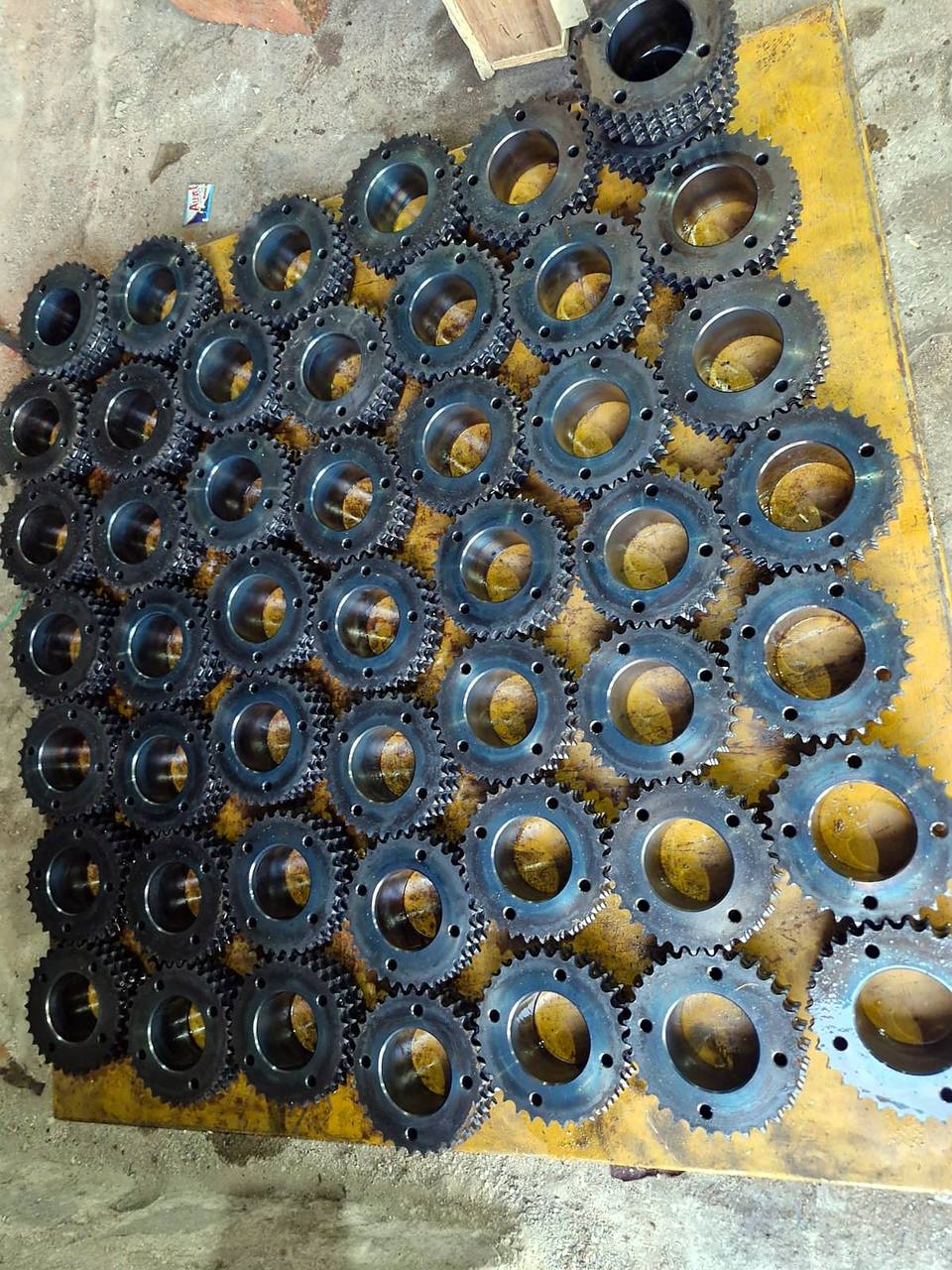
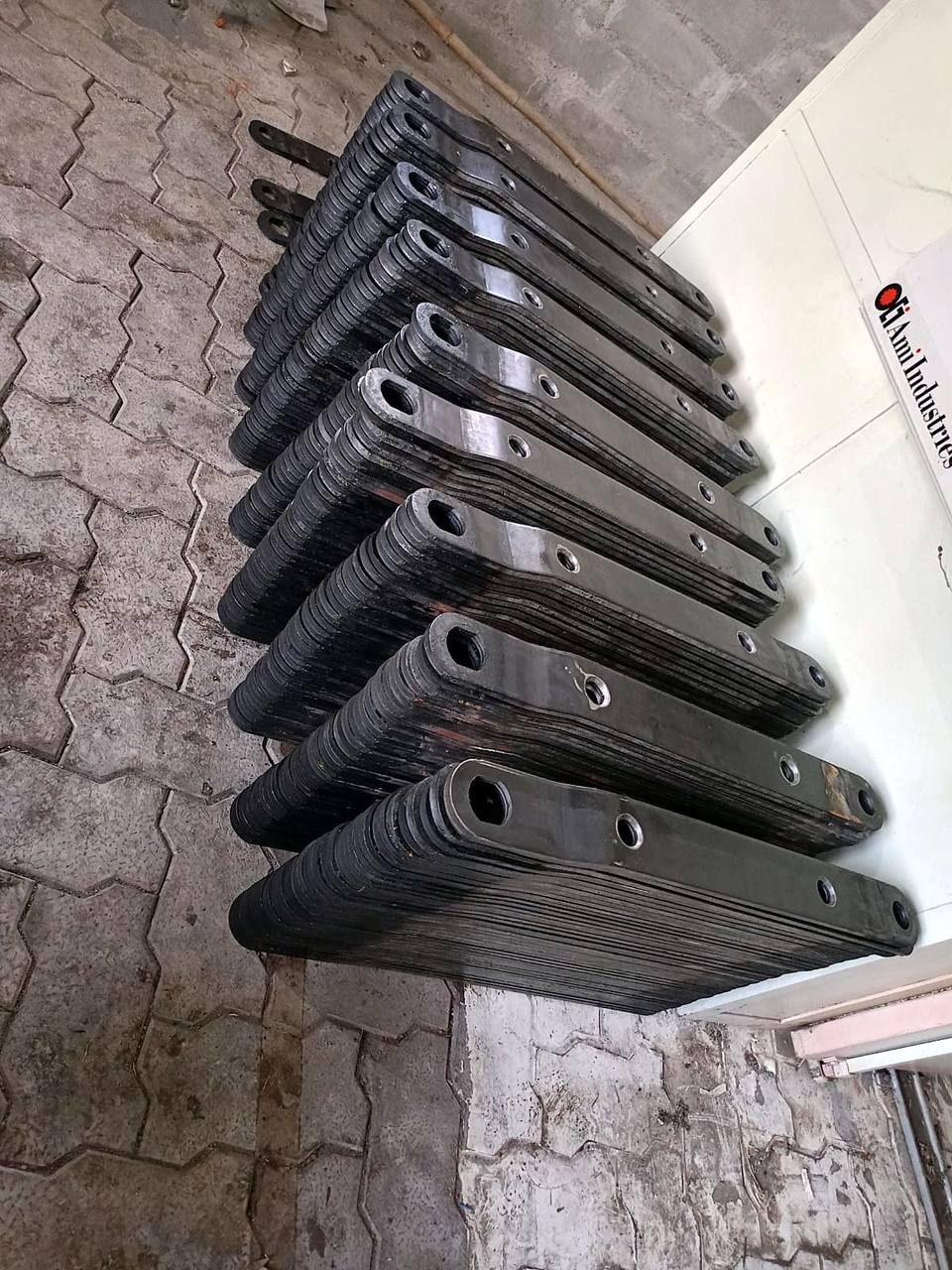
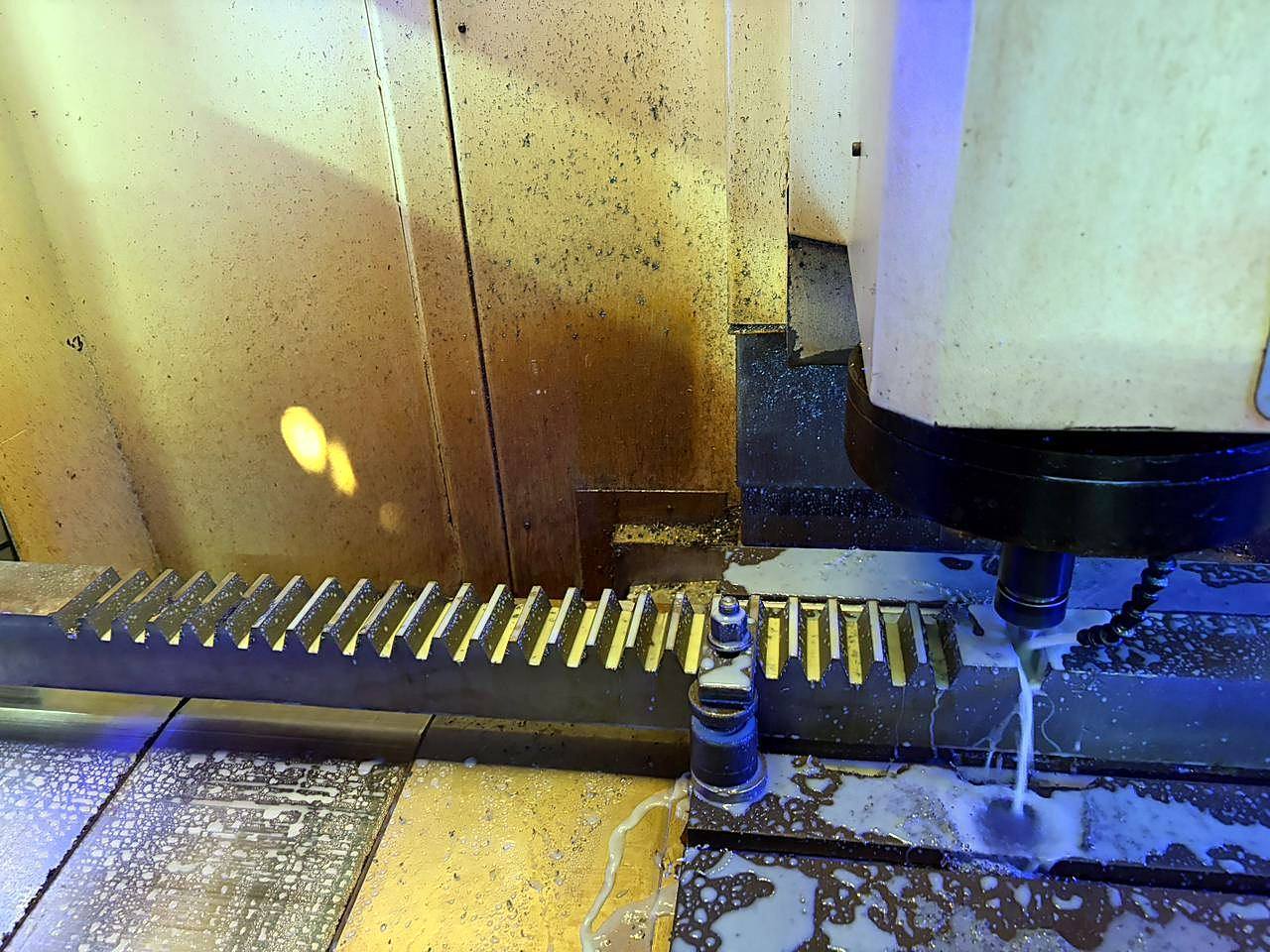
Our Industrial Transmission Chains and Recent Work
Photos of parts made and dispatched from our unit, not stock images.



Machining Videos from Our Shop Floor
Short, uncut clips of gear cutting, hobbing and machining at our unit in Gujarat.


What Our Customers Say
Reviews left on our Google Business Profile, shown word for word.
I bought a single screw extruder from asar engineering pvt.ltd. It's been a game changer for my manufacturing process. The extruder is efficient, easy to operate and built to last. Their customer is excellent and they guided me well through installation and setup. Highly recommended!
Asar Engineering supplied gearbox components for one of our industrial applications. The dimensional accuracy, finishing, and overall performance were satisfactory. We particularly appreciated their technical understanding and ability to suggest suitable solutions based on our operating requirements.
We have been sourcing industrial gearboxes from Asar Engineering Pvt. Ltd. and are satisfied with the product quality and consistency. The gearboxes are well-built, perform reliably under continuous operation, and were supplied according to our required specifications. Their team was also responsive during technical discussions and order coordination.
Industrial Transmission Chain FAQs
Questions buyers usually ask us before sending an enquiry for industrial transmission chain.
Should we use simplex, duplex or triplex chain, and does ANSI or BS matter?
Choose by power and speed: simplex chain suits light to medium drives, while duplex, triplex and multi-strand chains carry more load at the same pitch and simply get wider. Also confirm the standard. ANSI (ISO 606 A-series) and BS (B-series) transmission chains of the same nominal pitch, such as 40 and 08B, are not interchangeable because other dimensions differ.
Why does roller chain stretch, and when should sprockets be changed?
Chain elongation comes mainly from the pins wearing against the bushings, so lubrication at that joint decides chain life; lube-free chains with oil-impregnated sintered bushings suit places where oil is unwanted. Always renew worn sprockets with the chain, because a new industrial transmission chain on worn teeth wears quickly. We can induction harden sprocket teeth for heavy or dusty drives.
What details should I send to quote a chain and sprocket drive?
Give the chain pitch and standard (ANSI or BS), strand count, number of links or centre distance, material such as carbon or stainless steel, and any attachments. For matching sprockets, send tooth count, bore and keyway, or a drawing. Also mention power, shaft speed, operating conditions and the quantity of transmission chain and sprockets required.
Can you make matching sprockets or attachment chains to our sample?
Yes. We cut sprockets in-house from your drawing or a worn sample and match the tooth form to the chain pitch, so chain and sprockets run as one drive. Attachment chains with tabs, pins or brackets can be supplied for conveying, timing or positioning duties. If there is no drawing, send a short length of your existing transmission chain.
Do you supply industrial chains across India and for export?
We supply industrial transmission chains and sprockets across India from our Gandevi, Gujarat unit, from a single replacement drive to batch orders for machine builders and plant maintenance teams. Asar Engineering holds an IEC and takes export orders, and can suggest stainless steel or lube-free chains to suit washdown, corrosive or no-oil conditions at the site.
How We Make Your Industrial Transmission Chains
- Send your requirementDrawing, sample or photos of the industrial transmission chain, with the quantity you need.
- Technical check and quoteWe confirm material, hardness and tolerances, then send price and delivery time.
- Manufacturing and inspectionMade at our Gandevi unit; dimensions are checked before dispatch.
- DispatchPacked for road transport across India, or for export shipment.
Companies We Supply


























Need Industrial Transmission Chains made to your drawing?
Send the drawing or a sample with the quantity. We supply across India and take export orders.