Pinion Shaft Manufacturers in India
Pinion Shafts made to your drawing or sample at our Gujarat unit, supplied across India and exported.

Asar Engineering Pvt. Ltd. Gandevi, Gujarat
- Teeth cut in-house: hobbing, shaping and spiral bevel cutting
- Induction hardening done in-house
- Made to your drawing or a worn sample
- Supplied across India and exported (IEC registered)
Pinion Shafts with Integral Teeth
Asar Engineering is a pinion shaft manufacturer in India, making pinion shafts at our unit in Gandevi, Gujarat for industrial gearboxes, mill drives, cranes, conveyors and other rotating equipment. A pinion shaft combines a shaft and a small gear, the pinion, into one working part. Depending on the design, the pinion teeth are cut directly on the shaft or the pinion is mounted on it with an interference fit or a spline.
The pinion is the smaller gear in a conventional gear pair and normally contains fewer teeth than its mating gear. When the pinion shaft drives a larger gear, the gear pair can reduce rotational speed while increasing output torque. Because the pinion shaft is frequently positioned at the input or high-speed side of a transmission system, it must withstand combined torsional and bending loads generated during operation.
An integral pinion shaft needs no separate key, bolt or shrink joint between the shaft and the gear, which gives a rigid and concentric part for heavy-duty drives. We make each pinion shaft to the customer's drawing or sample, taking into account gear geometry, shaft dimensions, material, fits, operating speed, torque and the mating gear.
What is a Pinion Shaft?
A pinion shaft is a power transmission part made up of a small gear, the pinion, formed on or firmly mounted to a rotating shaft. The pinion has fewer teeth than the gear it meshes with and is normally the driving gear in the pair.
In an integral pinion shaft, the gear teeth are cut into the parent material of the shaft, so the shaft and pinion are one solid part. With no separate key, bolt or interference joint between gear and shaft, this design gives good mechanical integrity and accurate concentricity.
Pinion shafts matter most where the input shaft runs at relatively high speed. The pinion transfers the input power to a larger mating gear, and the gear ratio between the two sets the output speed and torque.
How Does a Pinion Shaft Work?
A pinion shaft generally receives rotational power from a motor, engine, or another input drive mechanism. The shaft rotates the pinion, and the pinion teeth engage with a larger mating gear.
The working process can be understood through three primary functions:
- Input Power Transmission: The pinion shaft commonly acts as the driving or input member and receives rotational energy from a motor, engine, or drive system.
- Speed and Torque Conversion: When a smaller pinion drives a larger gear, the output rotational speed is reduced while the available torque is increased according to the applicable gear ratio and transmission efficiency.
- Mechanical Load Handling: The pinion shaft experiences torsional forces from transmitted torque as well as bending forces generated by the interaction between the pinion teeth and the mating gear.
Because the pinion can operate at high speed and is directly involved in the first stage of gear engagement, its tooth geometry, shaft rigidity, material, surface condition, and dimensional accuracy are important considerations.
Applications of Pinion Shaft
Pinion shafts are used in industrial and heavy engineering power-transmission systems wherever motor speed has to be converted into the speed and torque the driven machine needs.
Differentials and Right-Angle Drives
Bevel pinion shafts are used in right-angle gear drives and differential-type assemblies, where the pinion meshes with a larger bevel or ring gear.
The pinion and ring gear change the direction of power transmission by 90 degrees and provide the required reduction ratio.
Industrial Gearboxes
Industrial gearboxes use pinion shafts to transfer power between different stages of a transmission. Pinion shafts can serve as high-speed input elements and engage with larger gears to reduce speed and increase torque.
Typical examples are reduction gearboxes, industrial drives, hoist gearboxes and other heavy rotating equipment.
Heavy-Lift Cranes
Cranes, hoists and lifting equipment need controlled power to the lifting and travel mechanisms. Pinion shafts are used in their gearboxes and in open gear drives where torque multiplication and reliable gear engagement are needed.
Cement, Mining and Mill Drives
Ball mills, rotary kilns, crushers and mixers in cement plants and mines use pinion shafts in their gearboxes and in open girth gear drives, where the pinion drives a large girth gear to rotate the mill shell or kiln.
Sugar, Steel and Paper Mills
Sugar mill drives, steel plant roller tables and paper machine drives use pinion shafts in their reduction stages. Replacement pinion shafts for these machines are often made to the old part as a sample.
Material Handling Equipment
Conveyors, lifting systems, industrial drives, and other material-handling machinery may use pinion shafts within their gearboxes to transmit power from motors to driven components.
General Industrial Machinery
Pinion shafts are also used in pumps, processing equipment, machine tools, plastic and chemical plant machinery and other industrial drives.
Types of Pinion Shaft
Pinion shafts can be categorized according to their construction, connection method, and tooth geometry. The appropriate type depends on the required torque, speed, gear arrangement, shaft configuration, and operating conditions.
Integral Pinion Shaft
The integral pinion shaft combines the shaft and gear into a single piece. The teeth are machined directly into the shaft material.
This construction gives a continuous structure with no gear-to-shaft joint. It is chosen when concentricity, rigidity and reliable torque transmission are important. The drawback is that damage to the teeth usually means replacing or reworking the complete shaft, not just a separate gear.
Shrunk-Fit Pinion Shaft
A shrunk-fit pinion shaft consists of a separately made pinion and shaft assembled with an interference fit. The pinion is heated so that its bore expands, placed over the shaft and allowed to cool, which creates a strong frictional grip.
This design is useful when making the gear and shaft separately is easier, or when the gear may need to be replaced on its own.
Splined Pinion Shaft
A splined pinion shaft uses external splines on the shaft that engage internal splines in the pinion or mating part. The splines share the torque around the shaft circumference and give positive engagement; depending on the design, they can also allow easier assembly or controlled axial movement.
Spur Pinion Shaft
A spur pinion shaft features straight gear teeth that run parallel to the shaft axis. It is generally used with parallel-shaft gear arrangements.
Spur teeth have a simple profile and produce no axial thrust, which keeps the bearing arrangement simple.
Helical Pinion Shaft
A helical pinion shaft has teeth cut at an angle to the shaft axis, so mating teeth come into contact gradually.
Helical pinion shafts are used in industrial gearboxes that need smoother and quieter running at higher speeds. They generate axial thrust, which the bearings must be designed to take.
Bevel Pinion Shaft
A bevel pinion shaft has teeth on a conical surface. It meshes with a mating bevel gear and transfers power between intersecting shafts, usually at 90 degrees. Teeth can be straight or spiral.
This configuration is used when the transmission system needs to change the direction of rotational power.
Hypoid Pinion Shaft
A hypoid pinion shaft looks similar to a spiral bevel pinion, but the pinion axis is offset from the gear axis, so the shafts do not intersect. Hypoid gears are mainly used in vehicle final drives and differentials.
The offset allows a larger pinion and more tooth contact than a bevel pinion of the same ratio, but it also increases sliding between the teeth, so special lubricants are needed.
Components of a Pinion Shaft
A pinion shaft has several functional areas that work together to transmit power.
Shaft Body
The shaft body provides the primary rotating structure and transfers torque between the input drive and the pinion gear section. Its diameter, length, material, and geometry are selected according to the mechanical load and equipment design.
Pinion Gear Section
The pinion is the smaller gear in the gear pair. Its number of teeth, pitch, diameter, pressure angle, tooth profile, and other gear parameters are determined according to the mating gear and required transmission ratio.
Gear Teeth
The pinion teeth provide direct mechanical contact with the mating gear. Accurate tooth geometry is essential for appropriate engagement, load distribution, and transmission performance.
Shaft Shoulders
Shoulders can be incorporated into the shaft to provide axial positioning for bearings, gears, seals, spacers, or other components.
Bearing Seats
Pinion shafts run on bearings. Accurately ground or turned bearing seats give the correct fit between the shaft and its bearings.
Keyways or Splines
Depending on the construction, additional keyways or splined sections may be used to connect the shaft to other components. Integral pinion shafts may eliminate the need for a key between the pinion and shaft itself.
Mating Gear
The pinion works together with a larger gear, ring gear, rack, or another compatible gear element. The mating component determines the required tooth geometry and transmission arrangement.
Shaft Ends
The shaft ends may be designed for coupling, bearing support, mounting, or connection with the input power source.
Pinion Shaft Supplier in India
When choosing a pinion shaft supplier in India, treat the shaft and gear section as one power-transmission part. The supplier needs to know the gear ratio, shaft speed, torque, tooth profile, shaft size, bearing arrangement, material and operating environment.
Asar Engineering supplies pinion shafts for gearboxes, mill drives, cranes, conveyors and other heavy machinery across India.
For integral pinion shafts, the gear teeth are cut into the shaft by hobbing or shaping after the shaft is turned. Concentricity between the teeth and bearing seats is critical because the gear cannot be repositioned on the shaft afterwards.
Material depends on the application. The shaft steel must have enough strength, toughness, fatigue strength and wear resistance for the load. The teeth and journals can be induction hardened in-house where the application needs a hard wearing surface.
The pinion tooth profile must match the mating gear: module or DP, pressure angle, helix angle and tooth count all have to agree.
As a pinion shaft manufacturer in India working to drawing or sample, we check dimensions, tooth size, runout and surface finish with dial gauges and other measuring instruments before dispatch.
A pinion shaft that is correctly sized and matched to its mating gear gives reliable power transmission and consistent meshing.
Benefits of Using Pinion Shaft
Pinion shafts offer several advantages in power-transmission systems:
- Integrated construction: An integral pinion shaft combines the shaft and gear into a single component.
- Strong mechanical connection: Integral designs eliminate a separate gear-to-shaft joining interface.
- Accurate concentricity: Cutting the pinion teeth directly on the shaft gives precise alignment between the gear and shaft.
- Reliable torque transmission: The pinion transfers rotational power directly into the mating gear.
- Speed reduction: A small pinion driving a larger gear can reduce output rotational speed.
- Torque multiplication: The corresponding gear ratio can increase available output torque.
- Multiple tooth profiles: Spur, helical and bevel pinions can be selected to suit the transmission arrangement.
- High-speed input capability: Pinion shafts are commonly used at the input or high-speed side of gear transmission systems.
- Application flexibility: They suit gearboxes, mill drives, cranes, conveyors and other heavy industrial equipment.
- Customized construction: Shaft dimensions, gear geometry, materials, and connection methods can be selected according to application requirements.
Pinion Shaft Specifications
| Specification | Typical Value / Consideration |
|---|---|
| Product Type | Pinion Shaft |
| Construction | Integral, Shrunk-Fit, or Splined |
| Pinion Type | Spur, Helical, Straight Bevel, Spiral Bevel |
| Shaft Material | Application-dependent steel or alloy steel |
| Pinion Material | Integral with shaft or application-specific separate gear material |
| Number of Teeth | Based on required gear ratio and mating gear |
| Gear Profile | Selected according to mating gear |
| Shaft Diameter | As per mechanical design |
| Overall Shaft Length | Application-dependent |
| Pinion Diameter | Based on tooth count and gear geometry |
| Gear Ratio | Determined by pinion and mating gear relationship |
| Pressure Angle | Application and gear standard dependent |
| Helix Angle | Applicable to helical configurations |
| Shaft Configuration | Straight, stepped, or application-specific |
| Bearing Seats | As required by gearbox or equipment design |
| Keyway | Where required |
| Splines | Where required for the connection |
| Heat Treatment | Through hardening or induction hardening, as per application |
| Surface Finish | Selected according to operating and mating requirements |
| Operating Speed | Application-dependent |
| Torque Capacity | Dependent on gear geometry, shaft size, material, and operating conditions |
| Mating Component | Gear, ring gear, rack, or other compatible gear element |
| Applications | Gearboxes, mill and kiln drives, cranes, conveyors, industrial drives |
| Customization | Made to drawing or sample: dimensions, gear geometry, material, tooth profile, heat treatment |
Pinion Shaft Exporter from India
Asar Engineering is IEC registered and takes export orders for pinion shafts made to customer drawings, alongside supply within India.
Pinion shafts usually need close tolerances because they must fit bearings, seals, couplings and the mating gear. For integral pinion shafts, the alignment of the teeth with the shaft centreline is especially important.
For export orders we work from the customer's drawing and specification: shaft diameter, length, number of teeth, gear profile, module or pitch, material, heat treatment, surface finish, bearing seats, keyways and splines.
Export shipments are packed so the machined teeth and bearing seats are protected from impact, moisture and contamination until installation.
Why Choose Asar Engineering
- In-house teeth cutting: Spur and helical pinions are hobbed or shaped, and bevel pinions cut, at our Gandevi, Gujarat unit.
- Made to drawing or sample: We make pinion shafts to your drawing, or reverse-engineer them from a worn sample.
- Integral pinion shafts: Teeth are cut directly on the shaft for one-piece, concentric construction.
- In-house induction hardening: Teeth and journals can be induction hardened in our own facility.
- Material matched to the application: Steel grade and hardness are chosen to suit the load, speed and duty.
- Inspection before dispatch: Dimensions, tooth size and runout are checked with dial gauges and measuring instruments.
- One-off to batch quantities: From a single replacement shaft to repeat batch orders.
- Supply across India and export: We supply customers across India and take export orders (IEC registered).
This product is part of our industrial transmission gear range, made at our unit in Gujarat and supplied across India.
Related products: Gear Coupling, Helical Gear, Spur Gear.
Get a Quote for Pinion Shafts
Send us your drawing or a sample, along with material, heat treatment and quantity, and we will quote for your pinion shafts. Asar Engineering supplies pinion shafts across India and takes export orders.
Get an accurate quote
What to Send for Your Pinion Shaft Quote
- Drawing, sample or clear photos with main dimensions
- Module or DP, number of teeth and pressure angle
- Face width, bore size and keyway or spline details
- Material and hardness, if known
- Quantity and the date you need the parts
Have a drawing, a sample or a worn part?
Send it with the quantity. We reply with material, hardness, price and delivery time.
Industries That Use Our Pinion Shafts
Material, hardness and fit are chosen for the duty the part will see in your plant.
-
Cement
Pinion Shafts for kiln, mill, crusher and conveyor drives.
-
Steel & Metal
Pinion Shafts for rolling mills and processing lines.
-
Sugar
Pinion Shafts for cane carriers, mill drives and bagasse conveyors.
-
Mining & Material Handling
Pinion Shafts for belt conveyors, crushers and bucket elevators.
-
Chemical & Process
Pinion Shafts for pumps, mixers and agitators.
-
Machine Builders (OEM)
Pinion Shafts for new machines, made to your drawing.
Our Pinion Shafts and Recent Work
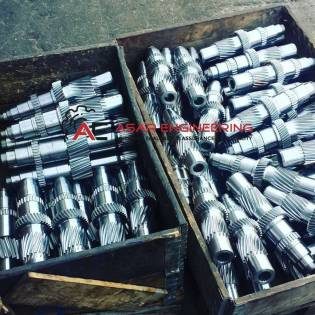
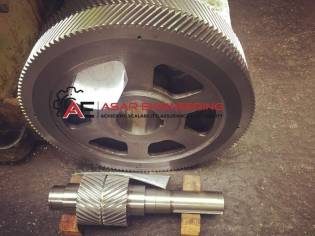
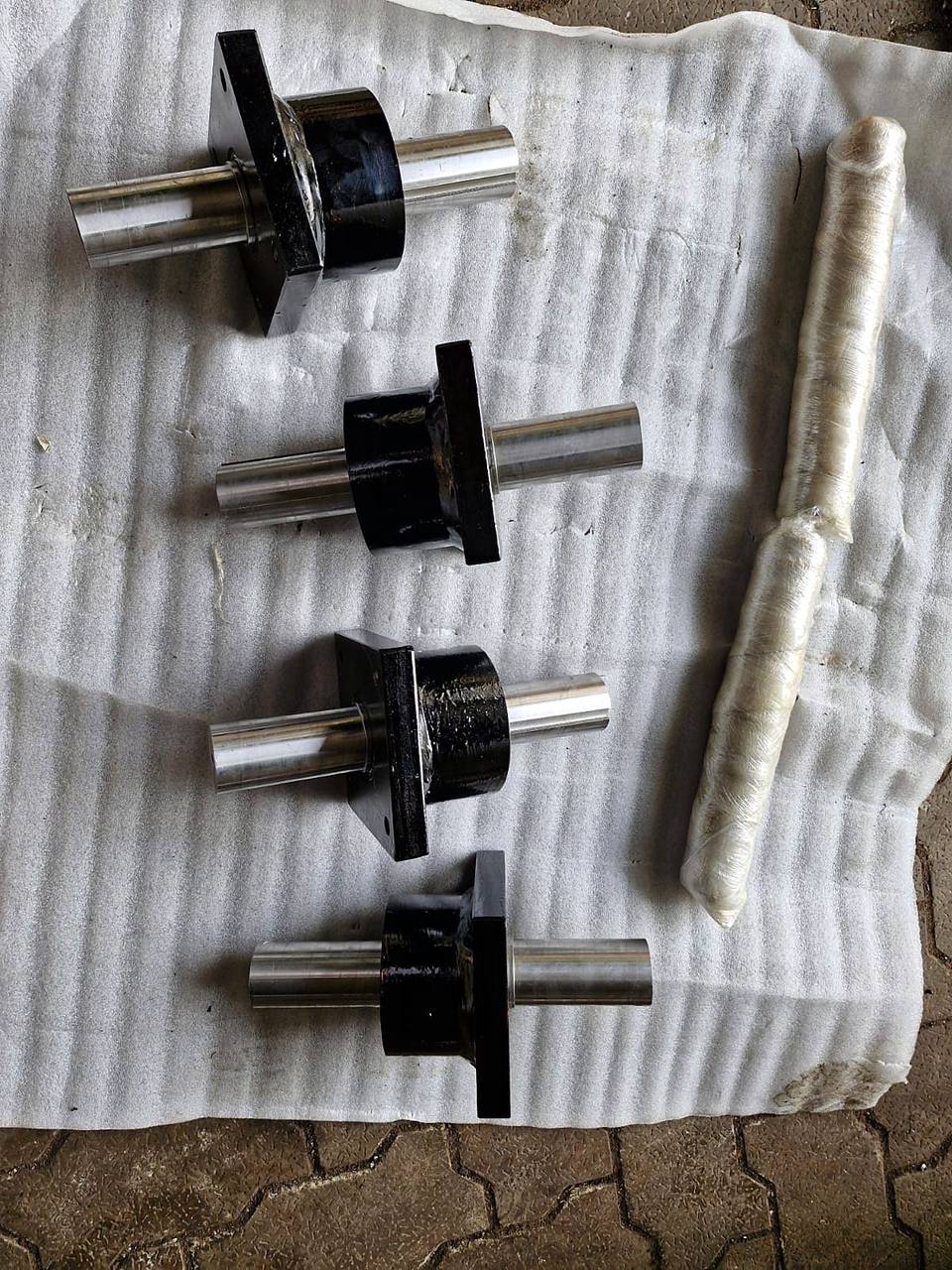
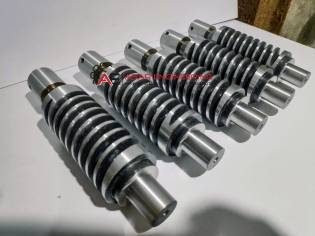
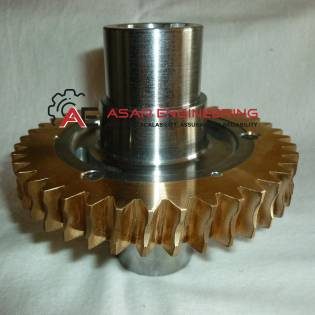
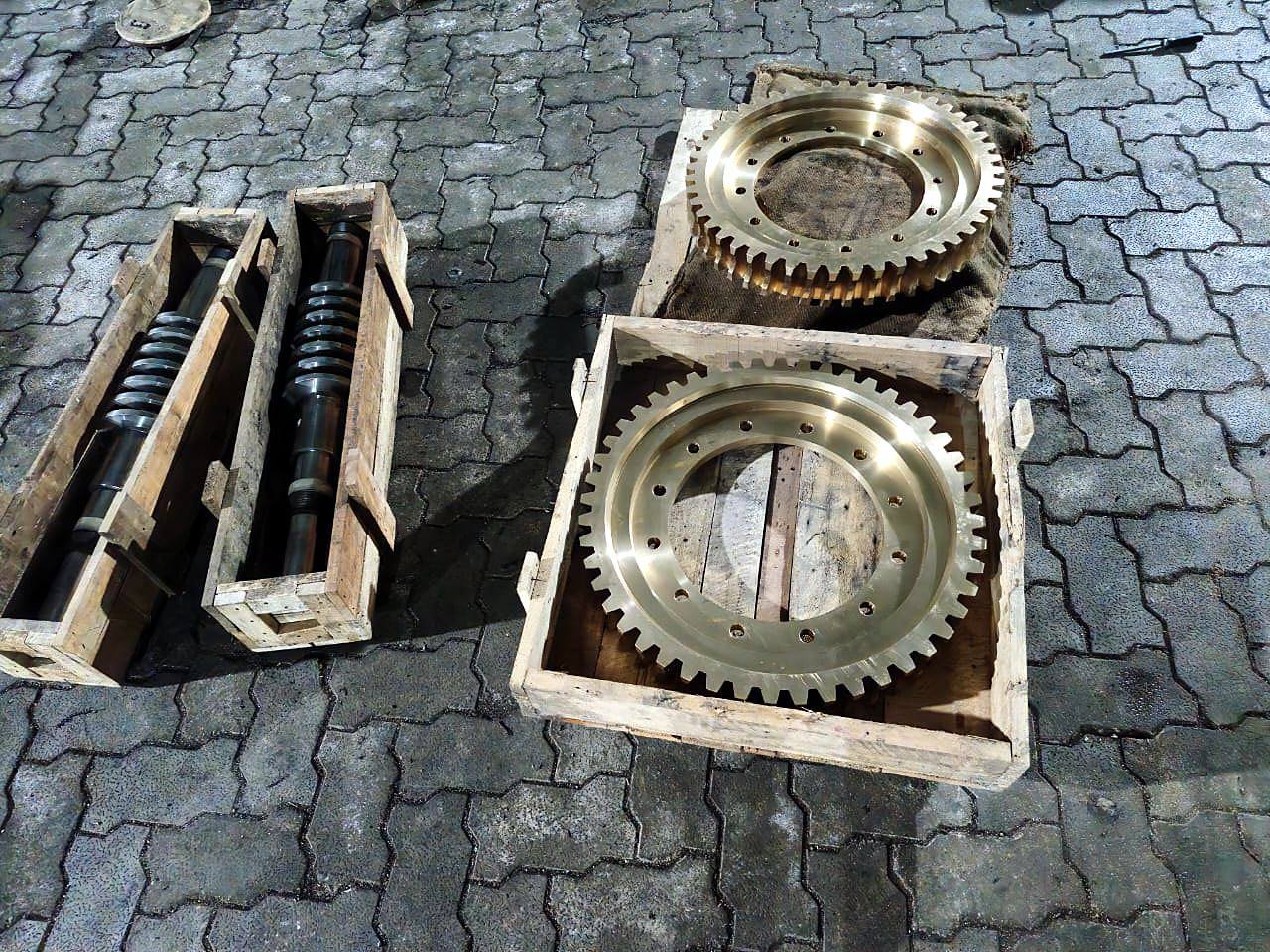
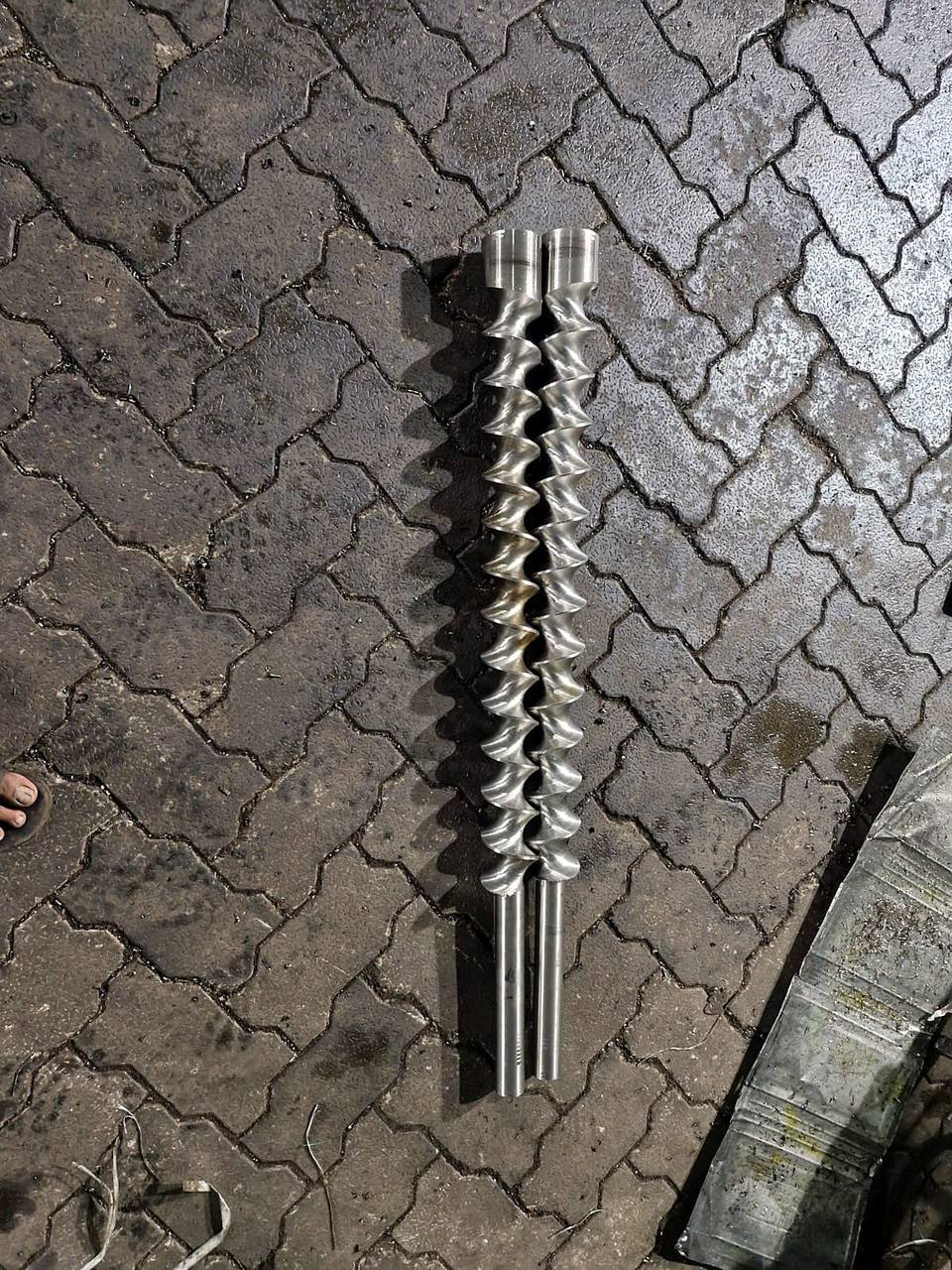
Photos of parts made and dispatched from our unit, not stock images.

Machining Videos from Our Shop Floor
Short, uncut clips of gear cutting, hobbing and machining at our unit in Gujarat.


What Our Customers Say
Reviews left on our Google Business Profile, shown word for word.
Asar Engineering supplied gearbox components for one of our industrial applications. The dimensional accuracy, finishing, and overall performance were satisfactory. We particularly appreciated their technical understanding and ability to suggest suitable solutions based on our operating requirements.
We have been sourcing industrial gearboxes from Asar Engineering Pvt. Ltd. and are satisfied with the product quality and consistency. The gearboxes are well-built, perform reliably under continuous operation, and were supplied according to our required specifications. Their team was also responsive during technical discussions and order coordination.
I bought a single screw extruder from asar engineering pvt.ltd. It's been a game changer for my manufacturing process. The extruder is efficient, easy to operate and built to last. Their customer is excellent and they guided me well through installation and setup. Highly recommended!
Pinion Shaft FAQs
Questions buyers usually ask us before sending an enquiry for pinion shaft.
Should I choose an integral, shrunk-fit or splined pinion shaft?
An integral pinion shaft, with teeth cut into the shaft itself, gives the most rigid and concentric part and suits heavy-duty gearbox and mill drives. A shrunk-fit or splined design lets the pinion be made separately and replaced on its own if the teeth wear. We can advise on the construction once we see the torque, speed and gearbox layout.
How are the teeth and bearing journals of a pinion shaft hardened?
The steel is chosen for strength, toughness and fatigue resistance, and the part is either through hardened or induction hardened depending on the duty. We induction harden pinion shaft teeth and journals in-house at Gandevi. Because the gear cannot be moved on an integral shaft, we cut the teeth after turning and check runout between the teeth and bearing seats with dial gauges.
What information do you need to quote for a pinion shaft?
Please send a drawing or the old pinion shaft, plus number of teeth, module or DP, pressure angle, helix angle and hand if helical, shaft diameters and overall length, bearing seats, keyways or splines, material, heat treatment, surface finish and quantity. Details of the mating gear, speed and torque help us confirm the tooth profile will mesh correctly.
Can you copy a broken pinion shaft from a sugar mill or kiln drive?
Yes. Replacement pinion shafts for sugar, steel, paper, cement and mill drives are often made using the worn part as the sample. We measure the shaft steps, bearing seats and tooth geometry, then hob, shape or cut the teeth to match the existing mating gear. Where possible, send the mating gear details too, since heavy wear can hide the original profile.
Do you supply pinion shafts outside Gujarat and for export?
We supply pinion shafts from our Gandevi, Gujarat unit to customers across India, with a branch office in Mumbai, and we are IEC registered for export orders made to customer drawings. Orders can be a single replacement shaft or repeat batches. Export shipments are packed to protect the machined teeth and bearing seats from impact and moisture.
How We Make Your Pinion Shafts
- Send your requirementDrawing, sample or photos of the pinion shaft, with the quantity you need.
- Technical check and quoteWe confirm material, hardness and tolerances, then send price and delivery time.
- Manufacturing and inspectionMade at our Gandevi unit; dimensions are checked before dispatch.
- DispatchPacked for road transport across India, or for export shipment.
Companies We Supply




























Need Pinion Shafts made to your drawing?
Send the drawing or a sample with the quantity. We supply across India and take export orders.