Screw Gear Manufacturers in India
Screw Gears made to your drawing or sample at our Gujarat unit, supplied across India and exported.

Asar Engineering Pvt. Ltd. Gandevi, Gujarat
- Teeth cut in-house: hobbing, shaping and spiral bevel cutting
- Induction hardening done in-house
- Made to your drawing or a worn sample
- Supplied across India and exported (IEC registered)
Screw Gears for Light-Duty Crossed-Shaft Drives
Asar Engineering is a screw gear manufacturer in India, cutting crossed helical gears at its manufacturing unit in Gandevi, Gujarat. A screw gear transmits rotary motion and relatively light power between non-parallel, non-intersecting shafts. The shafts are most often crossed at 90 degrees, but other shaft angles are possible depending on the machine layout.
Screw gears are useful where a machine needs a compact drive between shafts that cannot run parallel. Their helical teeth engage gradually, while the crossed-shaft layout changes the way the mating teeth work against each other. We make screw gears to customer drawing or sample, matched to the shaft arrangement, operating conditions, material pairing and load.
Screw gears are generally selected for light-duty and precision mechanical applications because their point-contact geometry and substantial sliding action limit their suitability for high-load power transmission. Proper material selection, lubrication, alignment, and operating conditions are therefore important when designing a reliable screw gear arrangement.
What is a Screw Gear?
A screw gear set is a pair of helical gears used to transmit motion between two non-parallel, non-intersecting shafts. Each gear looks like an ordinary helical gear, but because the shafts are crossed, the pair runs very differently from a parallel-shaft helical pair.
Screw gears are often confused with worm gears. Both work on crossed shafts, but a worm wheel is throated to wrap around the worm, so the teeth make line contact. That gives a worm set far higher load capacity and much higher reduction ratios. A screw gear pair uses two plain cylindrical helical gears with point contact, so it is suited only to light loads. If your drive carries real torque, a worm and worm wheel set is usually the better choice, and Asar Engineering cuts both.
For crossed helical gears, the shaft angle equals the sum of the two helix angles when both gears have the same hand. The usual 90-degree set therefore uses two gears of the same hand, for example 45 degrees + 45 degrees. Parallel-shaft helical gears are the opposite: the mating gears must have opposite hands.
The most important feature of screw gears is sliding between the teeth. Because the shafts are crossed, the teeth engage with mostly sliding motion rather than the rolling action seen in spur and parallel helical gears. This lets motion pass between shafts pointing in different directions, but it also generates more friction and heat.
Shaft Arrangement
Screw gears are designed specifically for non-parallel, non-intersecting shafts. A 90-degree shaft arrangement is common, but the geometry can be configured for different shaft angles according to the required mechanical layout.
This flexibility can be useful when machinery has limited space or when the input and output shafts cannot be positioned using a conventional parallel-axis gear train.
Same-Hand Helical Teeth
The helix hand is an important design consideration. In a common crossed-helical arrangement, the driving and driven gears use the same helix hand to achieve the desired meshing relationship.
Correct selection of helix hand, helix angle, normal module, tooth geometry and shaft angle is essential for proper tooth engagement and to avoid excessive local loading.
Point Contact
Unlike many conventional gear arrangements that distribute load along a broader contact region, screw gears have localized point contact between the mating tooth surfaces.
This point-contact geometry concentrates mechanical stress into a relatively small area. As a result, screw gears are generally more appropriate for light-duty transmission rather than applications requiring very high torque or horsepower.
Sliding Tooth Motion
The crossed orientation produces significant sliding between the mating tooth surfaces. This sliding action is responsible for both the operating characteristics and limitations of screw gears.
The continuous sliding can increase frictional losses and generate heat. Proper lubrication and compatible material combinations are therefore important for maintaining acceptable operating life.
Material Selection
Material selection is particularly important for screw gear sets because of their high sliding interaction. A common design approach is to use dissimilar materials for the mating gears.
For example, a hardened steel driving gear may be paired with a softer driven component manufactured from bronze, brass, or an engineered polymer such as nylon. The softer material can provide suitable sliding characteristics while reducing the risk of severe adhesive wear between similar hard metallic surfaces.
The final material combination depends on load, speed, lubrication, operating environment, dimensional requirements, and expected service life.
Lubrication Requirements
Lubrication reduces friction and controls the heat generated by sliding contact. Screw gear sets need continuous, suitable lubrication for their operating conditions.
Insufficient lubrication accelerates tooth wear, raises operating temperature and can cause scoring or galling. Asar Engineering takes lubrication into account when recommending the material pairing for a screw gear set.
Applications of Screw Gear
Screw gears are used where a compact drive between crossed shafts matters more than power capacity. They suit machinery and mechanisms where motion must be turned through an unusual angle.
Because point contact and sliding limit their load capacity, they are chosen for light-duty, compact and auxiliary drives.
Precision and Measuring Instruments
Screw gears can be used in mechanical instruments and measuring equipment where motion must pass between shafts on different axes within a tight layout.
Machine Tool Feed and Indexing Drives
Small screw gear pairs can drive feed shafts, indexing mechanisms and speed indicators on machine tools and special-purpose machines, where the load is light and the shafts are at right angles.
Lubrication Pump and Auxiliary Drives
A common use of screw gears is driving small auxiliary shafts, such as lubricating oil pumps, governors or tachometers, off a main shaft at right angles. Engine distributor and oil-pump drives are a well-known example of this arrangement; in industrial gearboxes and machinery, the same idea is used for pump and indicator drives.
Packaging Machinery
Light-duty packaging and automation equipment can use screw gears where a compact crossed-shaft drive is needed to move or position mechanical parts.
Textile Machinery
Some textile-handling mechanisms use compact crossed-axis drives, provided the load stays within the capacity of the screw gear set.
Printing Equipment
Small drives in printing machinery may use crossed helical gears to transfer movement between differently oriented shafts in a compact layout.
Common Types of Screw Gears
Screw gears are not a large family of gear forms. They are usually classified by shaft angle, helix hand and material pairing, chosen to suit the application.
90-Degree Screw Gears
The 90-degree screw gear arrangement is one of the most common configurations. The two shafts are positioned perpendicular to one another, allowing rotary movement to be redirected through a right-angle layout.
For this configuration, proper helix-hand selection and tooth geometry are essential to ensure appropriate meshing.
Other Shaft Angle Screw Gears
Screw gears are not limited to 90 degrees. By choosing different helix angles for the two gears, the pair can be designed for other crossing angles, such as 45 or 60 degrees.
This gives flexibility in shaft positioning when the machine layout does not allow a right angle.
Same-Hand and Opposite-Hand Screw Gear Sets
When the shaft angle equals the sum of the two helix angles, both gears have the same hand, which is the usual 90-degree case. When the shaft angle equals the difference between the helix angles, the gears have opposite hands. The hand must be specified correctly on the drawing, or the pair will not mesh at the intended shaft angle.
Steel-and-Bronze Screw Gear Sets
Steel-and-bronze combinations can be used where sliding contact requires a harder driving member and a more compatible sliding material for the driven gear.
The combination can help manage friction and wear when properly designed and lubricated.
Steel-and-Polymer Screw Gear Sets
Engineered polymers such as nylon can be considered for some light-duty applications. They offer good sliding behavior and low weight, but suitability depends on temperature, load, speed, dimensional stability and environment.
Core Components
A screw gear drive consists of several elements that together decide how well rotary motion passes between the shafts.
Driving Gear
The driving gear receives rotational input from the primary shaft and transfers movement through its helical teeth to the mating gear.
In many applications, the driving gear is manufactured from a harder material to withstand repeated sliding interaction.
Driven Gear
The driven gear receives movement from the driving gear and transfers it to the output shaft. Its material and tooth geometry are selected according to the expected load, speed, lubrication, and wear conditions.
Helical Teeth
The angled teeth are the primary working surfaces of the screw gear. Their helix geometry determines how the gears interact when mounted on crossed shafts.
Gear Bore
The central bore accommodates the shaft on which the gear is mounted. Bore dimensions must match the shaft arrangement and mounting method required by the machinery.
Hub
A hub provides additional material around the bore and can support secure mounting to the shaft. Its dimensions depend on torque requirements, shaft size, and overall gear design.
Shaft Alignment
The gears must be mounted at the specified crossing angle and center distance, and aligned accurately, to keep the tooth contact where it is designed to be.
Lubrication System
Because screw gears experience significant sliding, lubrication is an important part of the overall assembly. Proper lubricant selection and supply help manage friction, heat, and surface wear.
Screw Gear Supplier in India
Choosing a screw gear supplier in India is about more than outside diameter and number of teeth. For a crossed helical drive, the shaft angle, helix hand, module, tooth geometry, material pairing, lubrication, speed and transmitted load all need to be checked.
As a screw gear manufacturer in India, Asar Engineering looks at each screw gear requirement from the application side. We supply special transmission parts for machines where ordinary parallel-shaft gears cannot give the required layout.
When selecting a screw gear, consider point contact stress, sliding velocity, heat generation, material compatibility and the expected duty cycle. The right combination of steel, bronze, brass or engineered polymer should be chosen for the application, not assumed.
Where a standard gear does not fit, we make screw gears to your drawing or sample. Gear dimensions, bore, tooth profile, helix angle and hand, shaft angle and material are set by your mechanical requirement, from one-off replacements to batch orders.
Teeth are cut in-house by hobbing, and dimensions are checked with dial gauges before dispatch. Accuracy matters on crossed-axis drives because misalignment quickly raises local contact stress and wear.
Benefits of Screw Gears
Compact Crossed-Shaft Transmission
Screw gears transmit motion between shafts that are not parallel, in a compact layout, including the common right-angle arrangement.
Flexible Shaft Angles
Unlike parallel-axis helical gears, screw gears can be designed for different shaft crossing angles to suit the machine.
Smooth Tooth Engagement
The helical tooth form provides gradual engagement between the mating gear surfaces, which can contribute to smooth mechanical movement in suitable light-duty applications.
Useful for Precision Mechanisms
Screw gears suit instruments and mechanisms where the load is low but the shaft orientation is critical.
Dissimilar Material Options
Combining hardened steel with bronze, brass or engineered polymers helps manage sliding friction and wear.
Suitable for Specialized Machinery
They solve specific transmission problems where ordinary parallel-axis gears cannot give the required shaft layout.
Screw Gear Specifications
| Specification | Typical Range / Consideration |
|---|---|
| Gear Type | Screw Gear / Crossed Helical Gear |
| Gear Form | Cylindrical helical gear |
| Shaft Arrangement | Non-parallel and non-intersecting |
| Common Shaft Angle | 90° (e.g. two 45° helix gears of the same hand) |
| Other Shaft Angles | Application-dependent |
| Helix Hand | Same hand when shaft angle = sum of helix angles (typical 90° set) |
| Contact Type | Localized point contact |
| Tooth Motion | Predominantly sliding |
| Load Capacity | Generally suited to light-duty applications |
| Driving Gear Materials | Hardened steel and other suitable gear materials |
| Driven Gear Materials | Bronze, brass, nylon, or other suitable materials |
| Lubrication | Required according to operating conditions |
| Applications | Instruments, machine tool feed drives, pump and indicator drives, packaging, textile and printing machinery |
| Customization | Tooth profile, bore, material, dimensions, helix and shaft-angle requirements |
Screw Gear Exporter from India
Asar Engineering is registered with an IEC (Importer-Exporter Code) and takes export orders for screw gears made to drawing, for machinery, automation and instrumentation builders.
For export orders, dimensional consistency, tooth form, material, surface finish and export packing all matter. We quote against a full specification: gear size, bore, module, number of teeth, helix hand and angle, shaft angle, material grade, heat treatment and inspection required.
Why Choose Asar Engineering
- In-House Teeth Cutting: Helical teeth are hobbed at our own unit in Gandevi, Gujarat, so helix hand, angle and tooth form are controlled directly.
- Made to Drawing or Sample: We make screw gears to your drawing or from a worn sample, for your shaft angle and center distance.
- Material Matched to the Application: Steel, bronze, brass or polymer pairings are chosen for the sliding conditions, load and speed.
- Induction Hardening In-House: Steel driving gears can be induction hardened at our unit where wear resistance is needed.
- Inspection Before Dispatch: Bore, tooth dimensions and overall sizes are checked with dial gauges before the gears leave the shop.
- One-Off to Batch Quantities: From a single replacement pair to repeat batch orders.
- Worm Gears Too: If your load is too high for a screw gear, we also cut worms and worm wheels for the same crossed-shaft layout.
- Supply Across India and Export: We supply customers across India and take export orders under our IEC registration.
This product is part of our industrial transmission gear range, made at our unit in Gujarat and supplied across India.
Related products: Gear Coupling, Spur Gear, Spiral Bevel Gear.
Get a Quote for Screw Gears
Looking for a screw gear manufacturer in India for a crossed-shaft drive? Send your drawing or sample, the quantity and the shaft angle to Asar Engineering. We make screw gears in Gujarat, supply across India and take export orders.
Get an accurate quote
What to Send for Your Screw Gear Quote
- Drawing, sample or clear photos with main dimensions
- Module or DP, number of teeth and pressure angle
- Face width, bore size and keyway or spline details
- Material and hardness, if known
- Quantity and the date you need the parts
Have a drawing, a sample or a worn part?
Send it with the quantity. We reply with material, hardness, price and delivery time.
Industries That Use Our Screw Gears
Material, hardness and fit are chosen for the duty the part will see in your plant.
-
Cement
Screw Gears for kiln, mill, crusher and conveyor drives.
-
Steel & Metal
Screw Gears for rolling mills and processing lines.
-
Sugar
Screw Gears for cane carriers, mill drives and bagasse conveyors.
-
Mining & Material Handling
Screw Gears for belt conveyors, crushers and bucket elevators.
-
Chemical & Process
Screw Gears for pumps, mixers and agitators.
-
Machine Builders (OEM)
Screw Gears for new machines, made to your drawing.
Our Screw Gears and Recent Work
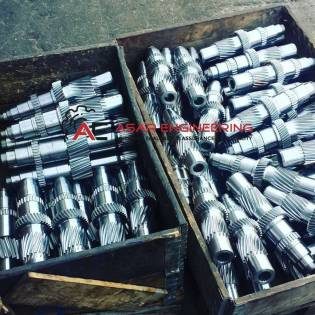
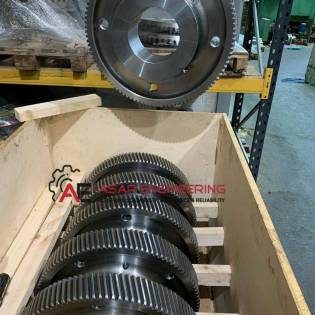
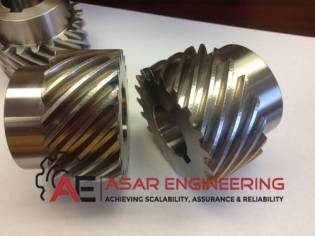
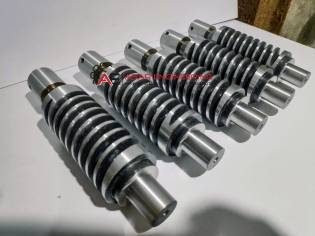
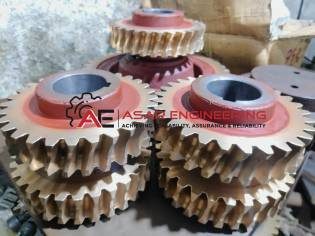
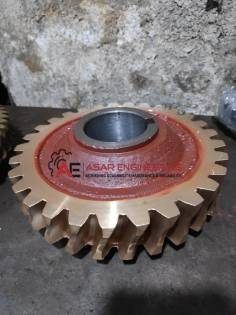
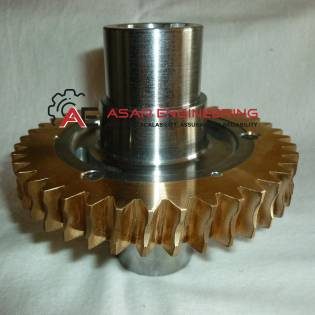
Photos of parts made and dispatched from our unit, not stock images.

Machining Videos from Our Shop Floor
Short, uncut clips of gear cutting, hobbing and machining at our unit in Gujarat.


What Our Customers Say
Reviews left on our Google Business Profile, shown word for word.
Asar Engineering supplied gearbox components for one of our industrial applications. The dimensional accuracy, finishing, and overall performance were satisfactory. We particularly appreciated their technical understanding and ability to suggest suitable solutions based on our operating requirements.
We have been sourcing industrial gearboxes from Asar Engineering Pvt. Ltd. and are satisfied with the product quality and consistency. The gearboxes are well-built, perform reliably under continuous operation, and were supplied according to our required specifications. Their team was also responsive during technical discussions and order coordination.
I bought a single screw extruder from asar engineering pvt.ltd. It's been a game changer for my manufacturing process. The extruder is efficient, easy to operate and built to last. Their customer is excellent and they guided me well through installation and setup. Highly recommended!
Screw Gear FAQs
Questions buyers usually ask us before sending an enquiry for screw gear.
Is a screw gear or a worm gear right for my crossed-shaft drive?
A screw gear pair uses two plain helical gears with point contact, so it suits light loads such as pump, indicator and machine feed drives. A worm and worm wheel has line contact, so it carries far more torque and gives much higher ratios. If your drive carries real torque, choose a worm set; we cut both at Gandevi.
Why are the two gears of a screw gear set often made from different materials?
The teeth slide heavily against each other, which raises friction and heat and risks galling between similar hard surfaces. A common pairing is a hardened steel driver with a bronze, brass or nylon driven gear. The final choice depends on load, speed, temperature and lubrication, and continuous lubrication is needed in every case.
What information do you need to quote a screw gear pair?
Please give the drawing or sample, the shaft angle, helix angle and hand of each gear, normal module, tooth counts, centre distance, bore and material pairing. Tell us the speed, what the screw gear drives and the quantity. Helix hand matters: on a 90 degree set both gears are usually the same hand.
Can you copy a worn screw gear pair from an old machine?
Yes. We make screw gears from a worn sample as well as to drawing. We establish the helix angle and hand, module, tooth count and bore, then hob the teeth in-house to suit your shaft angle and centre distance. If the wear suggests the load is too high for a crossed helical pair, we can offer a worm set instead.
Do you make small quantities of screw gears, and do you export them?
We make screw gears from a single replacement pair to repeat batches at our Gujarat unit and supply them across India. Export orders for gears made to drawing are accepted under our IEC registration. Bore, tooth dimensions and overall sizes are checked with dial gauges before the gears are dispatched.
How We Make Your Screw Gears
- Send your requirementDrawing, sample or photos of the screw gear, with the quantity you need.
- Technical check and quoteWe confirm material, hardness and tolerances, then send price and delivery time.
- Manufacturing and inspectionMade at our Gandevi unit; dimensions are checked before dispatch.
- DispatchPacked for road transport across India, or for export shipment.
Companies We Supply



























Need Screw Gears made to your drawing?
Send the drawing or a sample with the quantity. We supply across India and take export orders.