HRC Coupling Manufacturers in India
HRC Couplings made to your drawing or sample at our Gujarat unit, supplied across India and exported.

Asar Engineering Pvt. Ltd. Gandevi, Gujarat
- Hubs bored and keyed to your shaft sizes
- Gear coupling teeth cut in-house
- Replacement to your existing coupling size
- Supplied across India and exported (IEC registered)
HRC Flexible Couplings for General Drives
Asar Engineering is an HRC coupling manufacturer in India, with its manufacturing unit at Gandevi, Gujarat. An HRC coupling (Highly Resilient Coupling) is a flexible shaft coupling that connects two rotating shafts, transmits torque and protects connected machinery from shock loads, vibration and minor shaft misalignment. Its semi-elastic construction suits a wide range of industrial drives where steady torque transfer and vibration damping are important.
Unlike a rigid coupling, an HRC coupling has a resilient elastomeric element between two metal hubs. This element absorbs torsional fluctuations and reduces the sudden shocks passed from the driving machine to the driven equipment. The coupling is also fail-safe: if the element is severely damaged, the hub dogs engage and the drive keeps limited power transmission until it can be stopped.
We make HRC couplings to suit each drive, with attention to torque transmission, ease of installation and reliable operation across industrial applications.
What is an HRC Coupling?
An HRC coupling is a three-piece flexible coupling consisting primarily of two flanged hubs and one resilient elastomeric element. The two hubs are generally manufactured from robust cast iron and feature specially shaped pocket dogs or claws on their inner faces. A star-shaped rubber element fits between these dogs, creating the flexible connection between the two shafts.
The resilient element is commonly manufactured from Nitrile Rubber (NBR) because of its flexibility, vibration-damping characteristics, and suitability for industrial operating conditions. During operation, torque is transferred from one hub through the elastomeric element to the opposite hub.
The resilient element works in compression between the interlocking hub dogs. Compared with a small jaw-coupling spider, the HRC element is larger and thicker, which lets the coupling handle higher torque and shock loads while still giving flexibility between the connected shafts.
Three-Piece Construction
The basic HRC coupling assembly consists of:
- Two Flanged Hubs: Metallic hubs fitted to the driving and driven shafts. Their internal faces contain pocket dogs that engage with the resilient element.
- Resilient Element: A thick, star-shaped elastomeric component positioned between the two hubs.
- Shaft Bores: Hubs can be supplied with pilot bores or suitable bushing arrangements depending on the installation requirement.
Compression-Based Torque Transmission
When the driving shaft rotates, its hub transfers torque into the elastomeric element through the pocket dogs. The resilient element becomes compressed and transfers the load to the dogs of the opposite hub, causing the driven shaft to rotate.
This compression-based mechanism provides a useful combination of torque capacity, flexibility, and shock absorption. It also allows the coupling to damp torsional vibrations generated during starting, stopping, load changes, or operation of heavy rotating equipment.
Fail-Safe Operation
HRC couplings are designed with a fail-safe feature. If the resilient element becomes severely damaged or disintegrates, the metallic dogs of the two hubs can come into direct engagement. This helps prevent an immediate complete loss of torque transmission and can provide an opportunity for controlled shutdown and maintenance.
HRC Coupling and Jaw Coupling
Although an HRC coupling may appear similar to a jaw coupling, their resilient elements have different geometries and load-transfer characteristics. HRC couplings use a thicker star-shaped element positioned between pocketed metallic hubs, with torque transmitted primarily through compression.
This makes HRC couplings particularly useful for industrial drives where higher shock loads, robust construction, and continuous power transmission are required.
Applications of HRC Coupling
HRC couplings are widely used in industrial power transmission systems where motors, engines, pumps, compressors, conveyors, and gearboxes need a flexible connection between rotating shafts. Their ability to absorb shock and vibration makes them suitable for continuous-duty and heavy industrial equipment.
Centrifugal and Industrial Pumps
HRC couplings connect electric motors with centrifugal and process pumps while helping absorb torsional vibrations generated during pump operation. Their flexible element can also accommodate minor incidental shaft misalignment.
Air Compressors and Blowers
Industrial compressors and large blowers can experience starting shocks and torque fluctuations. An HRC coupling helps isolate these disturbances and provides flexible torque transmission between the motor and driven machine.
Heavy-Duty Conveyor Systems
Conveyor systems often experience variable loading, starting torque, and sudden changes in resistance. HRC couplings provide a robust connection between motors, gearboxes, and conveyor drive assemblies.
Motor-to-Gearbox Drives
HRC couplings are suitable for connecting electric motors or engines with gearboxes. Their shock-absorbing construction helps protect the transmission system from sudden torque fluctuations.
IC Engine Drives
Internal combustion engines produce cyclic torque variations that pass into the connected machinery. The resilient element helps damp these fluctuations, but engine drives should be checked for torsional vibration when the coupling is selected.
Industrial Machinery
The coupling can also be applied to fans, mixers, processing equipment, material-handling machinery, and other rotating industrial systems requiring a flexible and resilient shaft connection.
Common Types of HRC Coupling
HRC couplings can be configured according to shaft mounting requirements, installation conditions, and equipment arrangement. Common configurations include pilot-bore and taper-lock versions.
Pilot Bore HRC Coupling
Pilot-bore hubs are supplied with a small starter bore that is machined to the required shaft diameter and keyway before fitting. This suits applications where the exact shaft size is known only at order stage.
Pilot-bore configurations are particularly useful for non-standard shaft dimensions or customized coupling assemblies.
Taper Lock HRC Coupling
Taper-lock versions use split taper bushes that provide a convenient method for mounting the coupling hubs onto shafts. The bush grips the shaft as it is tightened inside the hub, providing a secure mechanical connection while simplifying installation and removal.
Type F HRC Coupling
In the Type F arrangement, the taper-lock bush is inserted from the flange (inside) face of the hub. The choice between Type F and Type H depends on the installation space and which side of the hub is accessible.
Type H HRC Coupling
In the Type H arrangement, the taper-lock bush is inserted from the hub (outside) face. This can make installation and maintenance easier where the external hub face is more accessible.
Standard Resilient Element HRC Coupling
The standard configuration uses a star-shaped NBR resilient element positioned between two metallic hubs. It provides flexible torque transmission, vibration damping, and shock absorption for general industrial applications.
Core Components
The performance of an HRC coupling depends on the interaction of its metallic hubs, resilient element, and shaft mounting arrangement.
Flanged Hubs
Two flanged hubs form the metallic portion of the coupling. They are generally manufactured from cast iron and contain specially shaped pocket dogs that engage with the resilient element.
Resilient Rubber Element
The resilient element is the flexible component positioned between the hubs. Nitrile rubber/NBR is commonly used because it provides the required combination of flexibility, resilience, and damping.
Pocket Dogs
The pocket dogs are the projecting sections on the hub faces that engage with the star-shaped element. Their geometry determines how torque is transferred and how the elastomer is compressed during operation.
Pilot Bore
A pilot bore provides a starting hole that can be machined to suit the required shaft diameter. It is useful when a customized shaft fit is required.
Taper Lock Bush
A taper-lock bush provides a removable shaft mounting arrangement. Its split design allows the hub to be secured to the shaft without permanently machining the coupling bore to one specific diameter.
Elastomeric Interface
The interface between the hub dogs and the resilient element is responsible for transmitting torque while allowing controlled elastic deformation. This deformation helps absorb vibration and shock during operation.
HRC Coupling Supplier in India
As an HRC coupling supplier in India, we check that the coupling, shafts, motor, gearbox and driven equipment are compatible. The right coupling depends on torque, shaft size, speed, misalignment, duty cycle and environment.
Asar Engineering chooses the hub design, bore option, resilient element and mounting arrangement to suit each application.
A correctly selected HRC coupling transmits torque reliably while limiting the effect of torsional shocks and vibration on connected equipment. Pilot-bore hubs can be bored to the exact shaft size, and taper-lock hubs make installation and removal easier.
For continuous-duty machines, also consider operating speed, shaft alignment, torque variations, the environment and maintenance access before fixing the size and type of coupling.
Benefits of Using HRC Coupling
High Torque Transmission
The compression-based resilient element provides a robust torque transmission path suitable for demanding industrial power transmission applications.
Shock Load Absorption
The elastomeric element absorbs sudden torque fluctuations and mechanical shocks, helping protect motors, gearboxes, pumps, and other connected machinery.
Vibration Damping
The flexible rubber element helps reduce the transmission of torsional and mechanical vibrations between the driving and driven shafts.
Fail-Safe Construction
If the resilient element becomes severely damaged, the metallic hub dogs can engage directly, helping maintain mechanical connection until the equipment can be safely stopped for maintenance.
Minor Misalignment Compensation
HRC couplings can accommodate incidental angular, axial, and radial shaft misalignment within the limits of the selected coupling size and operating conditions.
Simple Alignment Checking
The machined outside diameters of the coupling hubs can make preliminary alignment checking convenient using a straightedge before final alignment procedures.
No Lubrication Required
The resilient element operates without coupling grease or oil lubrication, simplifying routine maintenance compared with many metal-to-metal coupling designs.
Replaceable Resilient Element
The rubber element can be replaced without replacing the hubs. Depending on the arrangement and the axial space available, one hub may need to be moved back along its shaft to change the element.
Versatile Shaft Mounting
Pilot-bore and taper-lock configurations allow the coupling to be adapted to different shaft mounting requirements.
Robust Industrial Construction
Cast metallic hubs combined with a resilient elastomeric element provide a durable construction suitable for pumps, compressors, conveyors, gearboxes, and other industrial drives.
HRC Coupling Specifications
| Specification | Typical Configuration |
|---|---|
| Coupling Type | Highly Resilient Coupling |
| Construction | Three-piece flexible coupling |
| Main Components | Two flanged hubs + one resilient element |
| Hub Material | Commonly grey cast iron |
| Resilient Element | Nitrile Rubber / NBR |
| Element Shape | Star-shaped |
| Torque Transmission | Primarily through elastomer compression |
| Bore Configuration | Pilot Bore or Taper Lock |
| Taper Lock Types | Type F and Type H |
| Misalignment | Radial, axial, and angular within application limits |
| Lubrication | Not required for resilient element |
| Fail-Safe Feature | Metallic hub dogs can engage after element failure |
| Typical Applications | Pumps, compressors, blowers, conveyors, gearboxes, IC engines |
| Operating Speed | Application- and coupling-size-dependent |
| Torque Capacity | Application- and coupling-size-dependent |
| Shaft Size | Selected according to equipment and coupling configuration |
The table shows typical configurations. Exact dimensions, bore sizes, torque ratings, operating speeds and permissible misalignment are selected for the specific HRC coupling size and operating conditions.
HRC Coupling Exporter from India
Asar Engineering is IEC registered and takes export orders for HRC couplings, alongside supply across India. Each coupling is matched to the mechanical requirements of the connected equipment rather than supplied as one size for all.
HRC couplings can be supplied with suitable hub and shaft-mounting arrangements, including pilot-bore and taper-lock configurations. The resilient NBR element provides the flexibility required for vibration damping and shock absorption, while the metallic hub construction provides the mechanical strength required for torque transmission.
For export and industrial supply requirements, coupling selection can consider shaft diameter, transmitted torque, operating speed, alignment conditions, drive arrangement, and duty cycle. This helps ensure that the selected coupling is appropriate for the actual working environment of the machinery.
Why Choose Asar Engineering
- Made to Drawing or Sample: HRC coupling hubs are made to your drawing, sample or shaft details.
- Manufacturing Unit in Gujarat: As an HRC coupling manufacturer in India since 2015, we produce couplings at our unit at Gandevi, on National Highway 48.
- Flexible Mounting Options: Pilot-bore and taper-lock (Type F and Type H) hubs to suit shaft and installation requirements.
- Application-Based Selection: Coupling size is matched to torque, speed, shaft size, misalignment and duty.
- Inspection Before Dispatch: Bores, keyways and critical dimensions are checked with gauges, including dial gauges, before dispatch.
- Maintenance-Friendly Design: Replaceable resilient elements and lubrication-free operation keep routine maintenance simple.
- One-Off to Batch Quantities: We handle single replacement couplings as well as batch orders.
- Supply Across India and Export: We supply customers across India and take export orders under our IEC registration.
This product is part of our industrial coupling range, made at our unit in Gujarat and supplied across India.
Related products: Gear Coupling, Industrial Gearbox, Mechanical Seal.
Request a Quote for HRC Couplings
Send us your drawing or sample, shaft sizes, torque, speed, bore type (pilot bore or taper lock) and the quantity you need. We will check the requirement and quote for a suitable HRC coupling. Asar Engineering supplies across India and exports.
Get an accurate quote
What to Send for Your HRC Coupling Quote
- Coupling type and size, or the old coupling as a sample
- Motor power (kW) and speed (rpm)
- Both shaft diameters with keyway details
- Distance between shaft ends (DBSE) for spacer types
- Quantity and the date you need the parts
Have a drawing, a sample or a worn part?
Send it with the quantity. We reply with material, hardness, price and delivery time.
Industries That Use Our HRC Couplings
Material, hardness and fit are chosen for the duty the part will see in your plant.
-
Cement
HRC Couplings for kiln, mill, crusher and conveyor drives.
-
Steel & Metal
HRC Couplings for rolling mills and processing lines.
-
Chemical & Process
HRC Couplings for pumps, mixers and agitators.
-
Sugar
HRC Couplings for cane carriers, mill drives and bagasse conveyors.
-
Mining & Material Handling
HRC Couplings for belt conveyors, crushers and bucket elevators.
-
Machine Builders (OEM)
HRC Couplings for new machines, made to your drawing.
Recent Work from Our Gandevi Unit
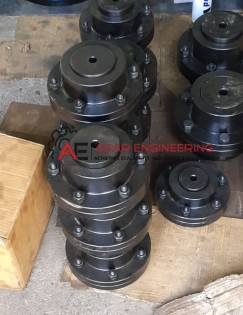
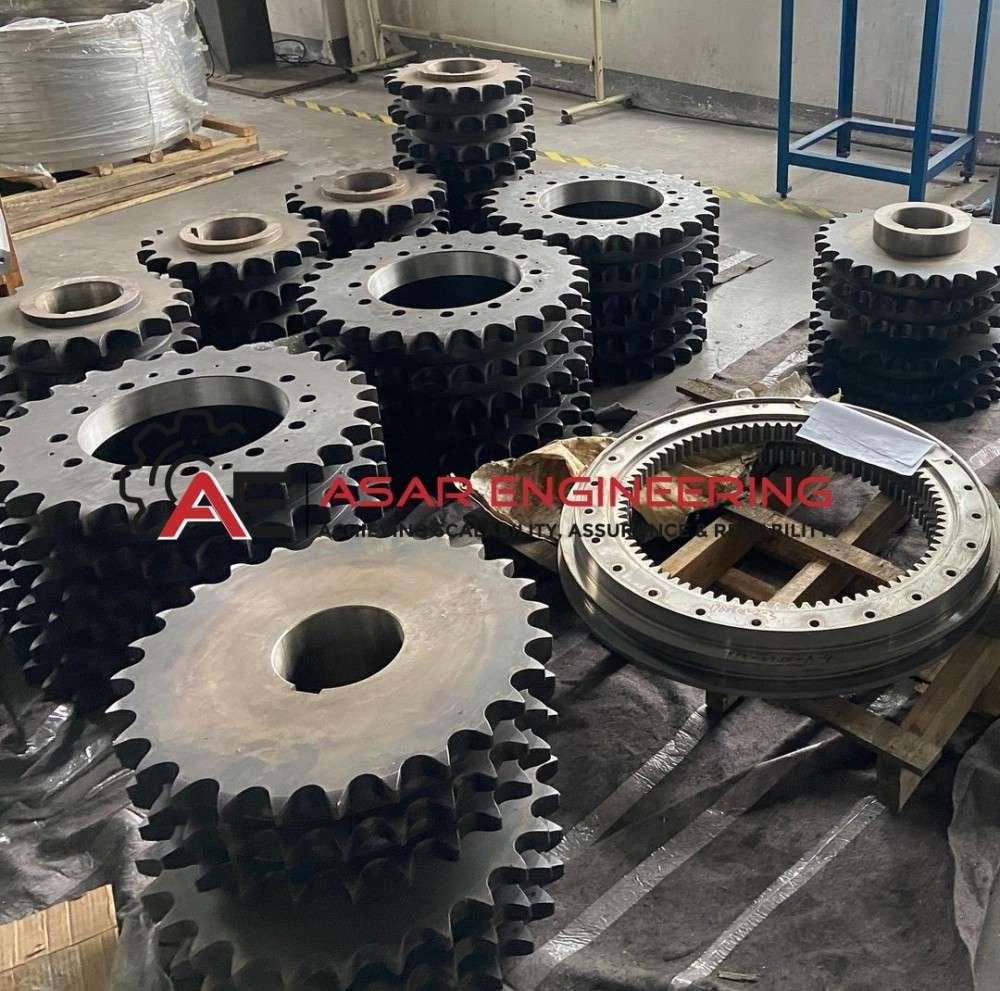
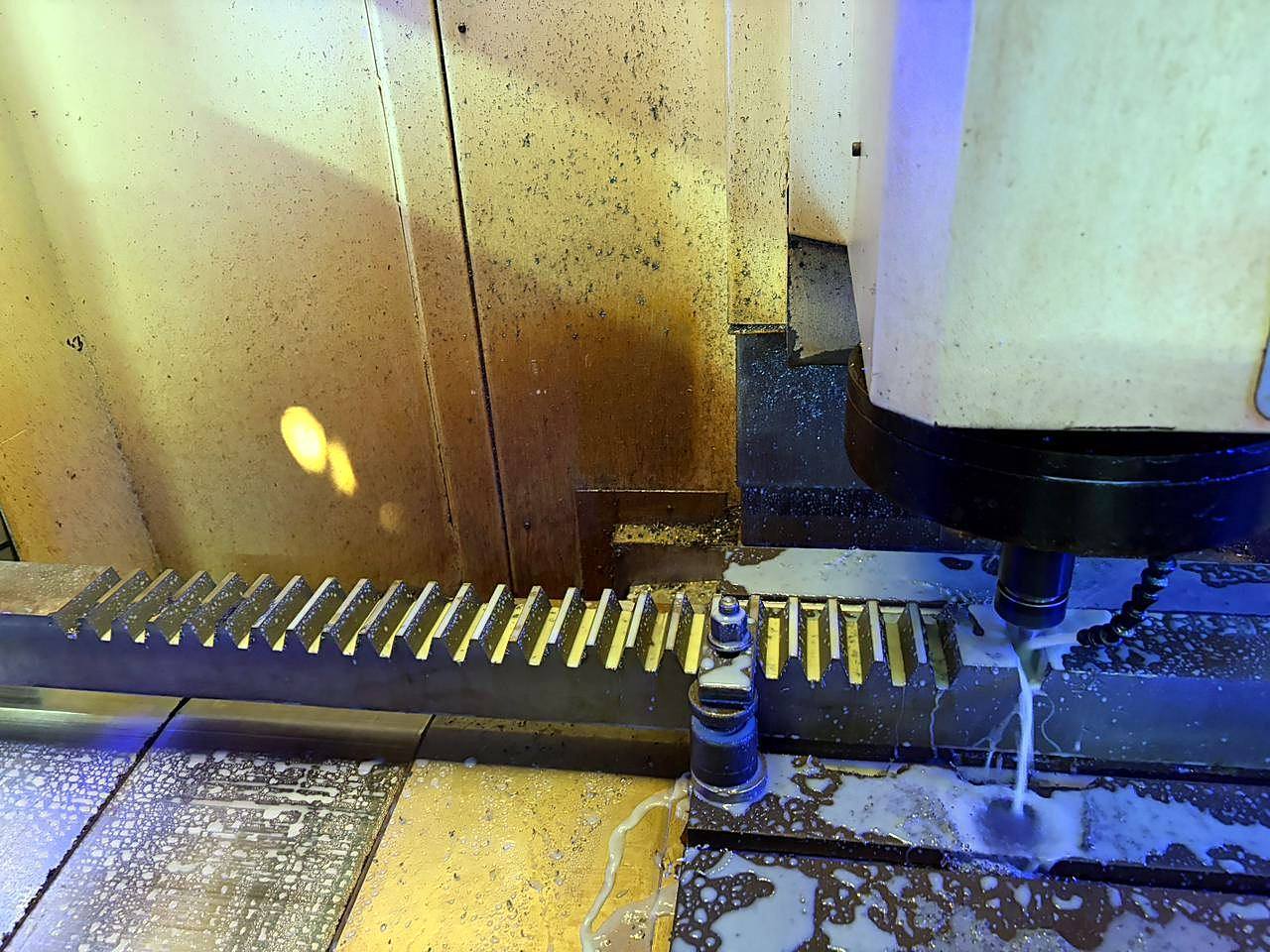
Photos of parts made and dispatched from our unit, not stock images.





Machining Videos from Our Shop Floor
Short, uncut clips of gear cutting, hobbing and machining at our unit in Gujarat.


What Our Customers Say
Reviews left on our Google Business Profile, shown word for word.
I bought a single screw extruder from asar engineering pvt.ltd. It's been a game changer for my manufacturing process. The extruder is efficient, easy to operate and built to last. Their customer is excellent and they guided me well through installation and setup. Highly recommended!
Asar Engineering supplied gearbox components for one of our industrial applications. The dimensional accuracy, finishing, and overall performance were satisfactory. We particularly appreciated their technical understanding and ability to suggest suitable solutions based on our operating requirements.
We have been sourcing industrial gearboxes from Asar Engineering Pvt. Ltd. and are satisfied with the product quality and consistency. The gearboxes are well-built, perform reliably under continuous operation, and were supplied according to our required specifications. Their team was also responsive during technical discussions and order coordination.
HRC Coupling FAQs
Questions buyers usually ask us before sending an enquiry for HRC coupling.
Should I order a pilot bore or a taper lock HRC coupling?
Pilot-bore hubs have a small starter bore that we machine to your exact shaft size and keyway, which suits non-standard shafts. Taper-lock hubs use split taper bushes for easier fitting and removal. With taper lock, choose Type F, where the bush enters from the flange face, or Type H, from the outer hub face, depending on access.
How is an HRC coupling different from a jaw coupling?
Both use a star-shaped element between two hubs, but the HRC element is larger and thicker and sits between pocketed cast iron hubs, working mainly in compression. This lets it carry higher torque and shock loads. It needs no lubrication, and if the NBR element fails, the hub dogs engage for limited torque until the drive is shut down.
What details should I share for an HRC coupling quote?
Send your drawing or sample, both shaft sizes with keyway details, torque or motor power, speed, the bore type (pilot bore, or taper lock Type F or H) and the quantity. Tell us the driving and driven machines and duty cycle; engine drives should also be checked for torsional vibration before the coupling size is fixed.
Can you machine HRC coupling hubs to a non-standard shaft or copy an existing coupling?
Yes. We make HRC coupling hubs to your drawing, sample or shaft details, and pilot-bore hubs are bored to the exact shaft diameter and keyway you need. Bores, keyways and critical dimensions are checked with gauges, including dial gauges, before dispatch. The resilient element can later be replaced without changing the hubs.
Do you supply HRC couplings in small quantities and for export?
Yes. We handle single replacement HRC couplings as well as batch orders, made at our unit at Gandevi, Gujarat, on National Highway 48, and delivered to customers across India. Export orders are taken under our IEC registration, with the hub and mounting arrangement matched to your equipment rather than one size for all.
How We Make Your HRC Couplings
- Send your requirementDrawing, sample or photos of the HRC coupling, with the quantity you need.
- Technical check and quoteWe confirm material, hardness and tolerances, then send price and delivery time.
- Manufacturing and inspectionMade at our Gandevi unit; dimensions are checked before dispatch.
- DispatchPacked for road transport across India, or for export shipment.
Companies We Supply



























Need HRC Couplings made to your drawing?
Send the drawing or a sample with the quantity. We supply across India and take export orders.