Industrial Screw Manufacturers in India
Conveyor screws, feed screws, single screw extruder screws and twin screw elements, made to your diameter, flight pitch and length.

Asar Engineering Pvt. Ltd. Gandevi, Gujarat
- Flights and threads made to your drawing
- Material matched to the product handled
- Old screw accepted as a sample
- Supplied across India and exported (IEC registered)
Types of Industrial Screws We Make


Conveyor, Feeder, Extruder and Lead Screws
Asar Engineering is an industrial screw manufacturer in India, making screw conveyor screws, feeder screws, extruder screws and lead screws to customer drawing at its manufacturing unit in Gandevi, Gujarat. An industrial screw, in this sense, is a helical flight or thread on a shaft that moves bulk material or converts rotation into linear motion. It is not a fastener: bolts, machine screws and set screws are a different product category.
Since 2015, Asar Engineering has made power transmission and machine parts for industrial plants. Industrial screws are made to drawing or sample, with the required diameter, pitch, flight thickness, length, material and end connections.
Industrial screws are used in cement, steel, sugar, paper, chemical, fertiliser, food processing, plastics and power plants. The right screw depends not only on its size but also on the material handled, capacity, speed, torque, abrasion, temperature and corrosion.
When ordering a replacement screw, share the drawing or the old screw as a sample, along with the material handled and the required capacity. This avoids mismatches in pitch, shaft size and end connections.
What is an Industrial Screw?
An industrial screw is a shaft or pipe carrying a continuous helical flight or thread. When it rotates inside a trough, tube or barrel, it moves material along its axis. When it turns in a matching nut, it produces controlled linear motion.
Industrial screws are used to convey, feed, meter, mix, compress or lift material, and to drive screw jacks, presses and machine slides. Their construction varies widely with the duty.
Unlike fasteners, which are bought by size and property class, industrial screws are usually engineered for one machine. Diameter, pitch, flight thickness, shaft size, material and wear protection are chosen for the specific application.
Main Classifications of Industrial Screws
Industrial screws can be broadly classified by what they do.
Screw Conveyor Screws
Screw conveyor screws have a helical flight welded to a centre pipe or shaft. They rotate inside a U-trough or tube and move bulk material horizontally, on an incline or vertically.
Screw conveyors are widely used for handling:
- Cement, fly ash and lime
- Coal and ash
- Grain, flour and sugar
- Chemicals and fertilisers
- Bagasse, wood chips and pulp
- Sludge and wet solids
Diameter, pitch, flight thickness and material are selected according to the material handled and the required capacity.
Feeder Screws
Feeder screws draw material from a hopper or bin and deliver it at a controlled rate.
They often use a shorter pitch, or a variable pitch that increases along the screw, so that material is drawn evenly across the whole hopper outlet instead of only from the back.
Feeder screws are used for dosing and metering in cement, chemical, food and plastics plants.
Extruder Screws
Extruder screws turn inside a heated barrel to convey, melt, mix and pressurise plastic or rubber. A typical single-stage screw has feed, compression and metering zones, with the channel depth reducing along its length.
The screw must be matched to the barrel bore, the material processed and the length-to-diameter (L/D) ratio of the machine. Flight clearance and surface hardness have a strong effect on output and screw life.
Lead Screws and Power Screws
Lead screws, also called power screws, have a trapezoidal, Acme or square thread and work with a matching nut. They convert rotation into controlled linear movement and can carry heavy axial loads.
Unlike a fastener thread, a lead screw thread is designed to transmit motion and force continuously, so thread form, lead, nut material and lubrication are critical.
They are commonly used in:
- Screw jacks
- Sluice gate and valve operators
- Presses
- Machine tool slides
- Lifting tables
- Adjusting mechanisms on process machinery
Correct thread form and nut fit are important because backlash, wear and load capacity all depend on them.
Applications of Industrial Screws
Industrial screws are used across process and engineering industries wherever material must be conveyed, fed or metered, or where controlled linear motion is needed.
Cement Plants
Screw conveyors and feeders handle cement, raw meal, fly ash and kiln dust. Screws for this duty need wear-resistant flights and robust shafts.
Steel and Power Plants
Screws are used for coal, ash, lime and dust handling. Heavy flights and hardfaced edges help against abrasion.
Plastics and Rubber Processing
Extruder screws are the core of extrusion and injection moulding machines. Replacement screws are made to match the barrel and the material processed.
Food Processing
Stainless steel screw conveyors and feeders move grain, flour, sugar, spices and other food ingredients where hygiene is important.
Chemical and Fertiliser Plants
Screws handle powders, granules and corrosive materials. Material choice depends on the chemicals involved.
Sugar and Paper Mills
Screw conveyors and feeders handle bagasse, wood chips and pulp, often in wet and abrasive conditions.
Machine Builders
Lead screws drive screw jacks, presses, lifting tables and adjusting mechanisms in machines built by OEMs.
Mining and Mineral Processing
Screw conveyors and screw classifiers handle ores, sand and minerals under heavy, abrasive loading.
Water and Effluent Treatment
Screw conveyors move dewatered sludge and screenings, and lead screws operate sluice gates and valves.
Corrosive and Hygienic Duties
Stainless steel screws, typically SS 304 or SS 316, are selected where moisture, chemicals or washdown are present.
Common Types of Industrial Screws
Industrial screws come in different forms according to their function, flight construction and thread form.
Helicoid Flight Screws
Helicoid flights are formed as a continuous helix from a single steel strip and welded to the centre pipe. The flight is thicker at the inner edge than at the outer edge.
They are common for light and medium-duty screw conveyors.
Sectional Flight Screws
Sectional flights are made from individual flat plate segments, each forming one pitch, which are butt-welded together on the pipe.
They allow thicker flights and larger diameters, and suit heavy-duty and abrasive conveying.
Ribbon Screws
Ribbon screws have a flight fixed to the shaft by support legs, leaving an open space between flight and shaft.
They suit sticky or viscous materials that would build up on a solid flight, and are also used for mixing.
Variable Pitch and Tapered Screws
Variable pitch screws have a pitch that increases along the length, and tapered screws have a flight diameter that changes along the length.
Both are used under hoppers and bins to draw material evenly across the full outlet.
Paddle and Cut-Flight Screws
Paddle screws carry adjustable paddles, and cut-flight screws have notches in the flight. Both mix or aerate material while conveying it.
Single-Stage Extruder Screws
Single-stage extruder screws have feed, compression and metering zones. The compression ratio and L/D ratio are chosen to suit the plastic or rubber processed.
Special designs, such as barrier screws or screws with mixing sections, are used where better melting or mixing is needed.
Trapezoidal Lead Screws
Trapezoidal lead screws have a 30-degree thread form to ISO 2904 / DIN 103. They are the most common metric power screw thread and carry high axial loads.
They are used in screw jacks, presses, gate operators and machine slides.
Acme Lead Screws
Acme screws have a 29-degree thread form to ASME B1.5, commonly used on equipment designed to inch dimensions.
Square Thread Screws
Square threads have the highest efficiency of the power screw forms but are harder to make and cannot compensate for wear, so they are now used mainly in special presses and jacks.
Key Design Parameters
The performance of an industrial screw depends on a few key design parameters. Screw conveyor practice often refers to guidance such as CEMA 350, while lead screw threads follow ISO 2904 / DIN 103 or ASME B1.5. Bolt and fastener standards such as ISO 898-1 do not apply to these screws.
Pitch and Diameter
Screw diameter and pitch set the conveying capacity at a given speed and trough loading.
Common pitch choices include:
- Standard (full) pitch, equal to the screw diameter, for horizontal conveying
- Half pitch for inclined and vertical conveying and for feeders
- Long pitch for agitating free-flowing materials
- Variable pitch for drawing material evenly from hoppers
Flight Thickness and Shaft Size
Flight thickness and centre pipe or shaft size must be enough to carry the drive torque and resist wear without excessive deflection.
Selection depends on:
- Drive torque and motor power
- Screw length and span between bearings
- Bulk density and abrasiveness of the material
- Trough loading and operating speed
Thread Form and Lead for Lead Screws
For lead screws, the thread form, pitch, number of starts and nut length determine load capacity, speed and efficiency.
A single-start trapezoidal screw with a small lead angle is often self-locking, but this depends on friction and is not guaranteed under vibration, so a brake or lock should be used where holding the load is critical.
Material Selection
The screw material affects strength, wear life, corrosion resistance, temperature performance and suitability for the process.
Stainless Steel SS 304 and SS 316
Stainless steel resists corrosion and is easy to clean. SS 304 suits general corrosion-resistant duty, while SS 316 contains molybdenum and gives better resistance to chlorides and many chemicals.
SS 316 is therefore chosen for chemical, coastal and frequent washdown duties, and SS 304 or SS 316 for food-contact screw conveyors.
Mild Steel and Carbon Steel
Mild steel and carbon steel are the usual materials for general screw conveyors and feeders, with protection added where needed.
Common options and treatments include:
- Hardfacing on flight edges for abrasive materials
- Abrasion-resistant steel plate for sectional flights
- Painting or hot-dip galvanising for outdoor exposure
- Induction hardening of shaft journals and lead screw threads where wear is high
The right combination depends on the abrasiveness, temperature and corrosiveness of the material handled.
Nitriding Steel for Extruder Screws
Extruder screws are commonly made from nitriding steels such as EN41B and then nitrided to give a hard, wear-resistant surface. Hard-faced flights are used for abrasive or filled compounds.
Lead Screw and Nut Materials
Lead screws are usually made from medium-carbon or alloy steels such as EN8, EN19 or EN24.
The matching nut is often bronze or cast iron, which runs well against steel and wears before the screw does, making it the cheaper part to replace.
Drive and End Connections
How the screw is connected to the drive and to other screw sections affects torque capacity and ease of maintenance.
Coupling Shafts and Bolts
Long screw conveyors are made in sections joined by coupling shafts that fit inside the centre pipes and are secured with through-bolts.
Keyed Drive Shafts
The drive end shaft carries a keyway for a sprocket, coupling or gearbox. Its size must suit the transmitted torque.
Hanger Bearings
Intermediate hanger bearings support long screw conveyors between sections. Flight is usually cut back at the hanger to allow material to pass.
Lead Screw Nuts
Lead screws run in a matching nut, often with a flange for mounting. The nut thread must match the screw thread form, pitch and number of starts.
Core Components of an Industrial Screw
An industrial screw has several parts that together decide how it performs.
Flight or Thread
The helical flight or thread moves the material or drives the nut. Its diameter, pitch, thickness and profile are chosen for the duty.
Centre Pipe or Shaft
The centre pipe or solid shaft carries the flight and transmits torque along the screw.
End Shafts and Journals
End shafts run in the bearings and connect the screw to the drive. They are machined to the required fits, keyways and lengths.
Couplings and Bolting
On sectional conveyor screws, coupling shafts and bolts join the sections and transfer torque between them.
Surface Finish
Surface treatments such as hardfacing, nitriding, induction hardening, galvanising or painting improve wear or corrosion resistance where needed.
Material
The material largely decides the screw's strength and life. Mild steel, carbon steel, alloy steel, abrasion-resistant steel and stainless steel are selected according to the application.
Industrial Screw Supplier in India
As an industrial screw supplier in India, Asar Engineering supplies screws for process plants and machine builders. Choosing an industrial screw involves more than its diameter and length.
The correct screw depends on the material handled, capacity, pitch, flight thickness, shaft size, material of construction, operating environment and end connections.
Helicoid flight screws suit general conveying, while sectional flights suit heavy and abrasive duty. Variable pitch screws are used under hoppers, and ribbon screws for sticky materials.
Stainless steel is used for food and corrosive duties, hardfaced or abrasion-resistant flights for abrasive materials, and nitrided steels for extruder screws. Lead screws need the correct thread form and nut material.
Asar Engineering makes industrial screws to drawing or sample, from one-off replacements to batch orders.
Important selection considerations include:
- Screw diameter
- Screw length and number of sections
- Pitch (or thread form and lead for lead screws)
- Flight thickness
- Material of construction
- Material handled
- Required capacity
- Abrasion and corrosion exposure
- Operating temperature
- Speed and drive torque
- End shaft and coupling details
- Trough, barrel or nut dimensions
Benefits of Using Industrial Screws
Controlled Material Flow
Screw conveyors and feeders move bulk material at a steady, controllable rate.
Enclosed Conveying
Screws run inside a trough or tube, which keeps dust in and protects the material.
Wide Material Selection
Mild steel, carbon steel, alloy steel, abrasion-resistant steel and stainless steel cover different load, wear and environmental requirements.
Wear and Corrosion Protection
Hardfacing, nitriding, induction hardening, stainless steel and protective coatings extend screw life where needed.
Flexible Layout
Screw conveyors can run horizontally, on an incline or vertically, and can feed several discharge points.
Accurate Dosing
Feeder screws deliver a consistent volume per revolution, which makes them suitable for metering.
Specialised Designs
Helicoid, sectional, ribbon, variable pitch, paddle, extruder and lead screws meet different process needs.
Heavy-Duty Capability
Thick sectional flights, heavy shafts and trapezoidal lead screws suit high loads and demanding plant duty.
Industrial Screw Specifications
| Specification | Typical Options |
|---|---|
| Product Type | Industrial Screw |
| Main Function | Conveying, feeding, metering, mixing, extrusion, linear motion |
| Screw Types | Screw conveyor (helicoid, sectional, ribbon, paddle, variable pitch), feeder, extruder, lead screw |
| Pitch | Full, half, long or variable pitch; single or multi-start threads for lead screws |
| Reference Standards | CEMA 350 (screw conveyors), ISO 2904 / DIN 103 (trapezoidal threads), ASME B1.5 (Acme threads) |
| Materials | Mild steel, carbon steel (e.g. EN8), alloy steel (e.g. EN19, EN24, EN41B), abrasion-resistant steel, SS 304, SS 316 |
| Flight Construction | Helicoid, sectional, ribbon, cut-flight, paddle |
| Wear and Surface Treatment | Hardfacing, nitriding, induction hardening, galvanising, painting |
| Applications | Cement, steel, power, sugar, paper, chemical, fertiliser, food processing, plastics, mining, water treatment |
| Environment | General, abrasive, corrosive, wet, high-temperature, food-contact |
| Diameter and Length | Application-dependent, made to drawing |
| End Connections | Keyed drive shafts, coupling shafts and bolts, flanged ends, lead screw nuts |
| Customization | Based on drawing or sample: diameter, pitch, flight, material, shaft and end details |
Industrial Screw Exporter from India
Asar Engineering is an IEC-registered industrial screw exporter from India and supplies screws for process plants and machine builders across India.
For export orders, the screw should be specified by drawing or sample, with the material handled, capacity, dimensions, material of construction and working environment. This is especially important for screws exposed to abrasion, high temperature or chemicals.
Screw conveyor screws, feeder screws, extruder screws and lead screws can be supplied, with end shafts, coupling shafts or nuts as required.
We ship worldwide, including to the USA, Canada, Europe, the UAE, Africa and Australia. Send your drawing or sample with the destination and the delivery terms you need, and we will quote.
Why Choose Asar Engineering
Made to Drawing or Sample
Industrial screws are made to your drawing, or copied from a worn sample, including end shafts and coupling details.
Manufactured in Gujarat
Screws are made at our own manufacturing unit in Gandevi, Gujarat, on National Highway 48.
Material and Hardness Matched to the Application
Mild steel, alloy steel, abrasion-resistant steel or stainless steel is selected, with wear protection to suit the material handled.
In-House Induction Hardening
Shaft journals and lead screw threads can be induction hardened in-house where wear resistance is needed.
Inspection Before Dispatch
Diameter, pitch, straightness and end-shaft dimensions are checked before dispatch.
One-Off to Batch Quantities
From a single replacement screw for a breakdown to batch orders for machine builders.
Supply Across India and Export
Asar Engineering supplies customers across India and takes export orders (IEC registered).
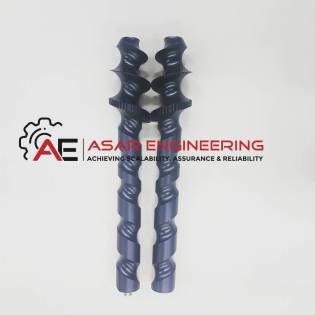
Types we make in this range: Twin Screw Elements.
Related products: Industrial Gearbox, Helical Gearbox, Worm Reduction Gearbox.
Get a Quote for Industrial Screws
Looking for an industrial screw manufacturer in India? Send your drawing or sample, the material handled, required capacity and quantity to Asar Engineering. We make industrial screws in Gujarat, supply across India and take export orders.
Get an accurate quote
What to Send for Your Industrial Screw Quote
- Outer diameter, pitch and flight thickness
- Overall length, shaft or pipe size and end connections
- Material handled and required capacity
- For extruder screws: barrel bore and L/D ratio
- Quantity and the date you need the parts
Have a drawing, a sample or a worn part?
Send it with the quantity. We reply with material, hardness, price and delivery time.
Industries That Use Our Industrial Screws
Material, hardness and fit are chosen for the duty the part will see in your plant.
-
Plastics & Extrusion
Industrial Screws for extruders and compounding lines.
-
Food Processing
Industrial Screws for processing, conveying and packing lines.
-
Chemical & Process
Industrial Screws for pumps, mixers and agitators.
-
Cement
Industrial Screws for kiln, mill, crusher and conveyor drives.
-
Mining & Material Handling
Industrial Screws for belt conveyors, crushers and bucket elevators.
-
Machine Builders (OEM)
Industrial Screws for new machines, made to your drawing.
Our Industrial Screws and Recent Work
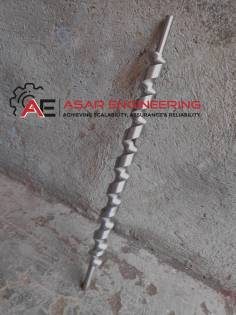
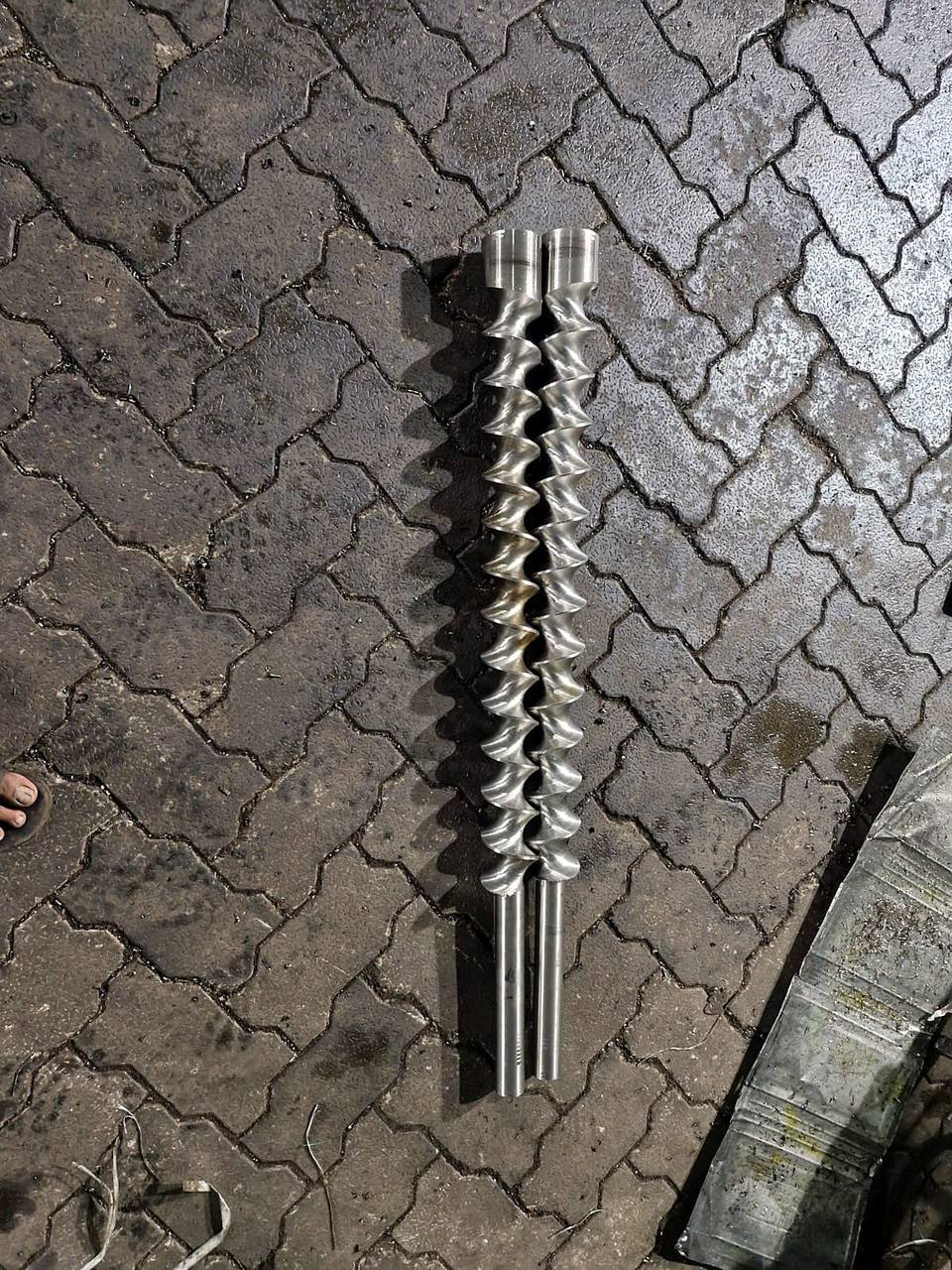
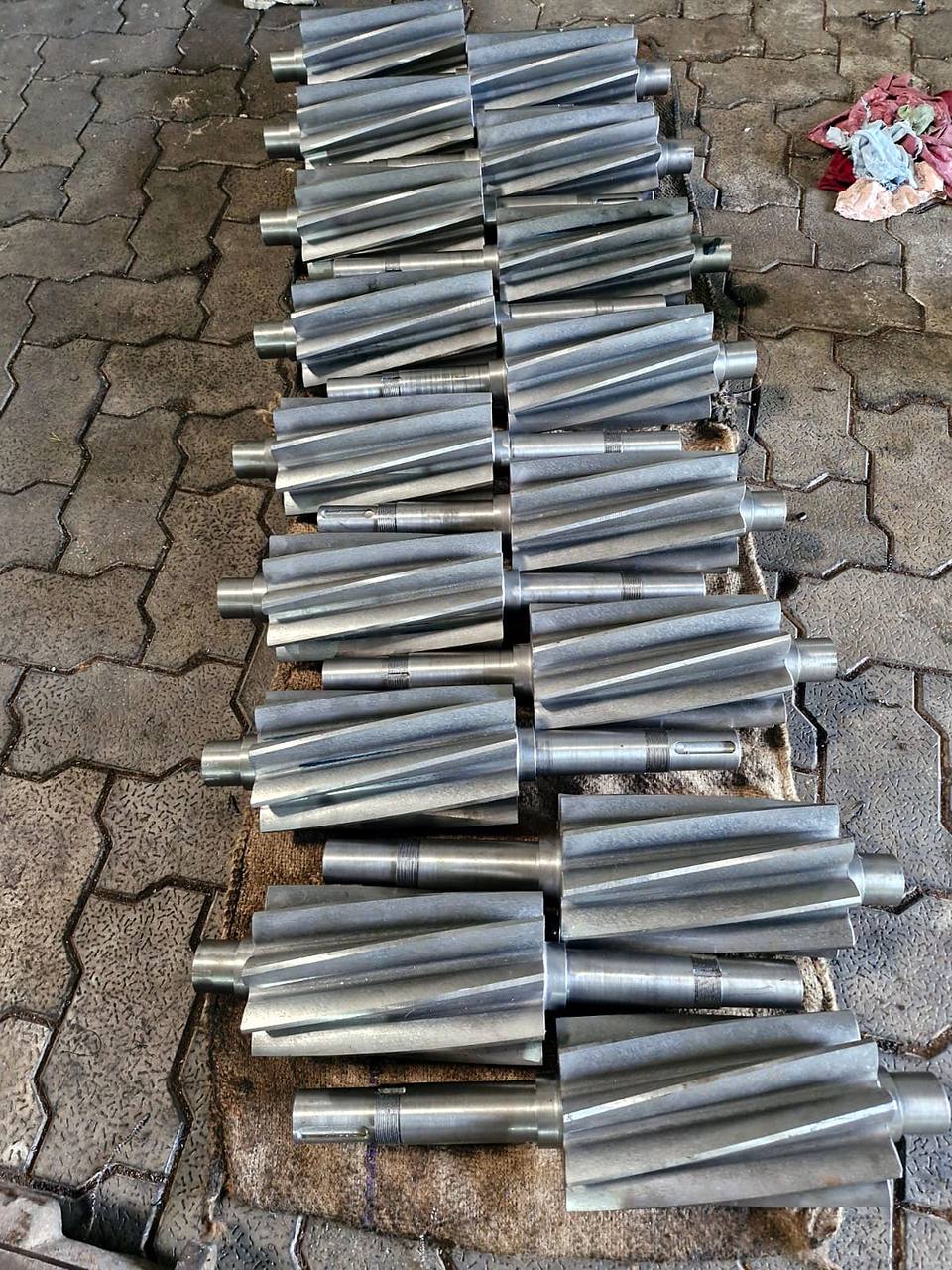
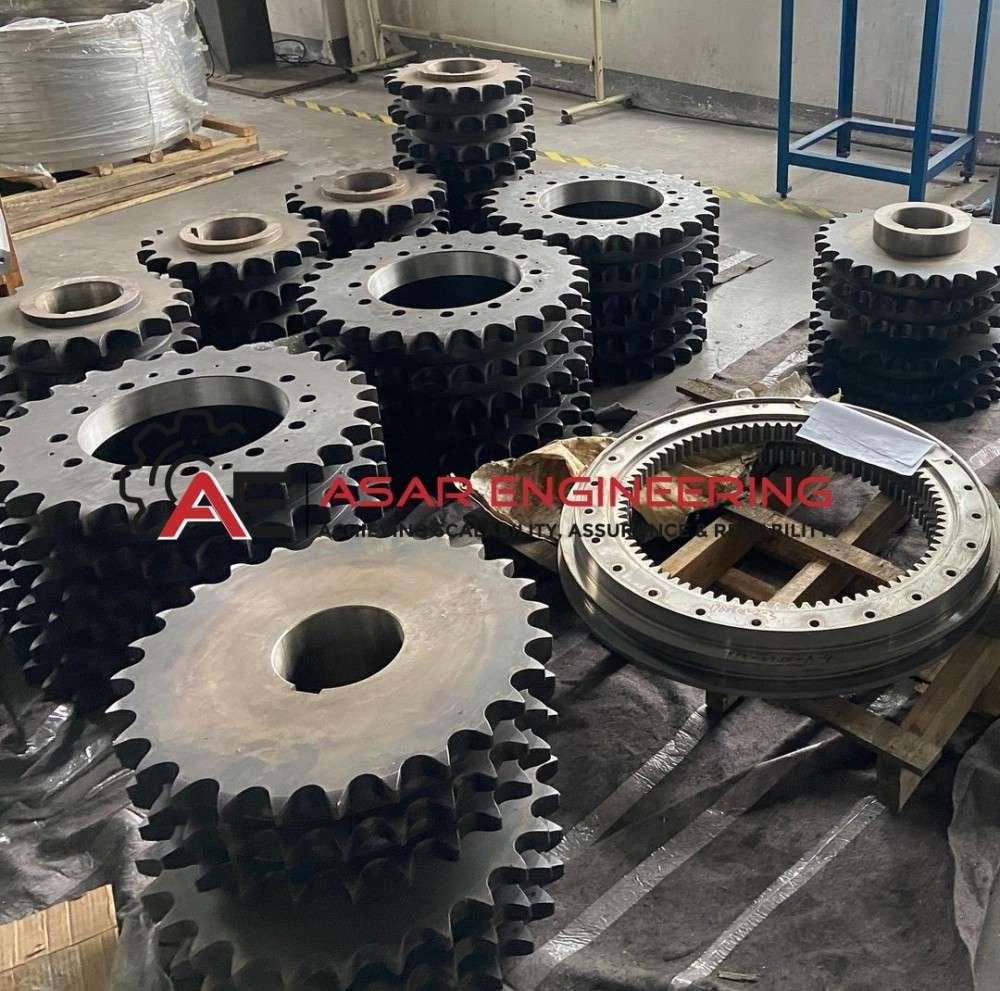
Photos of parts made and dispatched from our unit, not stock images.


Machining Videos from Our Shop Floor
Short, uncut clips of gear cutting, hobbing and machining at our unit in Gujarat.


What Our Customers Say
Reviews left on our Google Business Profile, shown word for word.
I bought a single screw extruder from asar engineering pvt.ltd. It's been a game changer for my manufacturing process. The extruder is efficient, easy to operate and built to last. Their customer is excellent and they guided me well through installation and setup. Highly recommended!
Asar Engineering supplied gearbox components for one of our industrial applications. The dimensional accuracy, finishing, and overall performance were satisfactory. We particularly appreciated their technical understanding and ability to suggest suitable solutions based on our operating requirements.
We have been sourcing industrial gearboxes from Asar Engineering Pvt. Ltd. and are satisfied with the product quality and consistency. The gearboxes are well-built, perform reliably under continuous operation, and were supplied according to our required specifications. Their team was also responsive during technical discussions and order coordination.
Industrial Screw FAQs
Questions buyers usually ask us before sending an enquiry for industrial screw.
What types of industrial screw do you make?
We make screw conveyor screws with helicoid, sectional, ribbon, paddle or variable pitch flights, feeder screws, extruder screws, and trapezoidal, Acme or square-thread lead screws. Each industrial screw is made to drawing or sample for one machine. These are not fasteners; bolts and set screws are a separate product we do not cover under this range.
Which material and wear protection should I choose for an industrial screw?
It depends on the material handled. Mild or carbon steel suits general conveying, with hardfaced flight edges or abrasion-resistant plate for cement, coal and ash. SS 304 or SS 316 is used for food and corrosive duties, SS 316 where chlorides are present. Extruder screws are usually nitrided EN41B, and lead screws EN8, EN19 or EN24 with a bronze or cast iron nut.
What details are needed to quote a screw conveyor or feeder screw?
Please send the drawing or old screw, screw diameter, pitch, flight thickness, centre pipe or shaft size, overall length and number of sections, end shaft and coupling details, material of construction, the material handled, required capacity, speed and quantity. For an extruder screw add barrel bore and L/D ratio; for a lead screw, thread form, lead, starts and nut.
Can you make a replacement industrial screw from our damaged one during a breakdown?
Yes. We copy a worn industrial screw from the sample, measuring diameter, pitch, flight, shaft steps, keyways and coupling bolt holes so it fits the existing trough, barrel or nut. Journals and lead screw threads can be induction hardened in-house. Diameter, pitch, straightness and end shafts are checked before dispatch from our Gandevi unit.
Do you take repeat industrial screw orders from machine builders and export buyers?
Yes. We supply single replacement screws for breakdowns and batch orders for OEMs building screw jacks, conveyors, feeders and presses, across India from Gujarat. Being IEC registered, we also take export orders; overseas buyers should specify by drawing or sample with the material handled, capacity, material of construction and working environment.
How We Make Your Industrial Screws
- Send your requirementDrawing, sample or photos of the industrial screw, with the quantity you need.
- Technical check and quoteWe confirm material, hardness and tolerances, then send price and delivery time.
- Manufacturing and inspectionMade at our Gandevi unit; dimensions are checked before dispatch.
- DispatchPacked for road transport across India, or for export shipment.
Companies We Supply



























Need Industrial Screws made to your drawing?
Send the drawing or a sample with the quantity. We supply across India and take export orders.