Industrial Coupling Manufacturers in India
Gear, HRC, jaw, pin bush, spacer, chain, grid, fluid, nylon gear and bellow couplings for connecting shafts and taking up misalignment. Supplied bored and keyed to your shaft sizes.

Asar Engineering Pvt. Ltd. Gandevi, Gujarat
- Hubs bored and keyed to your shaft sizes
- Gear coupling teeth cut in-house
- Replacement to your existing coupling size
- Supplied across India and exported (IEC registered)
Types of Industrial Couplings We Make


Shaft Couplings Made to Your Shaft Sizes
An industrial coupling is a power-transmission component that connects two rotating shafts and transfers torque from a driving machine to a driven machine. A typical drive connects an electric motor or engine to a pump, compressor, gearbox, conveyor, mixer or other rotating machine.
Besides transmitting power, a coupling also protects the drive. Depending on its design, it can accommodate some shaft misalignment, damp vibration, absorb shock loads and reduce the forces passed from one machine to the other.
Asar Engineering is an industrial coupling manufacturer in India, making couplings and coupling parts to drawing or sample at its manufacturing unit in Gandevi, Gujarat. Gear coupling hubs and sleeves are cut in-house: external teeth by hobbing and internal sleeve teeth by shaping. A coupling must suit the operating conditions of the whole machine, not just join two shafts.
The appropriate coupling depends on factors such as torque, rotational speed, shaft arrangement, alignment conditions, shock loading, operating temperature, and the characteristics of the connected equipment.
What is an Industrial Coupling?
An industrial coupling is a mechanical device designed to connect two rotating shafts so that rotational power and torque can be transmitted from one machine to another.
One shaft generally belongs to the driving equipment, such as an electric motor or engine, while the other belongs to the driven equipment, such as a pump, compressor, gearbox, or conveyor system.
An industrial coupling can also compensate for certain shaft movements that occur during normal machine operation. Thermal expansion, assembly tolerances, foundation movement, and operating loads can cause the shafts to move away from their original alignment.
Angular Misalignment
Angular misalignment occurs when the centrelines of the two shafts meet at an angle instead of lying on one straight line.
A suitable flexible coupling can accommodate a defined degree of angular movement while continuing to transmit torque.
Parallel Misalignment
Parallel or offset misalignment occurs when the two shafts are parallel but their centrelines are displaced from each other.
Flexible coupling designs can accommodate a specified amount of this offset and reduce the mechanical stress that would otherwise be transferred directly to bearings and connected equipment.
Axial Movement
Axial movement occurs when a shaft moves forward or backward along its longitudinal axis.
Certain coupling designs can accommodate controlled axial displacement, depending on their construction and operating limits.
Vibration and Shock Absorption
Some coupling designs use elastomeric elements or flexible metallic components to reduce vibration transmission and absorb sudden torque fluctuations.
This can help protect connected machinery from shock loads and torsional disturbances.
Torque Transmission
The fundamental function of a coupling remains the transmission of rotational torque between the driving and driven shafts. The coupling therefore needs to be selected according to the torque, speed, shaft dimensions, and operating conditions of the complete drive system.
Applications of Industrial Coupling
Industrial couplings are used throughout mechanical power-transmission systems where rotating equipment needs to be connected reliably.
Pumps
Couplings connect electric motors or engines to pumps while accommodating the alignment conditions that can occur between the driver and pump shaft.
Compressors
Industrial compressors can use flexible or metallic couplings depending on their speed, torque, operating temperature, and required precision.
Gearboxes
Couplings can connect motors to gearboxes or gearboxes to driven machinery while transmitting the required torque.
Conveyors
Heavy-duty conveyor drives can use specialized coupling arrangements to transfer power while managing shock loads and shaft movement.
Cement and Construction Equipment
High-load equipment such as mixers, crushers, and other heavy industrial machines can require couplings capable of handling significant torque and mechanical shock.
Cranes and Hoists
Industrial lifting systems can use specialized couplings in drive trains where torque transmission, acceleration, and load fluctuations are important considerations.
Rolling Mills
Gear and other metallic coupling arrangements can be used in demanding rolling-mill drive systems where high torque transmission and robust construction are required.
High-Speed Machinery
High-speed equipment such as turbine drives and centrifugal compressors typically uses disc or diaphragm couplings, where balance and controlled flexibility are important.
Mining Machinery
Mining equipment such as crushers, conveyors, and heavy-duty drives can require couplings capable of handling substantial loads and shock conditions.
Common Types of Industrial Coupling
Industrial couplings come in different designs according to their flexibility, construction, torque capacity, speed and application. The types below are described for general reference; the types Asar Engineering manufactures are listed under the supplier section.
Rigid Coupling
Rigid couplings create a solid mechanical connection between two shafts and provide little or no flexibility.
They are generally used where the connected shafts can be maintained in precise alignment and where controlled shaft movement is not required.
Sleeve or Muff Coupling
A sleeve coupling uses a cylindrical sleeve to connect two shafts. The design provides a straightforward mechanical connection and is suitable for applications where shaft alignment can be maintained.
Flanged Rigid Coupling
Flanged couplings use flanges to join the shafts and provide a robust rigid connection. They can be used in applications requiring a strong and mechanically secure shaft connection.
Rigid couplings require careful alignment because they do not provide the same misalignment compensation as flexible coupling designs.
Flexible Coupling
Flexible couplings are designed to accommodate specified shaft misalignment while transmitting torque.
Their flexibility may come from an elastomeric material or from specially engineered metallic components.
Jaw Coupling
A jaw coupling uses two metallic hubs with an elastomeric spider positioned between them.
The spider provides flexibility while helping to absorb vibration and shock. The coupling design can be used in general industrial motor-drive applications.
Gear Coupling
A gear coupling has two hubs with external gear teeth that mesh with internal teeth in a sleeve. The hub teeth are usually crowned so that the coupling can take angular and parallel misalignment as well as some axial float.
This all-metal construction suits high-torque drives such as rolling mills, cranes, cement plant equipment and other heavy machinery.
Gear couplings need grease or oil lubrication and periodic maintenance to protect the tooth mesh.
Grid Coupling
A grid coupling incorporates a serpentine metallic spring grid installed between specially grooved hubs.
The spring element can flex under changing loads and absorb shock and vibration, making this design suitable for machinery exposed to significant load fluctuations.
Disc Coupling
Disc couplings use thin metallic disc packs to accommodate controlled shaft movement while maintaining accurate torque transmission.
Because they are all-metal and have no elastomeric insert, they need no lubrication and suit many high-speed applications.
Diaphragm Coupling
A diaphragm coupling uses flexible metallic diaphragms to accommodate shaft movement while transmitting torque.
These couplings can be considered for high-speed machinery where precision and controlled flexibility are important.
Fluid Coupling
A fluid (hydrodynamic) coupling transfers power through oil circulating between an impeller and a runner, with no direct mechanical contact between the driving and driven members.
This gives smooth power transfer and soft starting of heavy loads, which is why fluid couplings are used on large conveyors, crushers and hoists.
Core Components of an Industrial Coupling
The construction of an industrial coupling depends on its design, but several components are commonly involved.
Hubs
Hubs connect the coupling to the respective shafts. They transmit rotational torque from the shaft into the coupling assembly.
Elastomeric Spider
In jaw-type couplings, the spider is the flexible element positioned between the two hubs. It can absorb vibration and accommodate controlled misalignment.
Gear Teeth
Gear couplings use external and internal gear teeth to transmit torque while permitting controlled movement between the connected shafts.
Grid Spring
A grid coupling incorporates a spring-like grid that fits into grooves in the coupling hubs. The grid flexes under load and helps absorb shock.
Disc Pack
Disc couplings use thin metallic discs assembled into packs. The discs flex to accommodate specified shaft movement while transmitting torque.
Diaphragm
Metallic diaphragms provide controlled flexibility in diaphragm couplings, particularly in high-speed applications.
Fluid Circuit
A fluid coupling contains an impeller and a runner in a sealed housing filled with oil. The oil transfers rotational power hydrodynamically between the driving and driven sides.
Shaft Connection
The hub is fixed to the shaft by a keyway and key, a taper bush, a shrink fit or a clamping arrangement, depending on the machine and the torque.
Industrial Coupling Supplier in India
Choosing an industrial coupling supplier in India starts with the drive itself. A coupling must be selected for the entire drive system, not just for the shaft diameter.
Consider the transmitted torque, speed, shaft sizes, expected misalignment, shock loading, operating temperature, installation space and the type of equipment being connected.
Asar Engineering supplies gear couplings and coupling hubs, sleeves and flanges made to the customer's drawing or sample. Bores, keyways and teeth are matched to the shafts and the existing coupling, and material and hardness are chosen for the load.
Important selection considerations include:
- Rated and peak torque
- Operating rotational speed
- Shaft diameter
- Shaft-to-shaft distance
- Angular misalignment
- Parallel misalignment
- Axial movement
- Shock and vibration levels
- Operating temperature
- Environmental conditions
- Installation space
- Maintenance requirements
- Required coupling flexibility
A properly selected coupling can help create a reliable mechanical connection while accommodating the movement and operating conditions expected from the connected machinery.
Benefits of Using an Industrial Coupling
Reliable Torque Transmission
Couplings provide a direct mechanical connection for transferring rotational power between the driving and driven shafts.
Misalignment Compensation
Flexible designs can accommodate specified angular, parallel, and axial movement that may develop during machine operation.
Vibration Reduction
Elastomeric and other flexible coupling designs can reduce the transmission of vibration between connected machines.
Shock Load Absorption
Certain coupling types can absorb sudden changes in torque and reduce the mechanical impact experienced by the drive system.
Equipment Protection
By accommodating movement and damping mechanical disturbances, suitable couplings can help reduce excessive stress on connected components.
Flexible Drive Configuration
Different coupling designs allow engineers to select an appropriate connection for low-speed, high-speed, high-torque, or shock-loaded machinery.
Reduced Mechanical Stress
A properly selected flexible coupling can help prevent alignment-related forces from being transmitted directly into connected bearings and shafts.
Application Versatility
Industrial couplings are used on pumps, compressors, conveyors, gearboxes, cranes, crushers, rolling mills and many other rotating machines.
Industrial Coupling Specifications
| Specification | Typical Details (Application-Dependent) |
|---|---|
| Component Type | Industrial shaft coupling |
| Primary Function | Shaft connection and torque transmission |
| Main Categories | Rigid and flexible |
| Flexible Designs | Elastomeric and metallic |
| Common Types | Jaw, gear, grid, disc, diaphragm, fluid |
| Rigid Types | Sleeve/muff and flanged |
| Misalignment | Angular, parallel, and axial depending on design |
| Torque Capacity | Application-dependent |
| Operating Speed | Application-dependent |
| Shaft Diameter | Based on machine configuration |
| Material | Steel, cast iron, elastomers (for flexible elements), application-specific alloys |
| Shock Absorption | Available in selected flexible designs |
| Vibration Damping | Available depending on coupling construction |
| Lubrication | Required for certain designs such as gear couplings |
| Application | Pumps, compressors, gearboxes, conveyors, cranes, crushers, rolling mills and heavy machinery |
| Installation | Shaft and machine-specific |
| Maintenance | Depends on coupling type and operating environment |
The final coupling specification should be determined according to the actual shaft dimensions, torque, speed, misalignment, temperature, load characteristics, and operating environment.
Industrial Coupling Exporter from India
Industrial drives run under varying loads, so a coupling must be chosen for the actual conditions of the equipment it connects.
Rigid couplings give a solid connection but need precise shaft alignment. Flexible couplings are used where misalignment, vibration or shock loads have to be absorbed.
Different applications call for different designs. Jaw couplings suit general motor drives; gear and grid couplings suit high-torque, shock-loaded machinery; disc and diaphragm couplings suit high-speed drives needing all-metal flexibility; and fluid couplings are used for soft starting of heavy loads.
Asar Engineering is IEC registered and takes export orders as an industrial coupling exporter from India, along with supplying customers across India. Coupling requirements are reviewed against the shaft arrangement, torque, speed and operating environment.
Correct installation and alignment are also critical. If the shafts are badly aligned, or the coupling is run beyond its limits, even a well-made coupling will wear out early.
We ship worldwide, including to the USA, Canada, Europe, the UAE, Africa and Australia. Send your drawing or sample with the destination and the delivery terms you need, and we will quote.
Why Choose Asar Engineering
Asar Engineering has been making gears and power-transmission parts at Gandevi, Gujarat since 2015. For couplings, this is what you get:
- In-House Teeth Cutting: Gear coupling hub teeth are hobbed and sleeve internal teeth are shaped in-house.
- Made to Drawing or Sample: Hubs, sleeves and flanges are made to your drawing or copied from a worn sample, with bore and keyway to your shaft.
- Induction Hardening In-House: Coupling teeth can be induction hardened for better wear life.
- Material and Hardness Matched to the Application: Material and hardness are chosen according to torque, shock load and operating conditions.
- Inspection Before Dispatch: Bores, teeth and key dimensions are checked with gauges before dispatch.
- One-Off to Batch Quantities: From a single replacement coupling to batch orders.
- Supply Across India and Export: Delivery to customers across India; export orders handled under our IEC registration.
Types we make in this range: N-Eupex Coupling, Spacer Coupling, Chain Coupling, Pin Bush Coupling, HRC Coupling, Nylon Gear Coupling, Encoder Coupling (Bellow Coupling).
Get Industrial Couplings from Asar Engineering
Send us your coupling drawing or a sample, along with the shaft sizes, torque or motor power, speed and quantity required. As an industrial coupling manufacturer in India, Asar Engineering supplies across India and takes export orders.
Get an accurate quote
What to Send for Your Industrial Coupling Quote
- Coupling type and size, or the old coupling as a sample
- Motor power (kW) and speed (rpm)
- Both shaft diameters with keyway details
- Distance between shaft ends (DBSE) for spacer types
- Quantity and the date you need the parts
Have a drawing, a sample or a worn part?
Send it with the quantity. We reply with material, hardness, price and delivery time.
Industries That Use Our Industrial Couplings
Material, hardness and fit are chosen for the duty the part will see in your plant.
-
Cement
Industrial Couplings for kiln, mill, crusher and conveyor drives.
-
Steel & Metal
Industrial Couplings for rolling mills and processing lines.
-
Chemical & Process
Industrial Couplings for pumps, mixers and agitators.
-
Sugar
Industrial Couplings for cane carriers, mill drives and bagasse conveyors.
-
Mining & Material Handling
Industrial Couplings for belt conveyors, crushers and bucket elevators.
-
Machine Builders (OEM)
Industrial Couplings for new machines, made to your drawing.
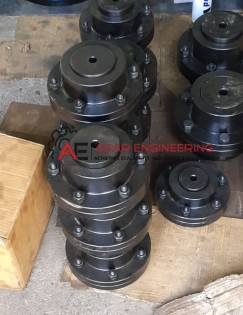
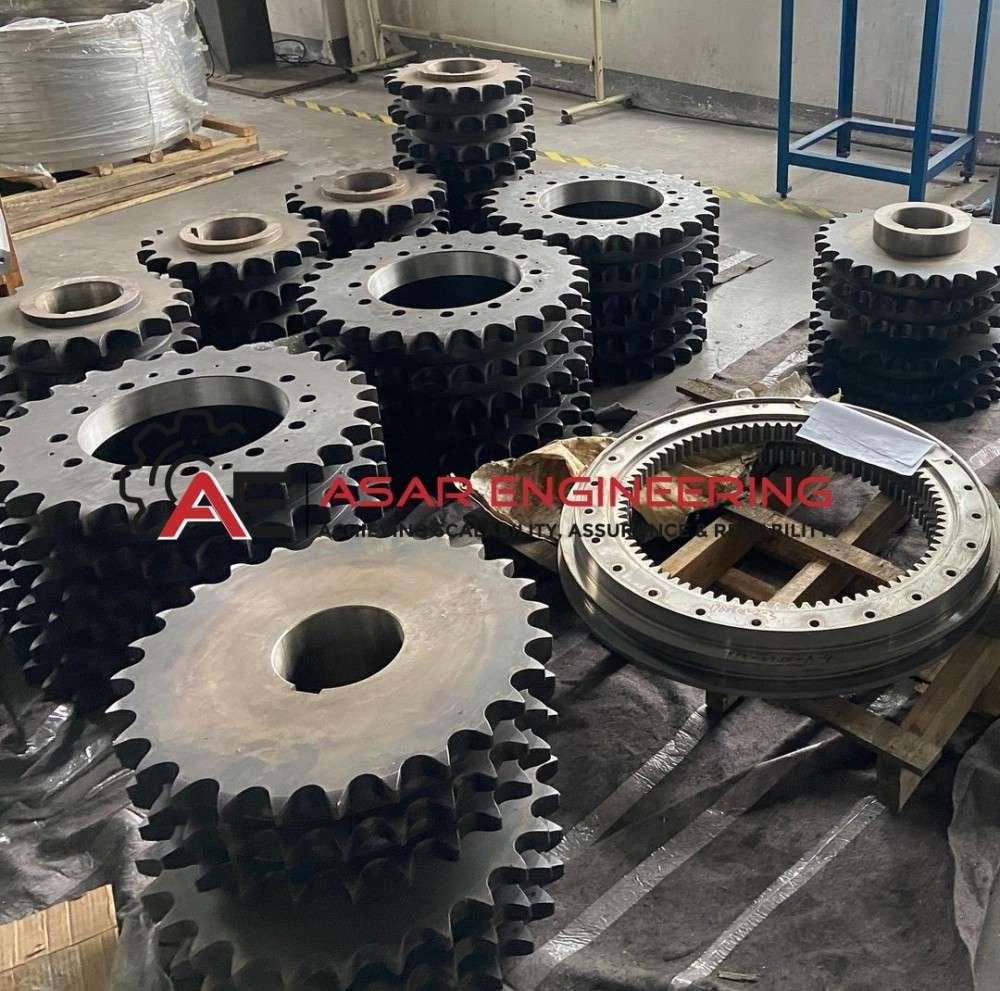
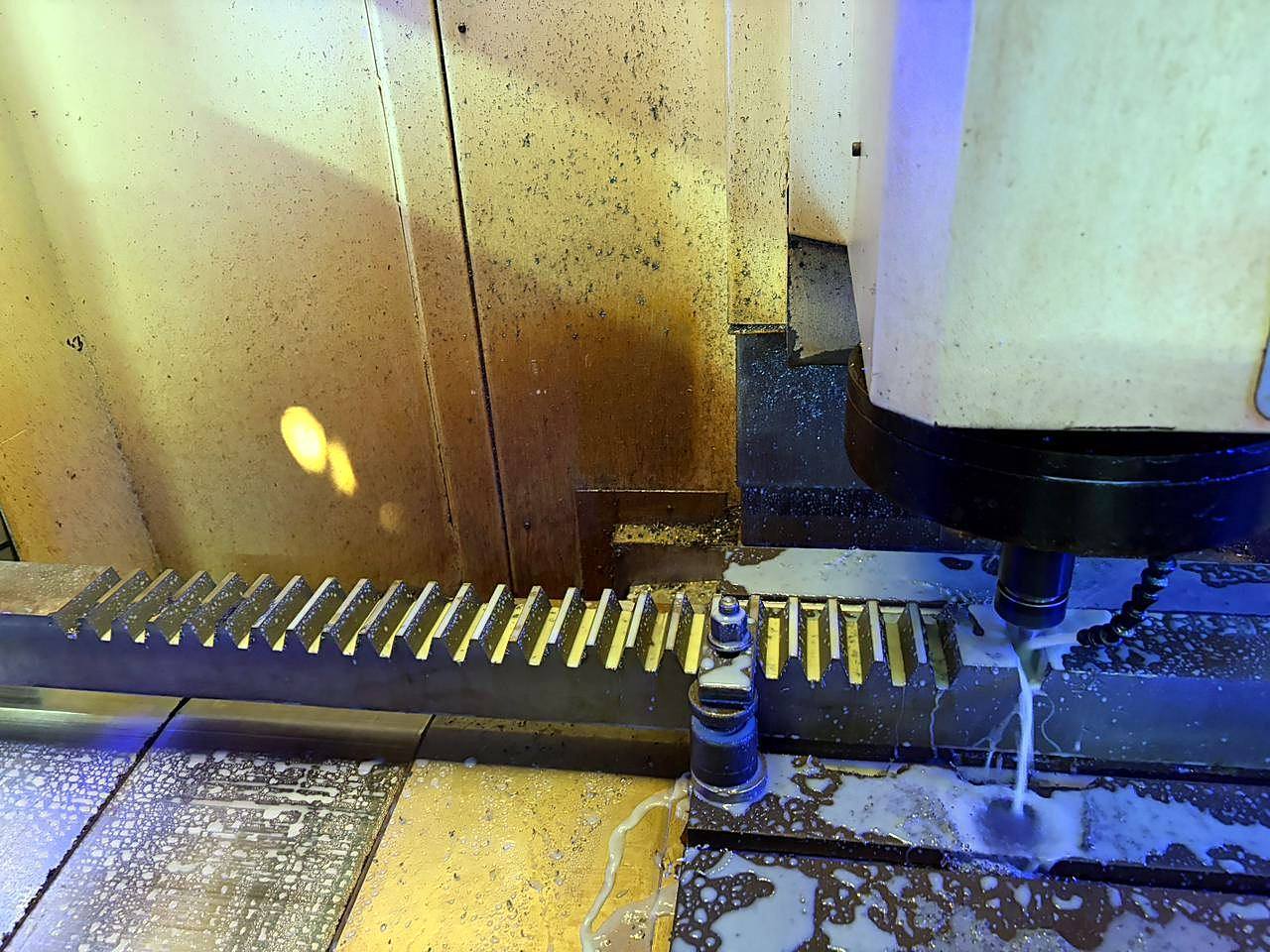
Recent Work from Our Gandevi Unit
Photos of parts made and dispatched from our unit, not stock images.





Machining Videos from Our Shop Floor
Short, uncut clips of gear cutting, hobbing and machining at our unit in Gujarat.


What Our Customers Say
Reviews left on our Google Business Profile, shown word for word.
I bought a single screw extruder from asar engineering pvt.ltd. It's been a game changer for my manufacturing process. The extruder is efficient, easy to operate and built to last. Their customer is excellent and they guided me well through installation and setup. Highly recommended!
Asar Engineering supplied gearbox components for one of our industrial applications. The dimensional accuracy, finishing, and overall performance were satisfactory. We particularly appreciated their technical understanding and ability to suggest suitable solutions based on our operating requirements.
We have been sourcing industrial gearboxes from Asar Engineering Pvt. Ltd. and are satisfied with the product quality and consistency. The gearboxes are well-built, perform reliably under continuous operation, and were supplied according to our required specifications. Their team was also responsive during technical discussions and order coordination.
Industrial Coupling FAQs
Questions buyers usually ask us before sending an enquiry for industrial coupling.
Which type of industrial coupling suits my drive, rigid or flexible?
Rigid sleeve or flanged couplings only suit shafts that can be held in precise alignment. Where misalignment, vibration or shock must be absorbed, a flexible design is used: jaw or HRC types for general motor drives, gear and grid types for high-torque, shock-loaded machines, disc types for high speed, and fluid couplings for soft starting of heavy loads.
How much shaft misalignment can an industrial coupling take?
It depends on the design and size. Flexible couplings accept limited angular, parallel and axial movement, gear types through crowned hub teeth and elastomeric types through the insert. This capacity is meant for movement from thermal expansion, foundations and loads, not for poor installation. Badly aligned shafts will wear even a well-made coupling early, so align the drive first.
What details should I send when enquiring for an industrial coupling?
Send the coupling drawing or a sample, both shaft diameters with keyway details, motor power or torque, speed, the driving and driven machines, shaft-to-shaft distance and the quantity. Also mention shock loading, operating temperature and space limits, and the existing coupling type if you are replacing one, so we can match bores, keyways and teeth.
Can you make a replacement industrial coupling hub or sleeve to match our existing coupling?
Yes. We make gear coupling hubs, sleeves and flanges to your drawing or by copying a worn sample, with the bore and keyway machined to your shaft. Hub teeth are hobbed and sleeve internal teeth are shaped in-house, and the teeth can be induction hardened. Bores, teeth and key dimensions are checked with gauges before dispatch.
Do you supply industrial couplings in small quantities and outside India?
Yes. We take orders from a single replacement coupling to batch quantities, covering gear, N-Eupex, spacer, chain, pin bush, HRC, nylon gear and bellow (encoder) couplings. We deliver across India from our unit at Gandevi, Gujarat, and handle export orders under our IEC registration.
How We Make Your Industrial Couplings
- Send your requirementDrawing, sample or photos of the industrial coupling, with the quantity you need.
- Technical check and quoteWe confirm material, hardness and tolerances, then send price and delivery time.
- Manufacturing and inspectionMade at our Gandevi unit; dimensions are checked before dispatch.
- DispatchPacked for road transport across India, or for export shipment.
Companies We Supply




























Need Industrial Couplings made to your drawing?
Send the drawing or a sample with the quantity. We supply across India and take export orders.