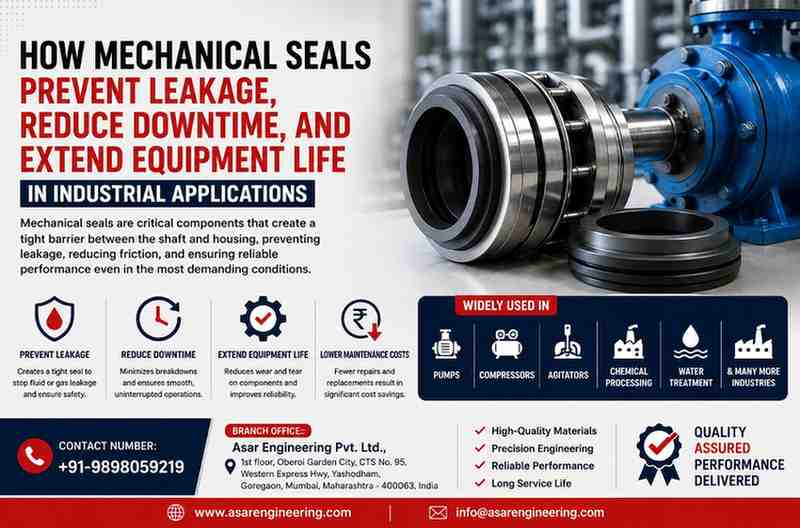
Industrial machinery operates under demanding conditions where reliability, efficiency, and safety are critical. Whether it is a pump, compressor, agitator, mixer, or processing equipment, preventing fluid leakage is essential for maintaining smooth operations. This is where mechanical seals play a vital role.
Mechanical seals have become an indispensable component in modern industrial systems because they help prevent leakage, minimize equipment wear, reduce maintenance requirements, and improve overall operational efficiency. Understanding how mechanical seals work and why they are important can help industries optimize performance while reducing long-term operating costs.
A mechanical seal is a precision-engineered device designed to prevent fluids and gases from escaping through the space between a rotating shaft and stationary equipment housing. Unlike traditional packing solutions, mechanical seals create a highly effective sealing interface that minimizes leakage while reducing friction.
Mechanical seals are widely used in:
Their primary function is to maintain system integrity while ensuring safe and efficient operation.
One of the most common challenges in industrial equipment is fluid leakage. Even minor leakage can result in production losses, contamination, environmental concerns, and increased maintenance expenses.
Mechanical seals utilize two precisely machined sealing faces:
These surfaces remain in close contact while the shaft rotates. A thin lubricating film between the faces reduces friction while maintaining an effective seal. This design significantly reduces fluid loss and provides superior sealing performance compared to conventional methods.
Unexpected equipment failure can disrupt production schedules and increase operational costs. Mechanical seals help reduce downtime by maintaining consistent sealing performance under challenging operating conditions.
Modern mechanical seals are engineered to withstand:
Because of their robust construction, mechanical seals minimize the risk of sudden seal failure, allowing equipment to run efficiently for extended periods.
Industrial equipment represents a significant investment. Protecting that investment requires components that reduce wear and maintain system integrity.
Mechanical seals help extend equipment lifespan by:
Advanced seal face materials reduce friction between moving parts, resulting in lower wear rates.
Leakage can damage bearings, shafts, and surrounding components. Mechanical seals prevent contaminants and fluids from reaching critical machinery parts.
Many industrial environments involve aggressive chemicals and moisture exposure. Proper sealing helps protect equipment from corrosion-related damage.
When machinery operates without leakage or contamination, overall efficiency remains higher throughout its service life.
A typical mechanical seal consists of several essential components:
Attached to the rotating shaft and rotates with the equipment.
Mounted to the equipment housing and remains stationary.
Provide additional sealing support and prevent leakage through secondary paths.
Maintain constant pressure between sealing faces for optimal performance.
Protects the shaft from wear and enhances seal durability.
Each component works together to ensure reliable and leak-free operation.
Mechanical seals are used across multiple industries where fluid containment and equipment reliability are critical.
Prevents hazardous chemical leakage and protects workers and equipment.
Ensures efficient pump operation and minimizes maintenance requirements.
Supports high-pressure applications and harsh operating conditions.
Maintains hygiene standards while preventing product contamination.
Provides clean and reliable sealing solutions for sensitive production processes.
Supports continuous operation of pumps and rotating equipment.
Proper maintenance significantly improves seal performance and longevity.
Identify wear, vibration, and leakage issues before they become major problems.
Adequate lubrication reduces friction and heat generation.
Avoid operating equipment outside recommended pressure and temperature limits.
Remove contaminants that may affect sealing performance.
Timely replacement prevents larger equipment failures and costly downtime.
Selecting the proper mechanical seal depends on several factors:
Working with an experienced manufacturer helps ensure the correct seal configuration for your specific application.
Mechanical seals play a critical role in modern industrial operations by preventing leakage, reducing downtime, and extending equipment life. Their ability to improve efficiency, protect machinery, and lower maintenance costs makes them an essential component in pumps, compressors, mixers, and other rotating equipment.
Investing in high-quality mechanical seals helps industries achieve greater productivity, improved safety, and long-term operational reliability. Whether used in chemical processing, manufacturing, water treatment, or power generation, the right sealing solution can significantly enhance equipment performance while reducing overall operating expenses.